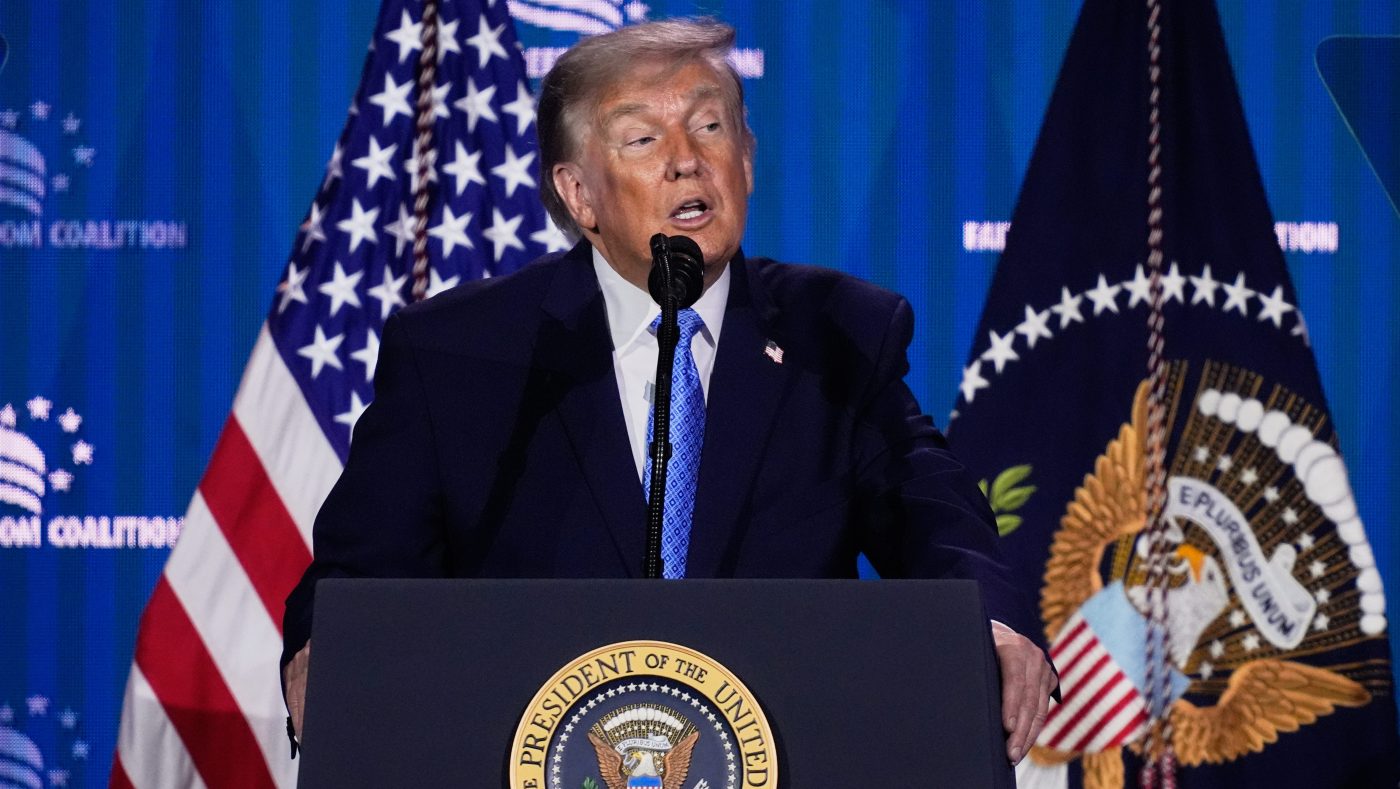
President Donald Trump sounded an alarm on Friday, asserting that the recent primary victories by democratic socialist candidates in New York City are just the beginning of a broader upheaval within the Democratic Party. Speaking at the Faith and Freedom Coalition's Annual Policy Conference in Washington, Trump framed the results as a warning sign for the party's establishment.
“The Democrat Party is in big trouble because this isn’t stopping with New York,” Trump told the audience. “It’s too easy to get elected, giving everything away. It’s easy for them to get followers because they make promises they know they can’t keep.”
The president’s remarks come after three leftist candidates, endorsed by New York City Mayor Zohran Mamdani, won congressional primaries on Tuesday. One of those victories came at the expense of an incumbent backed by the party’s establishment, a development that has rattled Democratic strategists.
Trump accused Democratic leaders of failing to mount a serious response to the insurgent wave. “They’re afraid to fight,” he said, suggesting that the party’s hierarchy is paralyzed by internal divisions and unwilling to confront the radical shift within its ranks.
The New York primaries have intensified a debate over the influence of democratic socialism in the party—a trend that Trump and his allies are eager to exploit in the lead-up to the midterms. The president’s warning echoes a broader Republican strategy of tying Democratic candidates to far-left policies.
Political analysts note that the victories in deep-blue New York City may not directly translate to swing districts, but the symbolism is potent. The rise of candidates backed by Mamdani, a progressive mayor, signals a growing appetite for aggressive left-wing policies, including Medicare for All and the Green New Deal.
Trump’s comments also touched on the ease with which these candidates are gaining traction. By promising expansive government benefits without clear funding mechanisms, he argued, they are building followings on a foundation of fiscal irresponsibility. The president’s critique aligns with his broader attacks on the Democratic agenda as a threat to economic stability.
The New York results have already prompted soul-searching within the party. Some centrist Democrats worry that the socialist surge could alienate moderate voters in general elections, while progressives see it as a mandate for bolder action. As Trump noted, the battle is far from over, and the fallout will likely shape the political landscape in the months ahead.