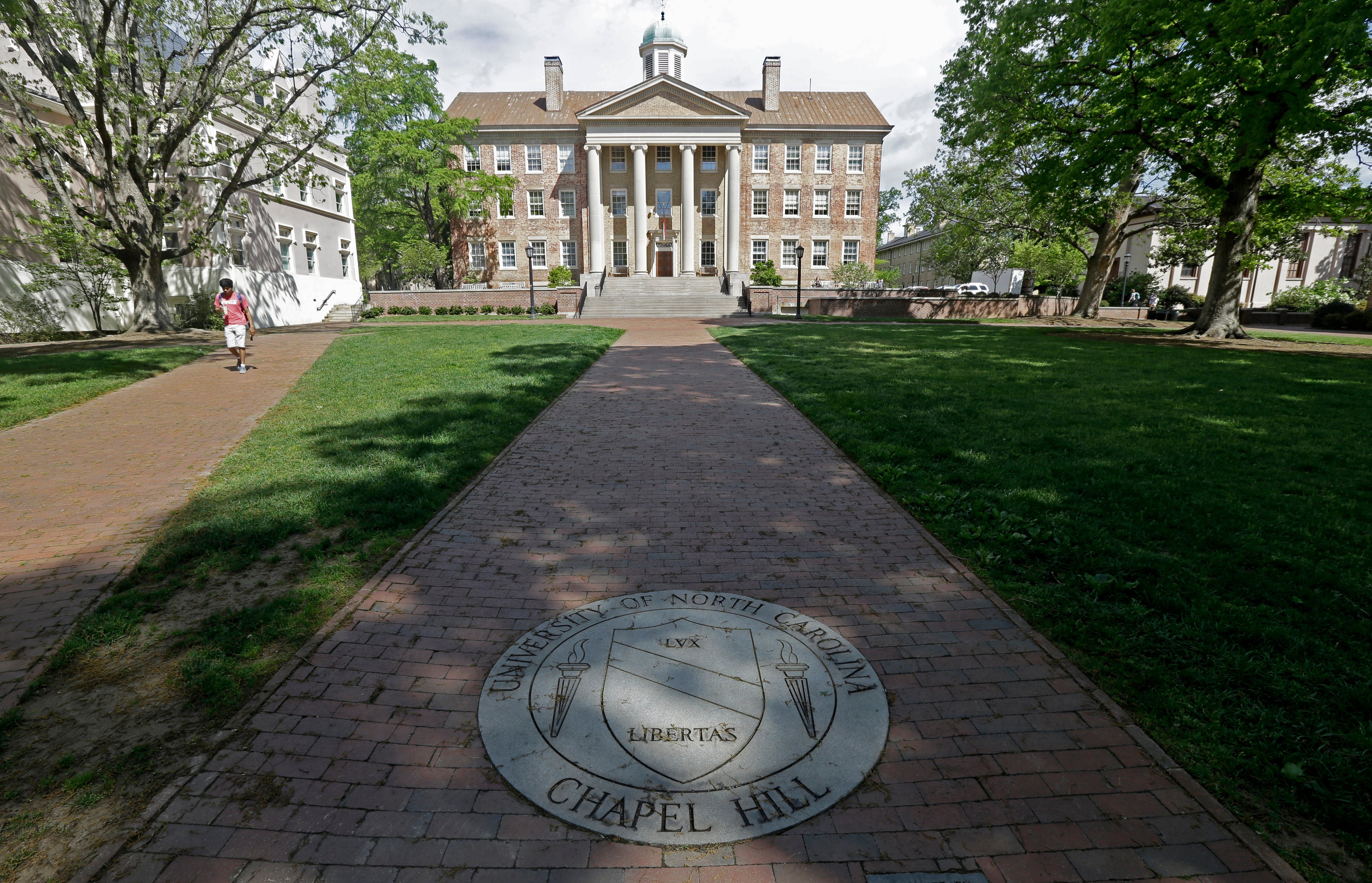
The University of North Carolina at Chapel Hill has formally resolved 19 federal investigations opened by the Trump administration, which had accused the school of tolerating antisemitism and engaging in race-based admissions practices. Under the settlement, UNC admits no wrongdoing and pays no fine, but it has agreed to a series of policy changes demanded by the administration.
The agreement, announced Tuesday, requires UNC to stop considering race or using racial proxies in its admissions decisions. The school also must create a Title VI coordinator position focused specifically on combating antisemitism on campus and enforce new rules that prohibit face masks that conceal identity, with violators required to show identification upon request by university officials.

Assistant Secretary Kimberly Richey of the Department of Education’s Office for Civil Rights praised the deal, saying it ensures that “aspiring students will be assessed based solely on their merit — not race — and Jewish students can thrive without the threat of antisemitic discrimination.” She added that the administration is “holding schools accountable for antisemitism at American universities.”
The settlement is part of a broader pattern in which the Trump administration has leveraged its control over federal funding to push universities into adopting specific policies. Similar agreements have been reached with other institutions, and the administration has repeatedly threatened to cut off federal dollars to schools that resist.
UNC Chancellor Lee H. Roberts framed the agreement as a way to end a period of uncertainty. “This announcement reinforces our commitment to the fair and equal treatment of everyone at Carolina,” he said. “For at least a decade, through different presidential administrations, U.S. universities have faced heightened public scrutiny across a range of issues.”
The deal comes as Trump's approval ratings slide and his administration faces escalating political turmoil, including ethics scandals in his inner circle. The university’s decision to settle may reflect a calculation that fighting the administration would be costly and risky, especially given the ongoing legal battles over executive authority.
Critics of the administration’s approach argue that forcing universities to adopt specific policies — such as banning face masks — goes beyond civil rights enforcement and intrudes on academic governance. Supporters, however, see the settlements as necessary to protect Jewish students and ensure that federal funds are not used to support discriminatory practices.
The agreement is set to expire in December 2028. Until then, UNC must comply with the new requirements or risk losing federal funding. The university remains eligible for federal support as long as it meets the terms.