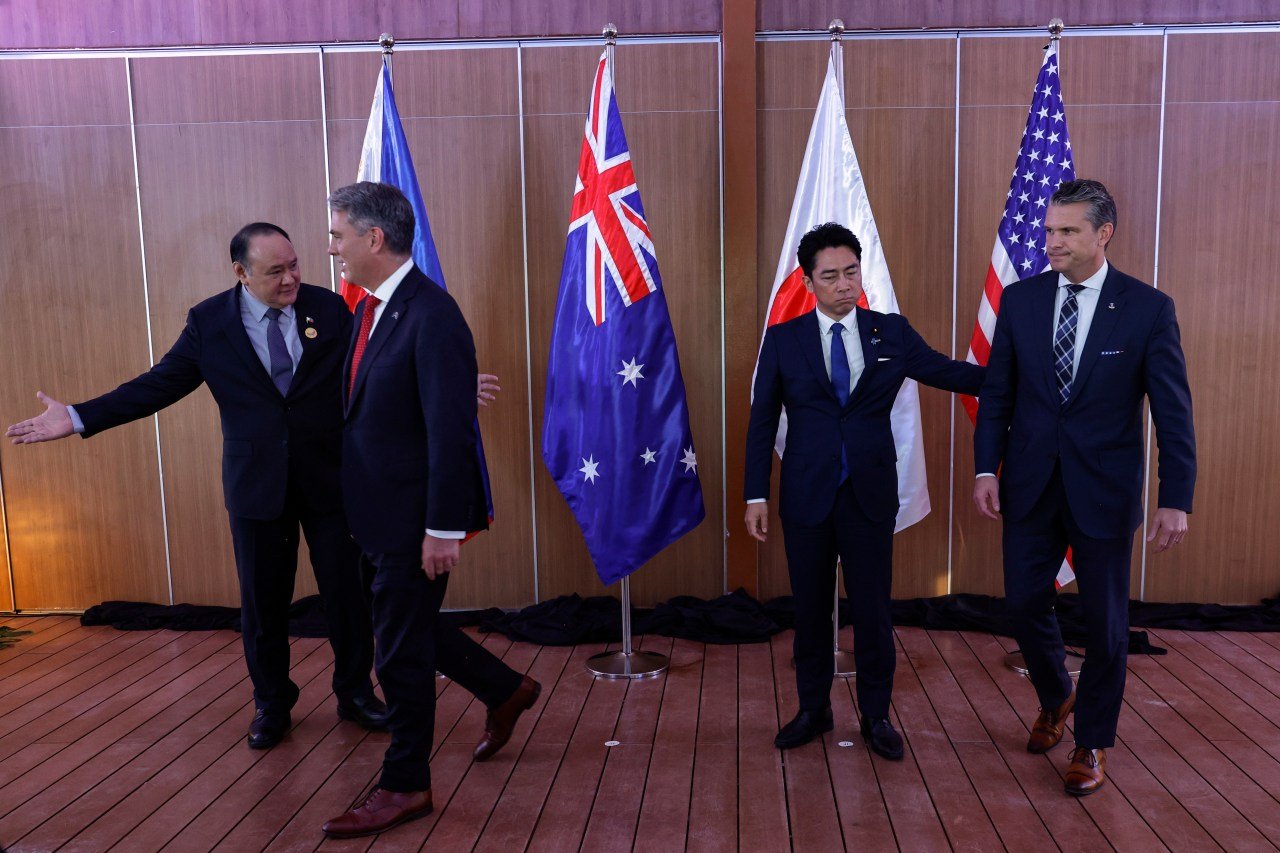
The United States and Japan have reached an agreement to set up a joint production facility in Japan for advanced medium-range air-to-air missiles, Japanese Defense Minister Shinjiro Koizumi announced late Wednesday. The move is the latest in a series of steps by the two allies to counter China's increasingly assertive military posture in the Indo-Pacific region.
Speaking at a news conference in Cebu, Philippines, where he met with U.S. Defense Secretary Pete Hegseth on the sidelines of an annual gathering of Southeast Asian defense ministers, Koizumi said the missiles are "essential for the F-35," the advanced U.S.-built fighter jet used by both countries. He did not provide further details about the timeline or scale of the production effort, which is part of a broader initiative dubbed "Operation Supercharge."

The agreement underscores the deepening defense industrial cooperation between Washington and Tokyo, as both nations seek to strengthen their deterrence capabilities in the face of China's military buildup and its aggressive actions in regional waters. The joint production is expected to enhance supply chain resilience and interoperability between the two militaries.
Koizumi said he and Hegseth "shared a sense of crisis regarding the increasingly severe regional situation" and agreed to strengthen the Japan-U.S. alliance "with greater speed and intensity than ever before." He also reaffirmed the importance of a "free and open international order based on the rule of law," though he carefully noted that their discussions were not directed at any specific country.
Hegseth, in a separate meeting with ASEAN defense ministers led by Philippine Defense Secretary Gilberto Teodoro Jr., renewed the Trump administration's commitment to deter aggression in the region. "The approach we're taking, we describe as strong, quiet and clear," Hegseth said. "Strong enough to deter coercion and aggression, quiet enough to avoid needless escalation or public theatrics to let our actions speak for themselves."
He emphasized that the message is "clear enough that our friends, our partners and potential adversaries understand precisely where the United States stands and that we will defend our interests and the interests of our allies and partners." Washington has repeatedly assured the Philippines, its oldest treaty ally in Asia, of its commitment to defend it under the mutual defense treaty, particularly amid escalating confrontations between Chinese and Philippine vessels in the disputed South China Sea.
Beijing claims almost the entire South China Sea, a vital global trade route, and has clashed with regional claimants including the Philippines, Vietnam, Malaysia, Brunei, and Taiwan. The U.S. has warned it is obligated to defend the Philippines if its forces, ships, or aircraft come under armed attack, including in those waters.
Australian Defense Minister Richard Marles said his country's forces, alongside allies like the U.S., will continue to uphold the rules-based order despite China's assertiveness. He cited a recent incident where a Chinese fighter jet released flares and flew within 30 meters of an Australian surveillance aircraft over the South China Sea. "That doesn't deter us from doing what we need to do," Marles told the Associated Press. "Freedom of navigation on the high seas is profoundly important for Australia."
The U.S.-Japan missile deal also comes amid separate territorial disputes between Tokyo and Beijing over Japanese-controlled islands in the East China Sea. The new production facility is expected to bolster Japan's domestic defense industry and reduce reliance on foreign suppliers, aligning with Tokyo's broader push to expand its military capabilities under its new national security strategy.
The announcement was made on the sidelines of the ASEAN Defense Ministers' Meeting-Plus, an annual forum aimed at fostering regional security cooperation. While the meetings are designed to prevent major conflict, they have often become a stage for criticism between the U.S. and China and their respective allies.