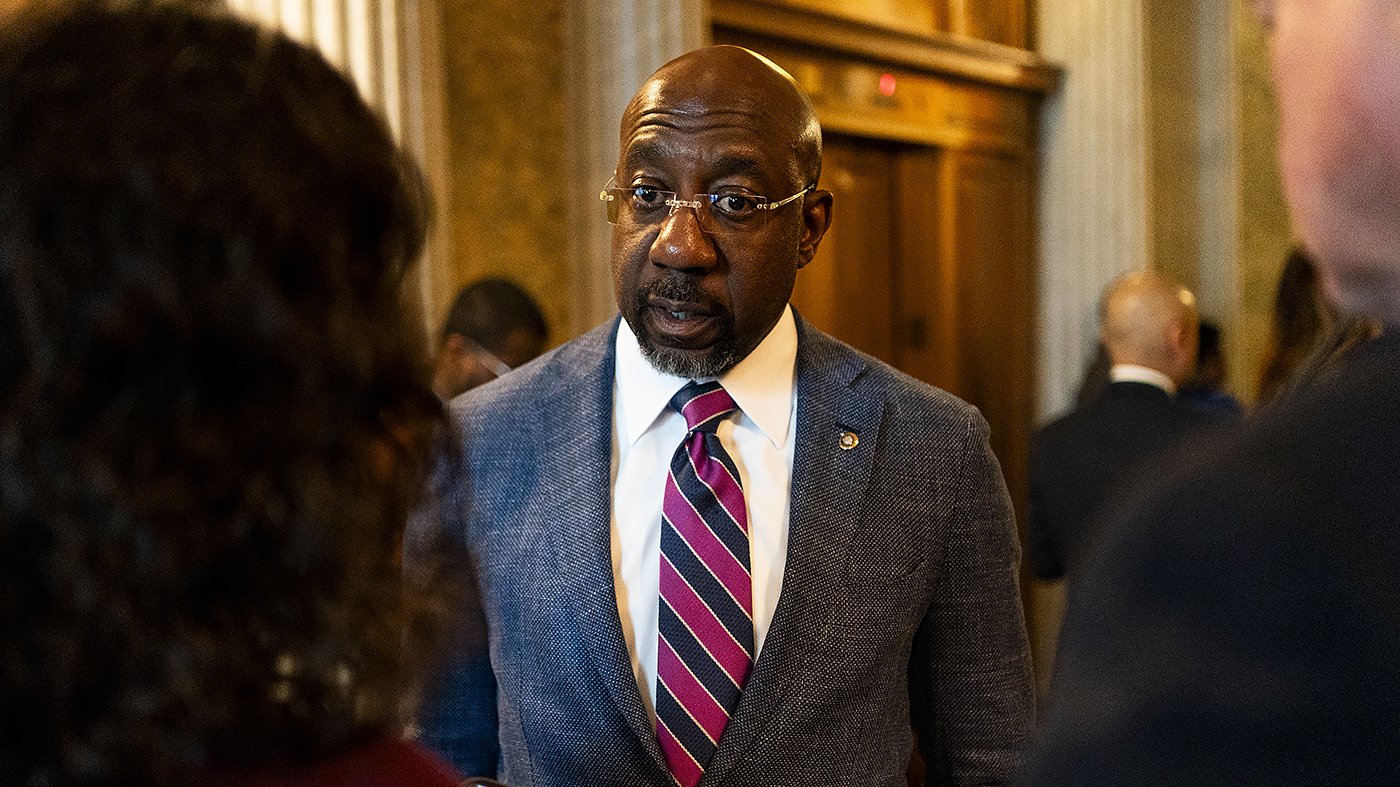
Senator Raphael Warnock, a Georgia Democrat and Baptist pastor, took aim at Vice President Vance on Sunday for his recent remarks about Pope Leo XIV, warning against the weaponization of religion in politics. Appearing on CNN's State of the Union, Warnock said he welcomed Vance's personal religious journey as detailed in his new book, but drew a sharp line at the vice president's critique of the pontiff.
“I take his Christian confession at his word. I don’t question that,” Warnock told host Jake Tapper. But he quickly pivoted to express concern over Vance’s suggestion that the pope should “be careful” when weighing in on theological matters earlier this year. The pope, the first American-born pontiff, has openly challenged the Trump administration’s mass deportation policies and the U.S.-Israeli military campaign against Iran.
“The pope, in the light of this illegal war of choice in Iran, began to talk about peace. And I couldn’t but chuckle a bit to hear… this new convert say that the pope needs to be careful when he’s talking about theology, that I guess he ought to stay in his lane,” Warnock said, directly referencing Vance’s conversion to Catholicism.
The senator’s critique comes amid a broader debate over the role of faith in governance. Defense Secretary Pete Hegseth earlier invoked scripture to justify strikes against Tehran, telling CBS News in March that the U.S. is “fighting religious fanatics” in Iran. “I’m a man of faith who encourages our troops to lean into their faith, rely on God,” Hegseth said. “There’s no atheists in foxholes.”
Warnock also pointed to a recent episode on Capitol Hill, where House Speaker Mike Johnson and other Republicans gathered in prayer before passing the One Big Beautiful Bill Act last summer. That sweeping tax and spending bill, according to the Congressional Budget Office, would cut eligibility for Medicaid and the Supplemental Nutrition Assistance Program, potentially stripping millions of Americans of health coverage and food assistance.
“After they prayed, they cut a trillion dollars out of Medicaid,” Warnock said. “They cut SNAP and kicked people off of their health care. And so I just want to know, what… were they praying about?”
The remarks underscore a growing partisan divide over the intersection of faith and policy. Warnock, who has often blended his pastoral role with his Senate duties, framed the issue in stark terms. “And so I just worry that sometimes… religion becomes one more tool in the ideological toolbox,” he said. “My faith is not a weapon. It is a bridge.”
Vance, who has been a vocal supporter of the administration’s hardline stance on immigration and foreign policy, has faced scrutiny for his comments on the pope, which some religious leaders see as an attempt to politicize the Catholic Church. The vice president’s book, Communion: Finding My Way Back to Faith, details his return to Christianity after a period of skepticism, but critics argue his public posture risks alienating believers who see the church as a moral counterweight to state power.
As the 2026 midterm elections loom, the clash between Warnock and Vance highlights how faith is becoming a central battleground in American politics, with both sides accusing the other of exploiting religion for partisan gain. For now, Warnock’s message is clear: faith should unite, not divide.