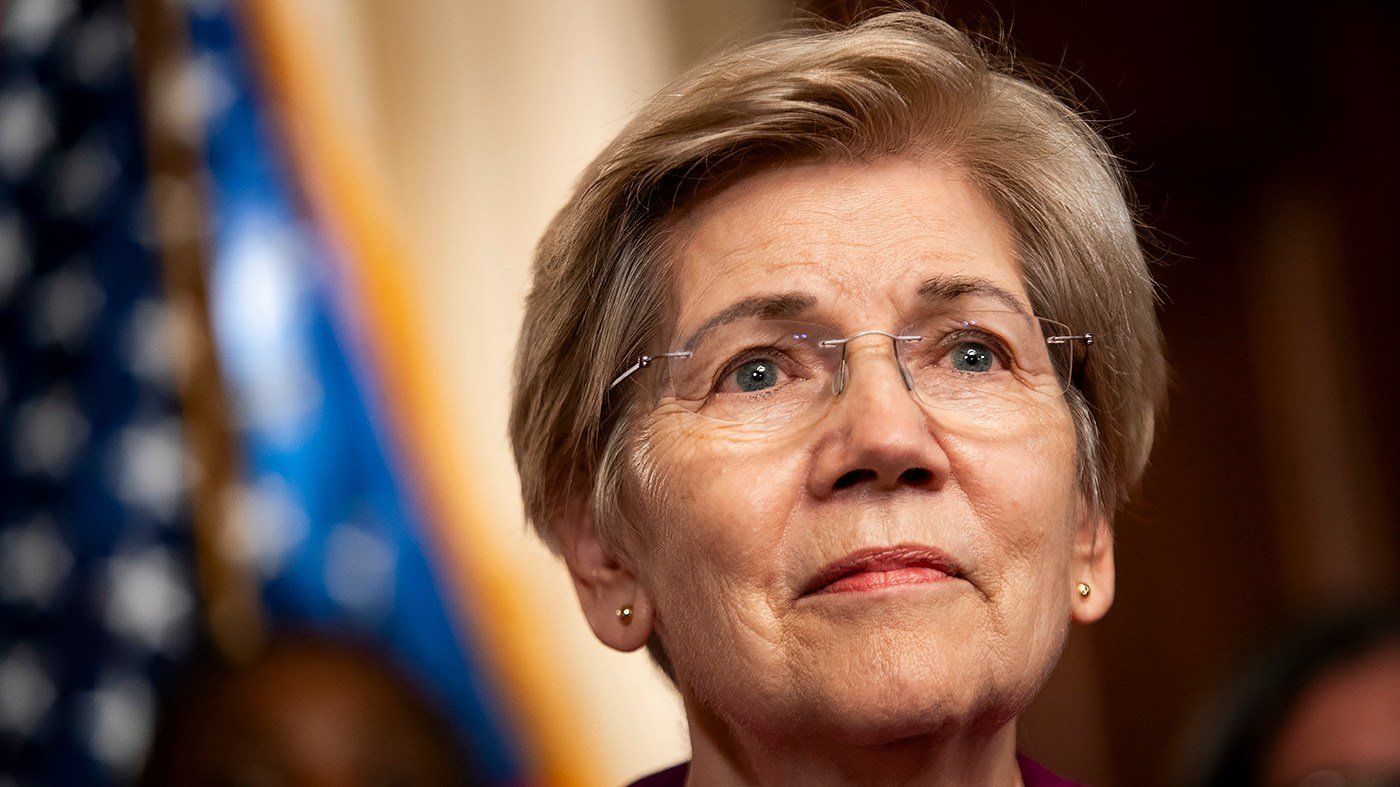
Sen. Elizabeth Warren (D-Mass.) is pressing the Justice Department to open a criminal investigation into Bank of America over its anti-money laundering (AML) compliance failures, arguing that a record $1.21 billion civil penalty from the Treasury Department is insufficient to deter future misconduct.
In a letter sent Thursday to Attorney General Todd Blanche, Warren, the ranking member of the Senate Banking Committee, called the Treasury fine a “slap on the wrist” and demanded that the DOJ determine whether criminal charges are warranted against the bank or its executives.
“I ask the Department of Justice to conduct a full criminal investigation and, if the facts warrant, prosecute the bank and its executives for their failures to follow the law,” Warren wrote.
The Treasury’s Financial Crimes Enforcement Network (FinCEN) imposed the $1.21 billion penalty earlier this month—the third-largest in the agency’s history—after finding that Bank of America failed to “mitigate and report priority national security risks.” The Office of the Comptroller of the Currency (OCC) separately assessed a $750 million civil penalty, describing the bank’s AML program as “ineffective.”
Warren’s letter highlights that Bank of America acknowledged the violations, which she said allowed “illicit actors to move billions through the financial system.” She noted that the OCC had already warned the bank in 2024 about its compliance shortcomings, calling the conduct “particularly egregious.”
The senator has set a Nov. 12 deadline for Blanche to clarify whether the DOJ has conducted or plans to conduct a criminal probe, and whether the department will coordinate with FinCEN to ensure the bank complies with the agency’s order. The Hill has reached out to the DOJ for comment.
The Trump administration, in announcing the fine, said Bank of America “failed to timely report” more than $5 billion in suspicious transactions—roughly $1 billion of which were tied to Chinese money laundering networks and cartels operating along the southern border.
Warren argued that civil fines have become merely “the cost of doing business on Wall Street” and are not enough to deter large financial institutions from repeated lawbreaking. “The type of penalties imposed by FinCEN and the OCC are not an adequate deterrent nor eliminate the profit incentives for repeated lawbreaking by large financial institutions,” she added.
The push comes as lawmakers on both sides of the aisle scrutinize banking oversight, and as early voting surges in key states ahead of the midterms. Warren’s call also aligns with broader Democratic efforts to hold financial executives accountable, a theme that has resonated with voters reporting worsening personal finances.
While the DOJ has not yet responded, Warren’s letter signals that congressional pressure on financial regulators and the banking industry is unlikely to subside, especially as Democratic leaders campaign on economic fairness.