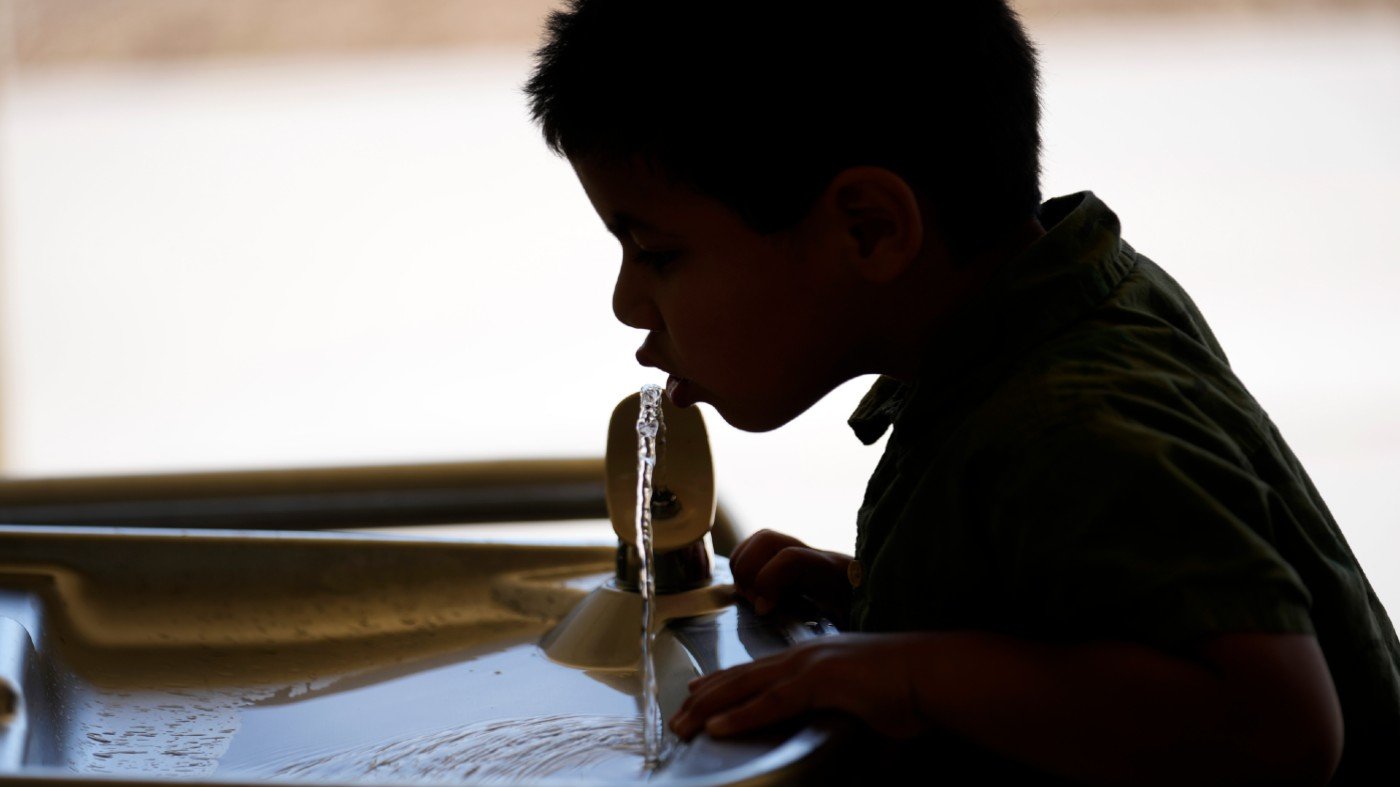
For the past year, the affordability crisis has dominated political discourse, with candidates across the spectrum hammering the rising costs of housing, groceries, healthcare, and energy. But a lesser-known affordability crunch is quietly hitting an even more fundamental necessity: water.
A survey commissioned by the American Water Works Association and other water infrastructure groups found that over 25 percent of Americans now say their water services are unaffordable—the highest level in a decade of polling. The findings, detailed in a new report from the association, confirm that the cost of drinking water is climbing and is set to accelerate without action.

Costs Rising Faster Than Incomes
Communities across the U.S. currently spend about $33.6 billion annually on drinking water capital expenses, but the report estimates they need $90.2 billion per year over the next quarter-century to meet projected needs. Labor, materials, and broader inflation are driving up operational costs, while federal and state mandates—especially for replacing lead pipes and removing so-called “forever chemicals”—are further straining utility budgets.
Utilities are also investing in resilience against natural disasters, hardening cybersecurity, and treating more complex water sources. The most direct way to cover these rising costs is to raise rates, which hits low-income households hardest. The report uses a benchmark of water costs not exceeding 2.5 percent of household income; by that measure, roughly 10.2 million U.S. households—7.8 percent—are already “water burdened.”
As Democrats target the affordability crisis with local policy wins ahead of midterms, the water issue remains a potent but under-discussed vulnerability.
Federal Solutions Exist
The report points to proven federal loan programs that can help. Congress, as it crafts appropriations for fiscal 2027, can reauthorize and fully fund the Drinking Water State Revolving Fund, the Clean Water State Revolving Fund, and the Water Infrastructure Finance and Innovation Act. These programs provide low-interest loans that accelerate infrastructure investment and hold down consumer costs.
Another key tool is restarting the Low-Income Household Water Assistance Program, which expired in 2024. Legislation has been introduced to revive it. “Water affordability is at a tipping point,” said Heather Collins, president of the American Water Works Association and chief of Water Treatment Operations for the Metropolitan Water District of Southern California. “Continued federal assistance through proven loan programs is critical.”
The broader political context adds urgency. Trump’s push for voter ID law risks the GOP’s midterm message on affordability, while some Republicans have mocked affordability concerns, highlighting the partisan divide on economic relief.
What Congress Can Do Now
Collins emphasized that in the context of the overall federal budget, the investment needed is relatively small. “This relatively small investment—which balances federal assistance and local responsibility—can have life-changing results for millions of Americans,” she said. “Congress now has a chance to make it happen.”
Without action, the report warns, water costs will continue to rise sharply, forcing more families into impossible tradeoffs. The choice, Collins argued, is one no American should have to make.