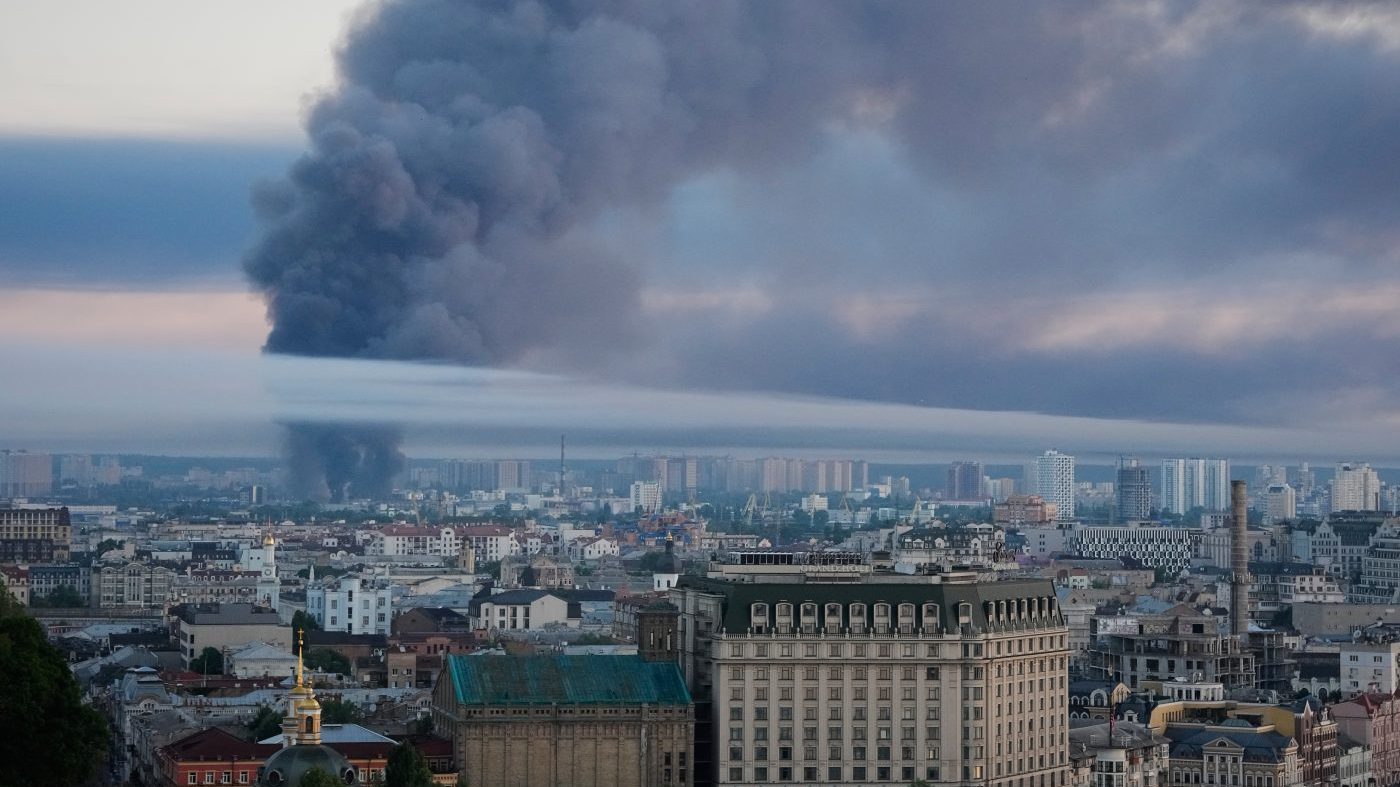
Russia unleashed a heavy barrage of drones and missiles on Kyiv overnight Thursday, killing at least 18 civilians and wounding more than 90 others, according to Kyiv Mayor Vitali Klitschko. The assault, which local officials described as one of the most intense in recent months, came just hours after Ukrainian President Volodymyr Zelensky publicly warned that Moscow was preparing a massive strike.
Zelensky took to social media platform X to sound the alarm, writing, “We know that Putin has been preparing a massive strike against Ukraine for some time. That is exactly the threat we are facing tonight. Russia’s head is completely refusing to end the war.” His warning followed a Ukrainian drone attack on a major communications hub in Moscow, which the Kremlin said injured three civilians and killed a six-month-old infant. Kremlin spokesperson Dmitry Peskov condemned the Ukrainian operation, calling it a deliberate escalation.
Russia’s Defense Ministry framed its assault on Kyiv as retaliation for Ukrainian strikes on Russian civilian infrastructure. In recent weeks, Ukraine has intensified attacks on Russian oil refineries, a strategy aimed at pressuring President Vladimir Putin to negotiate an end to the conflict. The tit-for-tat escalation underscores the deepening cycle of violence as diplomatic efforts remain stalled.
According to Zelensky, Russian forces launched more than 70 missiles—nearly half of them ballistic—and close to 500 attack drones. Ukrainian air defenders managed to intercept a “significant number” of incoming threats, but not enough to prevent casualties and damage. The president noted that first responders were still clearing rubble and searching for survivors as of Thursday evening, calling the response “ongoing.”
The attack has renewed Zelensky’s urgent plea for advanced air defense systems. Specifically, he called on the United States and other allies to provide anti-ballistic missiles capable of countering the high-speed weapons that evade traditional defenses. “These are the kinds of steps that can stop this war and prevent attacks like this,” he said, thanking nations that continue to support Ukraine’s efforts to protect civilian lives.
In a related development, Ukrainian Defense Minister Mykhailo Fedorov announced Wednesday that Kyiv had signed a contract for hundreds of PAC-2 and PAC-3 interceptor missiles, with Germany’s backing. The deal, reported by the Ukrainian National News Agency, marks a tangible step toward bolstering Ukraine’s air defense umbrella. Zelensky also expressed hope that the Trump administration would permit Ukraine to manufacture Patriot missiles domestically, a move he argued could significantly shift the battlefield calculus.
The latest assault on Kyiv comes amid broader geopolitical tensions. The Kremlin’s justification—that it is targeting infrastructure used for military purposes—has drawn skepticism from Western officials, who note the high civilian toll. Meanwhile, Ukraine’s strategy of hitting Russian energy assets reflects a calculated effort to degrade Moscow’s war economy, even as it risks provoking harsher reprisals.
For Kyiv’s residents, Thursday’s attack was a grim reminder of the war’s relentless toll. As recovery operations continue, the international community watches closely. Zelensky’s appeal for more robust air defenses—including the potential for domestic production—highlights the urgent need for sustained military aid. Without it, he warned, similar strikes will remain a recurring threat.
Parallel developments, such as the recent Supreme Court decision to review AR-15 bans, underscore the complex interplay of domestic and international security debates. But for Ukraine, the immediate focus remains on survival and deterrence. As one Kyiv official put it, “Every missile intercepted is a life saved—but we need the tools to stop them all.”