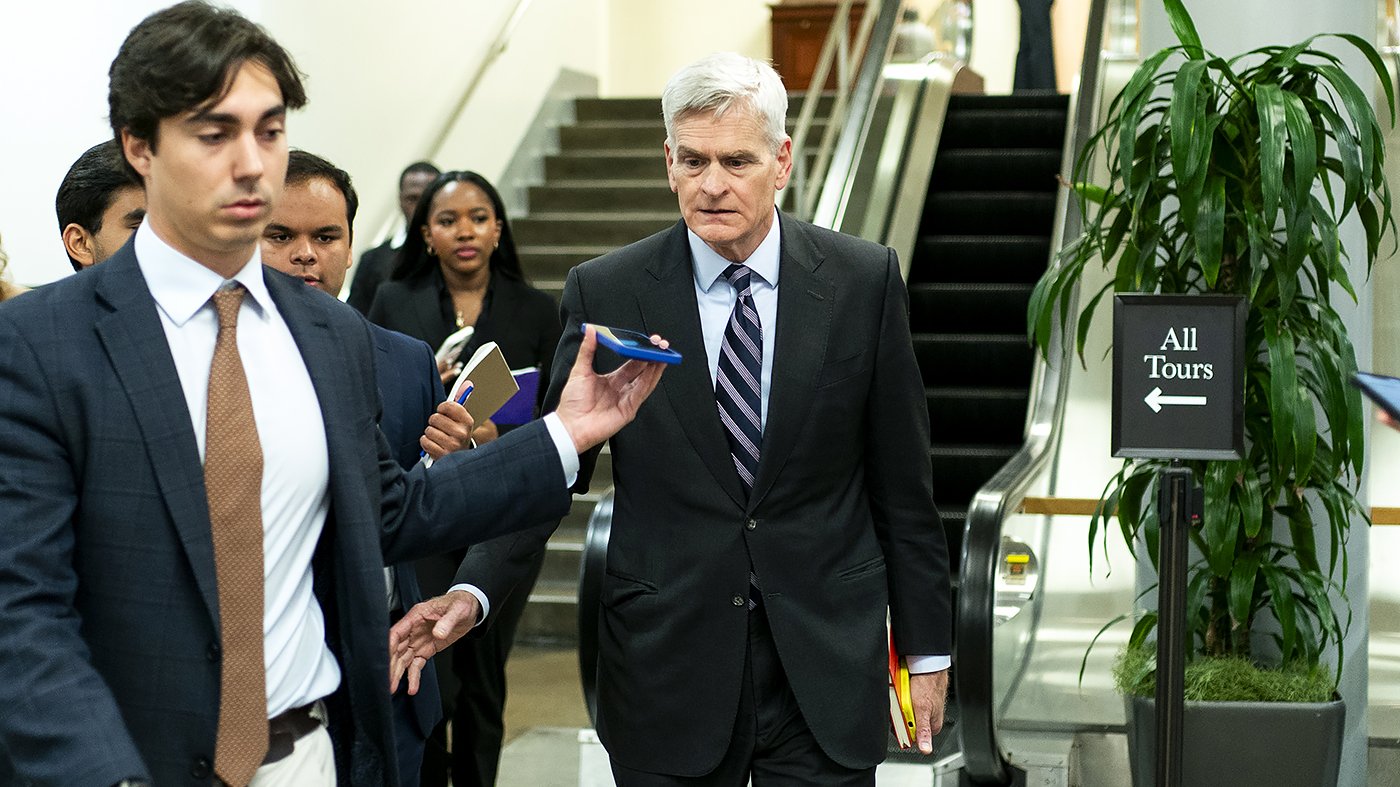
Senator Bill Cassidy (R-LA) received a detailed briefing on the Iran conflict from Vice President JD Vance and Special Envoy Steve Witkoff at the White House Wednesday afternoon. The meeting came hours after the Louisiana Republican engaged in a fiery exchange with President Trump during a closed-door session on Capitol Hill.
Cassidy, who voted with three other GOP senators in favor of a House-passed war powers resolution demanding the withdrawal of U.S. forces from Iran, had publicly accused Trump of withholding critical information from both Congress and the American public. The White House quickly arranged the briefing in an apparent effort to smooth over the escalating tensions.
“I want to thank Vice President Vance and Special Envoy Witkoff for the thorough briefing this afternoon on Iran. I appreciate the quick invitation to the White House to address many of my concerns,” Cassidy said in a statement posted on X.
The earlier meeting on Capitol Hill turned confrontational when Trump expressed fury over the four Republican senators who broke ranks to support the war powers measure. Alongside Cassidy, Senators Susan Collins (R-ME), Lisa Murkowski (R-AK), and Rand Paul (R-KY) voted for the resolution, which directly challenged the president's authority to conduct military operations against Iran.
Trump's anger was palpable, sources said, as he berated the group for what he viewed as a betrayal of party unity on a national security issue. The president has repeatedly accused critics of undermining his administration's stance toward Tehran.
The war powers resolution, which passed the House with bipartisan support, reflects growing unease among lawmakers from both parties about the trajectory of U.S. policy in the Middle East. Critics argue that Trump's approach risks dragging the country into another protracted conflict without clear congressional authorization.
Cassidy's decision to vote for the measure placed him at odds with the White House and many of his Republican colleagues. The senator has long positioned himself as a pragmatist willing to buck party leadership when he believes it serves the national interest.
The White House briefing appeared designed to bring Cassidy back into the fold, at least on the Iran issue. It remains unclear whether the session succeeded in changing his stance or merely provided him with additional information to share with constituents.
This episode is the latest in a series of clashes between Trump and Cassidy over policy and process. The two have sparred repeatedly, most notably over healthcare and fiscal matters, with Cassidy often emerging as a foil to the president's more aggressive tactics.
The broader context includes resistance from GOP fiscal conservatives to Trump's $1.5 trillion defense and Iran war funding push, highlighting the deep divisions within the party on both spending and foreign policy. The war powers vote has become a flashpoint for those who believe Congress must reclaim its constitutional role in authorizing military action.
As the administration continues to press for a hardline stance on Iran, the Cassidy episode underscores the challenges Trump faces in maintaining unity among Senate Republicans, even on matters of national security.