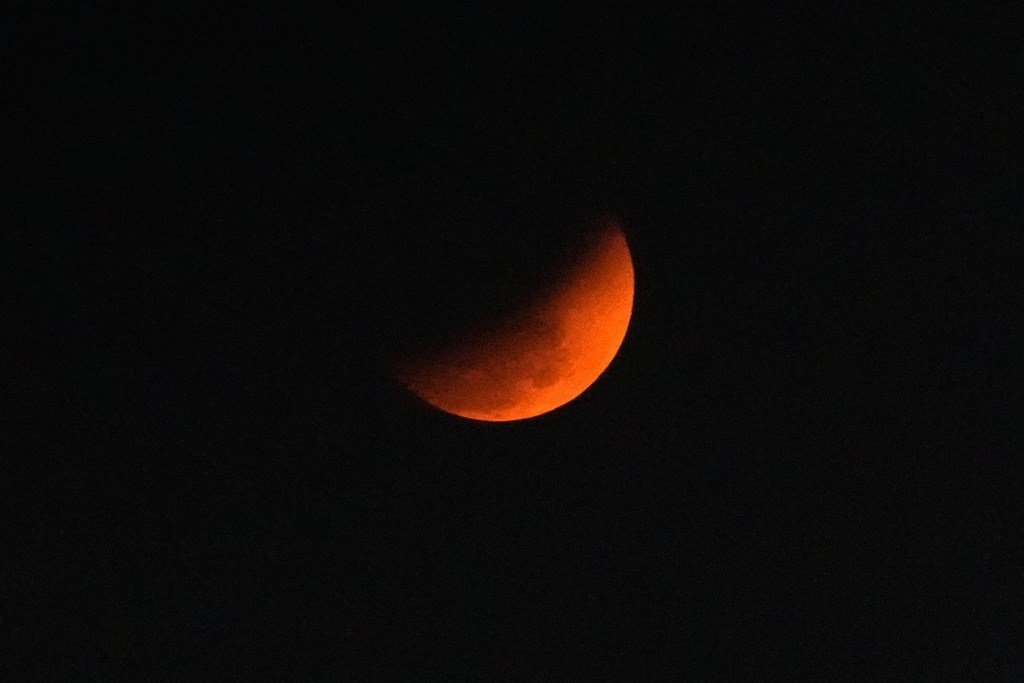
This week's total lunar eclipse, popularly known as a blood moon, will be visible across the entire United States, but the quality of the view will vary significantly depending on where you are. While the eclipse's viewing zone covers all of North America, time zones and geography will play a major role in how well you can see the moon turn a reddish hue.
The eclipse begins Thursday night and continues into early Friday morning, as the moon passes through Earth's shadow. The red, coppery tint that gives the event its nickname is the result of sunlight filtering through Earth's atmosphere and bending around the planet, a phenomenon often called a total lunar eclipse.

East Coast vs. West Coast Viewing
According to Nexstar chief meteorologist Brian James, most of the U.S. will see the eclipse, but the experience will differ dramatically. "Most of the U.S. is going to see the eclipse, but once you get west of the continental divide, that's where you're starting to see the eclipse take place at moonrise," James explained. That means viewers in the Mountain and Pacific time zones will have to contend with the moon low on the horizon, making the eclipse harder to spot.
For example, on the West Coast, the eclipse reaches its maximum at 9:12 p.m. Pacific Daylight Time on Thursday, just after sunset. At that point, the moon will be very low in the sky. "So it's going to be occurring right as the moon is coming up over the horizon," said James. "That's going to make it a little bit more difficult to see, but there will still be at least a little chance to see as it's getting toward the tail end of the eclipse."
Prime Viewing Times by Time Zone
For those in the Eastern and Central time zones, the moon will be much higher in the sky, offering a clearer view. The eclipse reaches its maximum at the following times in the continental U.S.:
- Eastern Daylight Time: 12:12 a.m. on Friday, Aug. 28
- Central Daylight Time: 11:12 p.m. on Thursday, Aug. 27
- Mountain Daylight Time: 10:12 p.m. on Thursday, Aug. 27
- Pacific Daylight Time: 9:12 p.m. on Thursday, Aug. 27
The higher the moon is in the sky, the easier it will be to see, so the East Coast is clearly the best spot in the continental U.S. for this event.
Alaska and Hawaii Face Additional Challenges
Viewers in Alaska and Hawaii may have an even tougher time, as the eclipse will reach its maximum before the sun has fully set in those regions. However, they can still catch the tail end of the eclipse after darkness falls.
Potential Obstacles and Safety Tips
Aside from time zone issues, cloud cover and wildfire smoke could obscure the view for many. Forecasters advise checking local conditions before heading out.
Unlike a solar eclipse, no special glasses are needed to view a lunar eclipse. You can safely watch the blood moon with the naked eye or binoculars. This event is a rare opportunity for skywatchers, and NASA has also been tracking lunar impacts from space debris, such as the crater left by a SpaceX rocket.