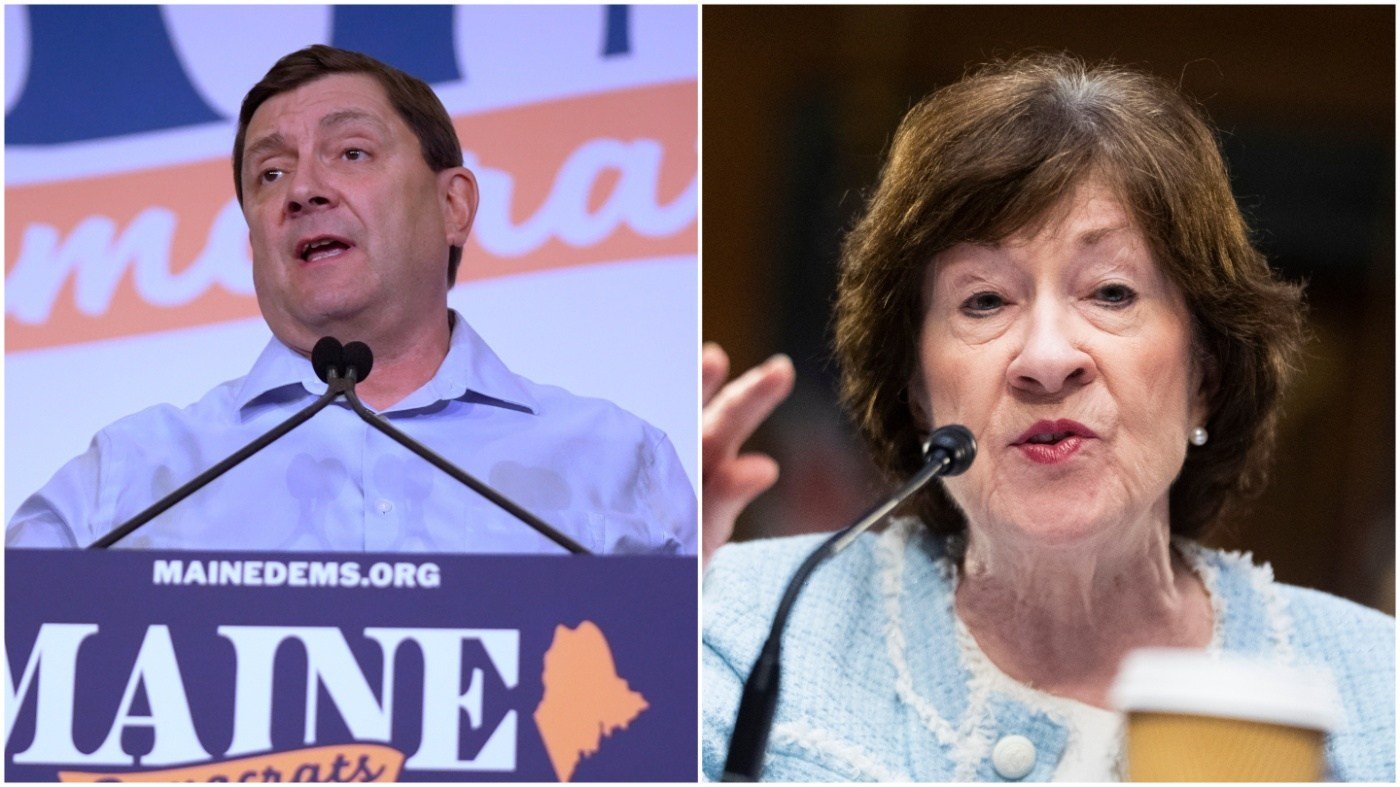
Colorado became the latest battleground in the Democratic Party's ideological war on Tuesday, as primary voters toppled a veteran congresswoman and a sitting senator, handing victories to candidates running on a more aggressive progressive platform. The results have reignited a fierce debate within the party about whether a leftward lurch is a winning strategy or a recipe for general election disaster.
In Denver's 1st Congressional District, 29-year-old Democratic Socialists of America (DSA) member Melat Kiros defeated nine-term Representative Diana DeGette. DeGette, a reliable progressive vote on abortion rights and environmental issues, was undone largely by her stance on Israel. Kiros had previously lost a job over social media posts that framed Palestinian armed resistance as a symptom of colonialism and accused Israel of weaponizing antisemitism. The contest echoed last week's New York primary, where former DSA member Brad Lander unseated Representative Dan Goldman, another Israel-friendly Democrat.
Simultaneously, state Attorney General Phil Weiser defeated Senator Michael Bennet in the gubernatorial primary. Weiser, while not a socialist, campaigned on a promise to take a more confrontational approach to President Trump, tapping into voter frustration with what many see as Democratic timidity in Washington.
Trump, who has seized on the left's gains, used a Wednesday speech in North Dakota to warn against what he called a communist takeover of the Democratic Party. 'We're not going to let the communists get in our way,' he said, echoing earlier remarks in which he claimed that self-described democratic socialists are really communists. This line of attack has been amplified by allies, including Homeland Security Secretary Markwayne Mullin, who on Wednesday described the party as now belonging to 'Bernie Sanders, who openly claims to be a socialist communist.' Sanders is a democratic socialist, not a communist, and is not a formal member of the Democratic Party.
The intraparty schism was on full display following the results. Centrist Democrats worry that candidates like Kiros will alienate moderate voters needed to win swing districts. Will Marshall, president of the center-left Progressive Policy Institute, argued that Kiros's win reflects an anti-incumbent mood more than a socialist wave, noting that 58 percent of Americans view the party as too liberal. 'The working-class voters the party needs lean moderate to conservative on immigration, crime, and cultural issues,' he said.
Leftist groups, however, see Tuesday as validation of a strategy that prioritizes confronting corporate power, ending foreign wars, and opposing Israel's Gaza campaign. Alexandra Rojas, executive director of Justice Democrats, celebrated Kiros's victory as proof that primary voters want leaders who will 'bring the fight to the corporations raising our prices, the war lobbies profiting off endless war and genocide, and the immigration gestapo terrorizing our communities.' The group has been instrumental in organizing recent insurgent wins.
DeGette, in a concession video, framed her defeat as a symptom of a toxic political climate that no longer rewards bipartisan legislating. 'Sadly in our toxic political climate, there seems to be little room for that type of politician anymore,' she said.
The Colorado results come amid a broader push by the Trump administration on multiple fronts, including invoking emergency powers to prevent a grid collapse during a heatwave and approving 'forever chemical' pesticides over health objections. Meanwhile, Kiros has pledged to refuse corporate PAC money, a stance that further distinguishes her from the party establishment.
As the primary season continues, the Democratic Party faces an unresolved question: whether the energy driving its left flank is a path to power or a detour into electoral wilderness.