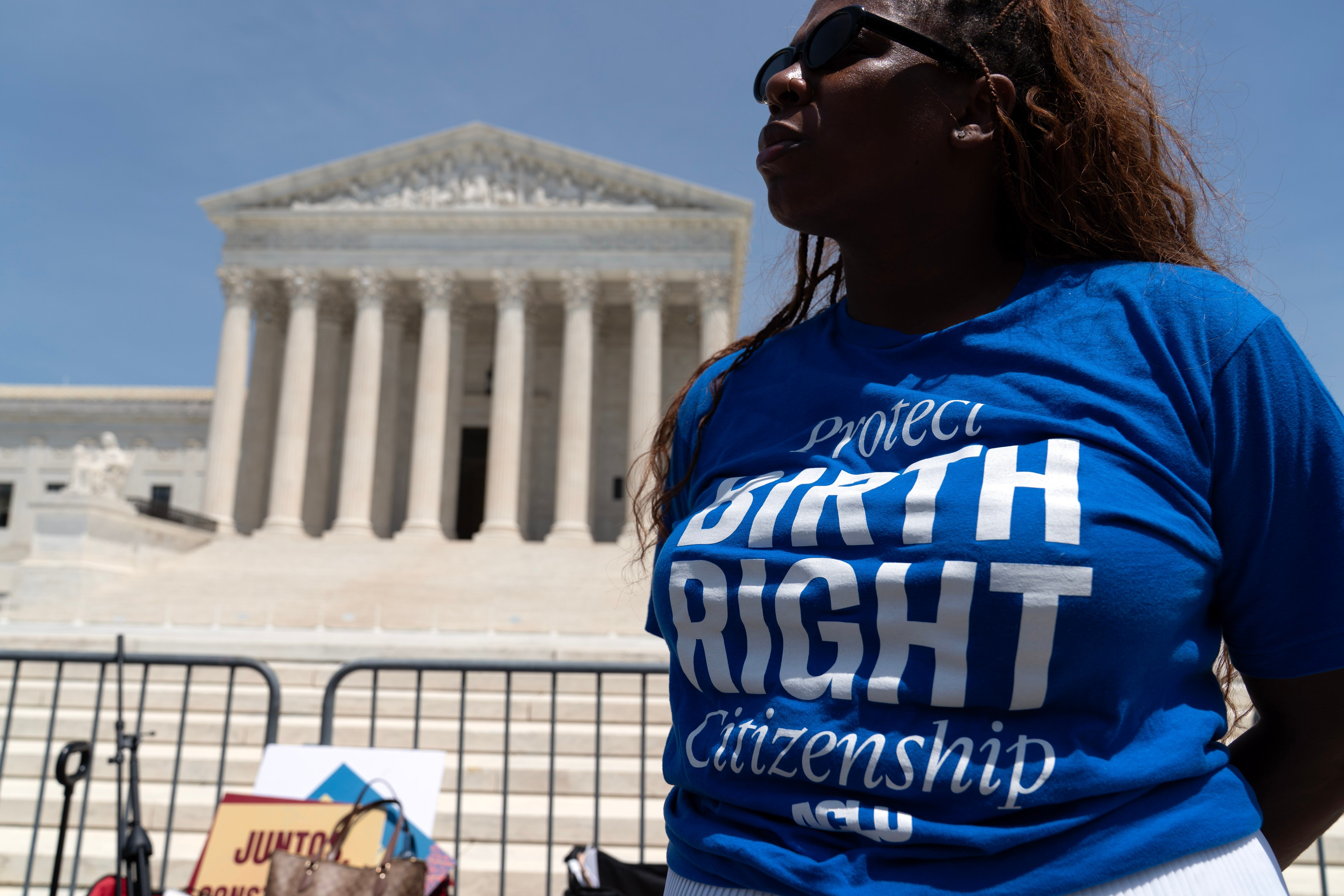
The Supreme Court this week delivered a decisive ruling in Trump v. Barbara, affirming that the 14th Amendment grants citizenship to virtually every child born on American soil—including those whose parents are in the country illegally or on temporary visas. The decision effectively blocks President Trump's January 2025 executive order that sought to narrow the interpretation of birthright citizenship, a move that had sparked immediate legal challenges.
Nearly one in 11 U.S. births in 2023 were to mothers who were either undocumented or present on temporary legal status, according to available data. Under the principle known as jus soli—Latin for "right of the soil"—those infants automatically became U.S. citizens. The United States is among only 33 of the world's 191 countries that grant birthright citizenship, a fact that has fueled ongoing debate about its relevance in modern immigration policy.
The court's ruling was rooted in constitutional text, historical precedent, and the debates surrounding the Reconstruction-era amendments. The justices noted that the 14th Amendment's language—"All persons born or naturalized in the United States and subject to the jurisdiction thereof"—contains no exceptions for parental immigration status. Words like "mother," "father," "lawful," and "temporary," which appeared frequently in Trump's executive order, are absent from the amendment "for a simple reason: they did not matter," the court observed.
Birthright citizenship has a long lineage in Anglo-American law. Before the American Revolution, English common law held that anyone born within the king's dominions owed allegiance and was owed protection—even the children of groups like the Romani, who faced expulsion under British law. That tradition crossed the Atlantic with the colonists and remained largely unchallenged until the Supreme Court's infamous 1857 Dred Scott decision, which denied citizenship to enslaved people.
The Civil Rights Act of 1866 restored the common-law rule, declaring that all persons born in the U.S. and not subject to a foreign power were citizens, regardless of race. To cement that principle against constitutional challenges, Congress passed the 14th Amendment, ratified in 1868. The court this week concluded that this history, along with subsequent legal precedent, firmly supports birthright citizenship as the law of the land.
What the court did not do, however, was weigh in on whether birthright citizenship is sound policy. That question remains open, and critics argue the practice may be outdated. John Skrentny, a sociology professor at the University of California-San Diego, has noted that most nations in the Americas adopted jus soli as a nation-building strategy after colonialism—a context that may no longer apply.
Even the United Kingdom abandoned its version of birthright citizenship in 1981, replacing it with a system based on parental status. The British Nationality Act of that year reflected a belief that citizenship should hinge on a genuine connection to the country, not merely the accident of birthplace. Some U.S. lawmakers have pointed to this shift as a model for potential reform, though any legislative change would require a constitutional amendment or a new Supreme Court challenge.
The ruling leaves the political battle over birthright citizenship unresolved. While the court has settled the constitutional question for now, the policy debate—whether the 150-year-old provision still makes sense in an era of mass migration—remains very much alive. For those who see birthright citizenship as a magnet for illegal immigration, the fight is far from over.
In related developments, President Trump's administration has faced other legal setbacks on immigration and domestic policy. A court recently blocked Trump's curbs on student loan forgiveness for public service workers, and the administration's push for the SAVE Act has divided Republicans, risking midterm unity. Meanwhile, the Supreme Court's backing of TPS terminations has drawn warnings from lawmakers like Ocasio-Cortez about rising costs for affected communities.