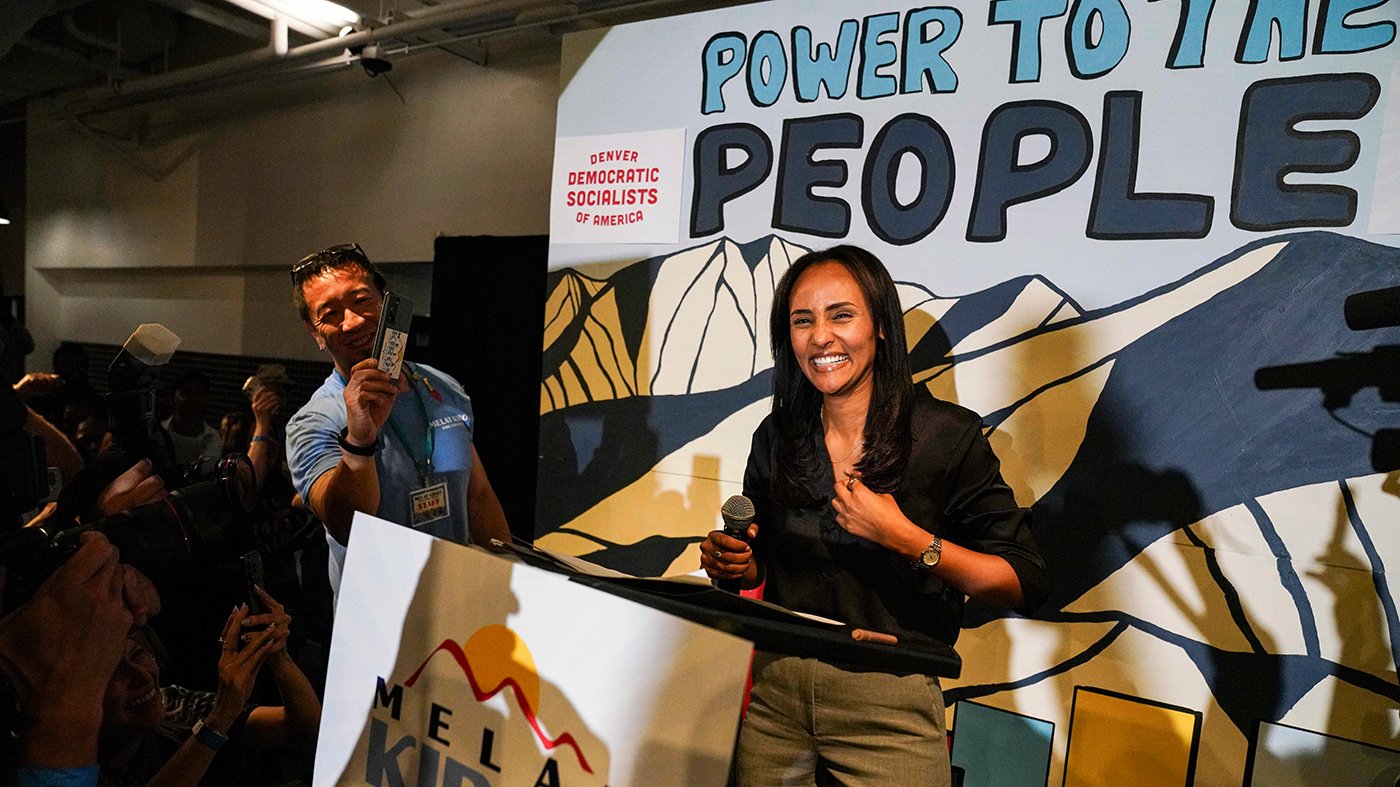
Melat Kiros, the 29-year-old democratic socialist who upset longtime Representative Diana DeGette in Colorado’s 1st Congressional District primary, is drawing a hard line on campaign finance: she will not back any party leader who takes money from corporate PACs.
Speaking to Politico after her Tuesday victory, Kiros called for rooting out corruption and reducing the influence of money in politics. “We have to root out the corruption and get money out of our politics … It’s about political will — and that means we have to vote out any of the incumbents that are standing in our way by taking that kind of corporate PAC money,” she said.
When asked directly whether she would support House Minority Leader Hakeem Jeffries (D-N.Y.) if she wins the general election in November, Kiros was unequivocal. “I’m not supporting anyone for leadership who takes corporate PAC money,” she declared. “I’m dead serious about this issue. We have to start setting a standard now.”
Kiros’s stance aligns with a broader push from the party’s left flank to reshape internal dynamics. In a statement to The Hill the day before the primary, she said she looked forward to discussing the party’s direction with Jeffries but stressed that disentangling from special-interest corporate PAC money is a non-negotiable rule for any leader she supports.
Her primary win follows recent victories by democratic socialist candidates in two New York House races, backed by New York City Mayor Zohran Mamdani. The movement, championed by figures like Senator Bernie Sanders (I-Vt.), has focused on challenging incumbents who accept corporate PAC funds and advocating for working-class interests.
On Wednesday, Sanders congratulated Kiros on what he called an “extraordinary victory.” In a social media post, he wrote, “The tide is turning. Americans are tired of status quo politics. They want representatives in Congress who will stand up to oligarchy and fight for working families.”
The outcome in Colorado adds fuel to ongoing debates within the Democratic Party over leadership and funding. A recent call by Representative Elissa Slotkin for a leadership overhaul after the 2024 losses underscored divisions, while the Congressional Black Caucus has defended Jeffries amid such challenges.
Kiros’s victory also highlights the growing influence of democratic socialism in down-ballot races, with candidates increasingly running on platforms that reject corporate donations. The trend mirrors broader voter frustration with money in politics, a sentiment that has been amplified by recent Supreme Court rulings that have unleashed party spending.
As Kiros prepares for the general election, her pledge sets up a potential conflict with party leadership if she wins. Her insistence on a clean break from corporate PAC money could force difficult conversations about the Democratic Party’s fundraising strategies and its relationship with corporate interests.
For now, Kiros is focused on the November contest, but her message is already reverberating through party ranks. Whether her hardline stance will gain traction among other progressive candidates—or force leadership to adapt—remains an open question.