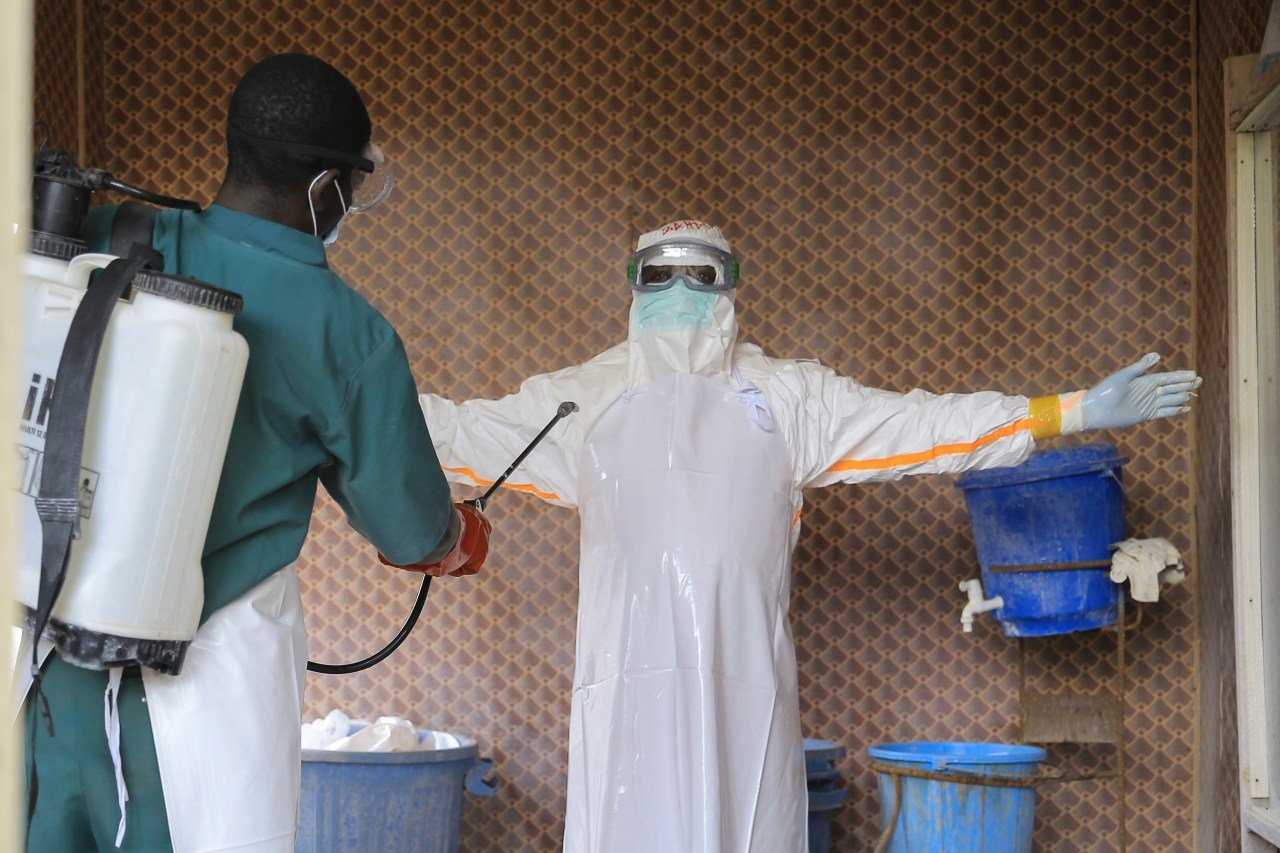
The Democratic Republic of Congo's Ebola outbreak has officially crossed the 10,000 confirmed cases mark, according to government data released Tuesday, underscoring the accelerating pace of a crisis that is now spreading into multiple African nations. The Ministry of Health reported 10,060 confirmed infections, with nearly half of those infected—approximately 4,800 people—having died, making this the deadliest Ebola outbreak in the country's history.
Declared in May, this outbreak is caused by the rare Bundibugyo virus, for which there is no approved vaccine or treatment. Response teams are grappling with an array of obstacles, including armed conflict, poor infrastructure, and violent resistance from communities fueled by deep-seated mistrust and misinformation. These challenges are complicating efforts to encourage early reporting of symptoms and acceptance of care in regions that have already suffered years of instability and repeated epidemics.
Compared to the 2014-2016 West Africa Ebola outbreak—the largest and deadliest on record with over 28,000 cases and 11,000 deaths—this current outbreak has already seen at least three times the number of cases and deaths in the same timeframe since its declaration. It has also spread more widely across the continent than any previous Ebola outbreak, reaching three regions and recording cases in Kenya and Nigeria. Overall, the disease has been detected in five countries, including Uganda and France, though the latter two currently have no active cases.
A recurring concern is the apparent weakness in surveillance, as many initial cases were only confirmed long after symptoms appeared or after individuals had traveled, allowing the virus to slip across borders undetected. To address this, African health ministers are scheduled to hold a virtual summit on Wednesday to strengthen the collective response. "Ebola is crossing borders. Our response must move faster, with stronger coordination, greater solidarity and decisive political leadership," said Dr. Jean Kaseya, head of the Africa CDC.
Despite the grim statistics, there are moments of hope. At least 2,600 patients have recovered in Congo, and a viral video this week showed health workers in protective gear dancing as the last two patients were discharged from a treatment center in Mongbwalu, Ituri province. "The outbreak is far from over, but every life saved is worth celebrating," said WHO Director-General Tedros Adhanom Ghebreyesus.
However, the situation remains precarious. About 80% of new cases are occurring outside of monitored contacts, indicating ongoing chains of transmission that authorities are not aware of. For officials to consider the outbreak largely under control, the Africa CDC says at least 95% of cases should come from known contacts. Additionally, half of all deaths are among people who were never admitted to treatment centers, a sign that many are still not reporting symptoms.
The response is also hampered by operational failures. Last week, in the Nia Nia health zone of Ituri province, Ebola responders went on strike over unpaid bonuses owed since late August—a common issue across affected areas. Health workers continue to face attacks from villagers; on Saturday, a nurse was killed and another severely injured while responding to an alert in Bafwasende, Tshopo province.
The outbreak is taking a heavy toll on Congo's already fragile healthcare system. It has diverted attention from other disease outbreaks like cholera, and maternal mortality has doubled in some provinces as pregnant women avoid hospitals out of fear of infection and isolation. Routine services such as childhood vaccinations have been disrupted, and the crisis has interrupted schooling for millions of children, caused trauma and stigma for affected families, and further strained livelihoods in a region already struggling with hardship.
As the virus continues to spread, the need for a coordinated, well-funded response has never been more urgent. The upcoming summit of African health ministers will be a critical test of the continent's ability to unite against this threat. For now, the outbreak is far from contained, and the world is watching.