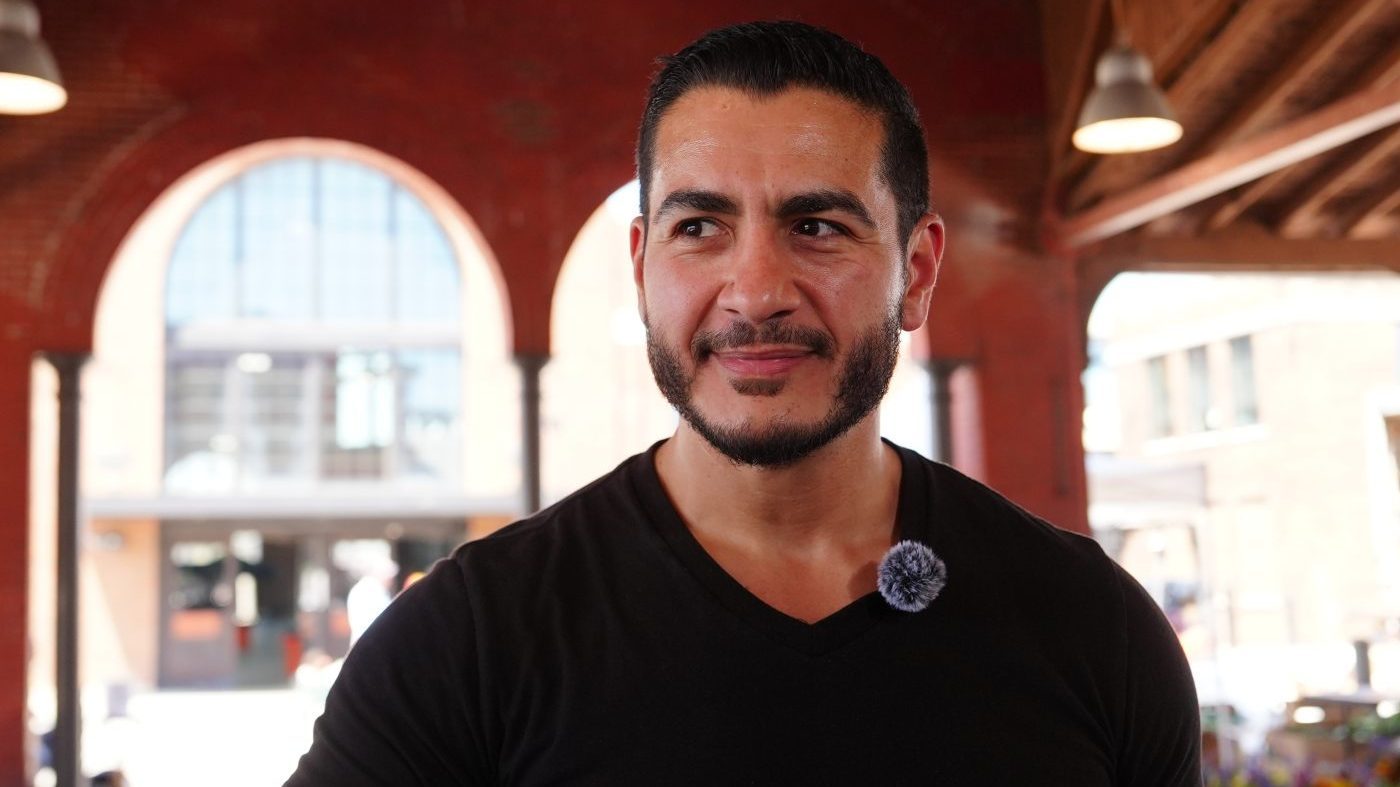
Michigan Democratic Senate candidate Abdul El-Sayed confronted Fox News anchor Bret Baier during a Friday evening interview over persistent accusations linking him to the Muslim Brotherhood, a line of attack his Republican opponent, former Rep. Mike Rogers, has hammered on the campaign trail.
When Baier raised the allegations, El-Sayed immediately interjected, saying, "Let me just stop you right there. You are asking this question to raise a question about whether or not I have dual loyalty." Baier denied the implication and attempted to continue reading from Rogers' campaign materials, but El-Sayed cut him off again, accusing the anchor of taking his words "out of context" and urging him to "be a journalist."
"As a journalist, if you're asking about my allegiance to the constitution, I have never been a member of the Muslim Brotherhood, I never will be a member of the Muslim Brotherhood," El-Sayed said. He added, "I'm interested in serving the United States. I'm interested in swearing an oath to the constitution that every senator has sworn an oath to."
The exchange comes as Rogers, a former FBI agent and congressman, has made the Muslim Brotherhood charge a central theme of his bid for Michigan's open Senate seat. Appearing on Fox News immediately after the interview, Rogers repeated his claim that El-Sayed "has adopted the ideology of the Muslim Brotherhood," despite the Democrat's repeated denials and public disavowal of the group.
El-Sayed, who would be the first Muslim senator if elected, has faced a barrage of attacks related to his faith and family background, including past comments from his mother and half-sister. The controversy traces back to a 2012 open letter El-Sayed signed, along with other academics and activists, urging then-Egyptian President Mohamed Morsi—whose political party was the Muslim Brotherhood's political wing—to "purge the media and police as quickly as possible."
His campaign has consistently rejected any connection to the Muslim Brotherhood, noting that the letter was part of broader advocacy during the Arab Spring. The group has been designated a terrorist organization by several countries, and former President Trump added its Lebanese, Jordanian, and Egyptian chapters to the U.S. terror list.
The clash with Baier is the latest flashpoint in a race that has drawn national attention. Republican attacks on El-Sayed's faith have intensified as the election nears, with Rogers and his allies seeking to cast the Democrat as outside the mainstream.
El-Sayed has sought to turn the tables, framing the accusations as a distraction from kitchen-table issues. In recent appearances, he has emphasized his commitment to protecting Michigan jobs and pushing back on policies he says hurt working families, including concerns over energy prices and trade deals.
Political analysts say the Muslim Brotherhood line of attack may resonate with some voters but risks alienating others, particularly in a state with a significant Arab American population. El-Sayed's campaign has also highlighted support from prominent Democrats, including those who have denounced the attacks as Islamophobic.
The interview aired just days before the final stretch of the campaign, with early voting already underway. Both candidates are expected to make their closing arguments in a high-stakes debate that could shape the race's outcome.