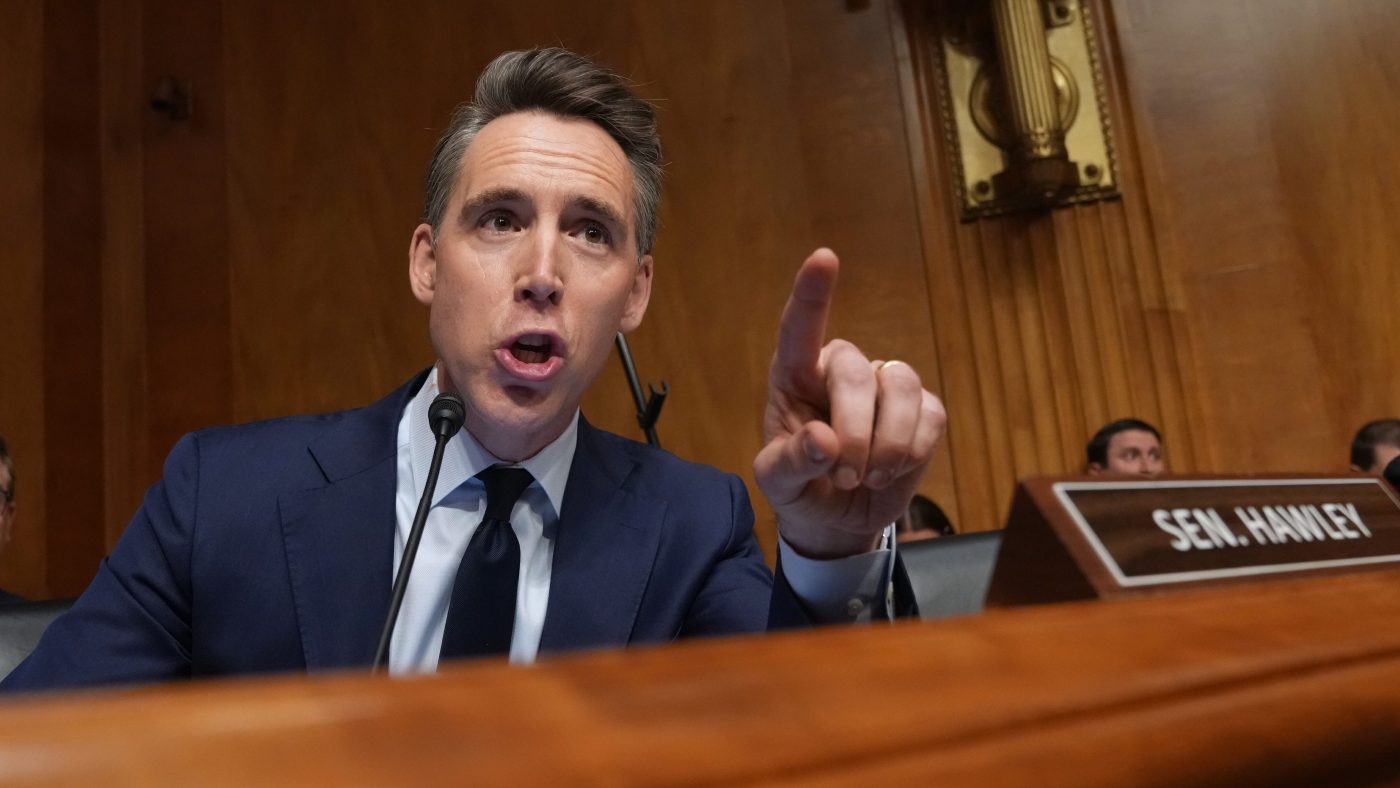
Sen. Josh Hawley (R-Mo.), who chairs the Senate Judiciary Subcommittee on Crime and Counterterrorism, has opened an inquiry into Flock Safety’s expansive surveillance apparatus, pressing the company to disclose exactly who can tap into the personal data it collects from millions of American drivers.
In a letter to Flock CEO Garrett Langley, Hawley described the Atlanta-based firm as having built “an unprecedented national surveillance network” — more than 120,000 cameras spread across 49 states, logging roughly 20 billion vehicle scans each month. The senator stressed that the vast majority of people captured in those records are not suspects in any crime.
“Instead of serving discrete local investigations, as contemplated by our constitutional processes and safeguards, these camera networks harness artificial intelligence to pool what they capture into a national database that customers can search,” Hawley wrote. He added that the lack of guardrails has led to “abuse and misuse of personal data.”
Hawley pointed to several instances where Flock’s technology was exploited or went awry. In St. Charles County, Missouri, police cut ties with Flock after an internal audit revealed a civilian employee had run searches for personal reasons unrelated to law enforcement. In Milwaukee, a police officer was charged with searching his girlfriend’s license plate 124 times and her former boyfriend’s plate 55 times; the misconduct only came to light after the ex-boyfriend checked a website that tracks plate searches.
The senator also highlighted cases where Flock alerts led to wrongful arrests, including a Florida woman who spent 13 days in jail on felony charges after a mistaken identification. “Errors and false positives add insult to injury,” Hawley wrote. He cited a California police department where 71% of Flock alerts were deemed inaccurate, and noted that the Los Angeles Police Department terminated its contract after an audit showed officers had stopped 161 vehicles that were incorrectly flagged as stolen.
Beyond misuse, Hawley raised concerns about the company’s financial incentives. With Flock valued at $8.3 billion, he argued there is “enormous pressure to find new commercial applications” for the data. He has requested all relevant documents and information by September 8.
While acknowledging that law enforcement needs effective tools, Hawley insisted that “Americans do not surrender their privacy rights when they drive to work, drop their kids off at school or go to church.” His probe comes as Flock has faced mounting criticism and privacy lawsuits, and the company has recently adjusted its data policies in response. The inquiry also follows surreal public testimony in San Diego, where a man dressed as Darth Vader defended the cameras.
Hawley’s investigation signals growing bipartisan unease over automated license plate readers and the expansion of mass surveillance, a debate that is likely to intensify as more communities weigh the trade-offs between public safety and civil liberties.