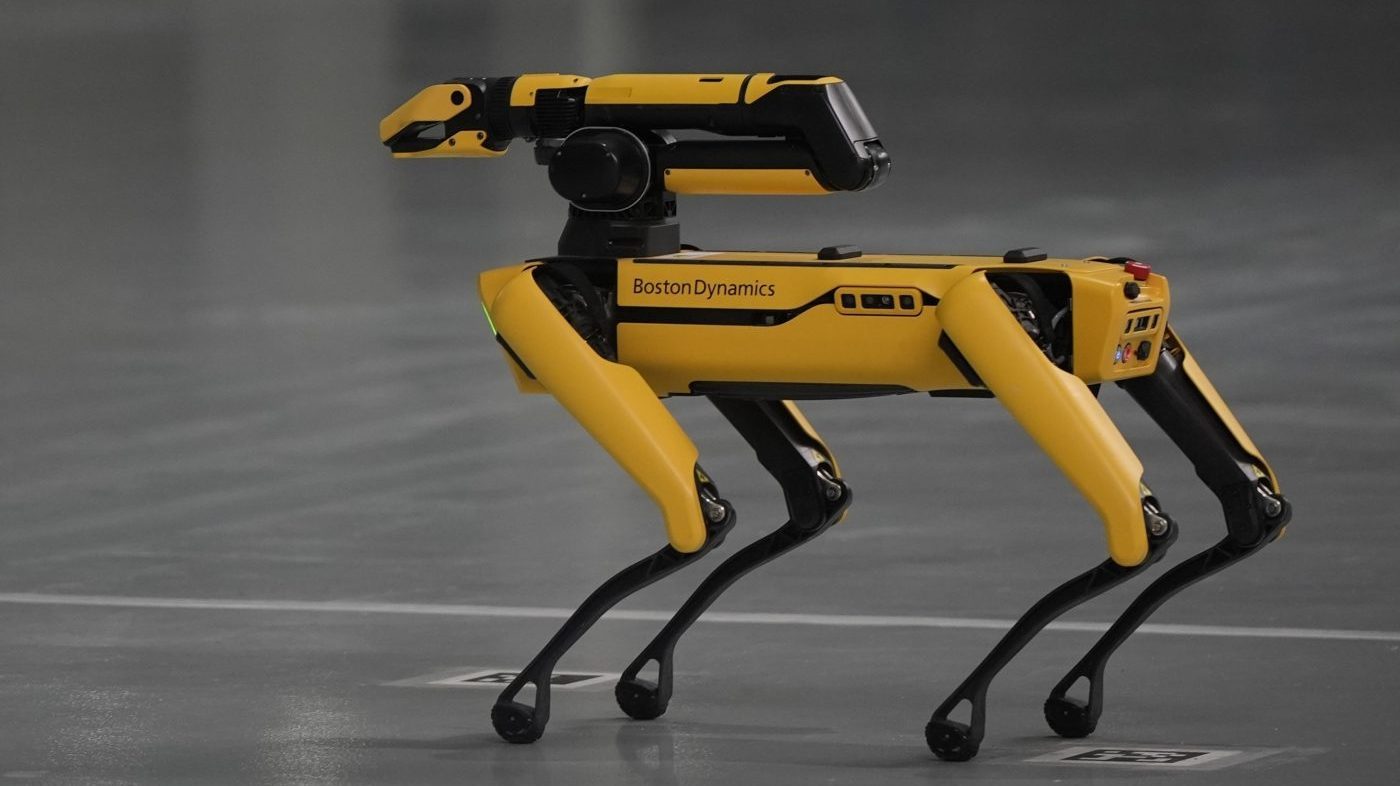
U.S. Immigration and Customs Enforcement (ICE) is preparing to spend up to $2 million on robotic dogs to support field operations, according to a Department of Homeland Security (DHS) procurement notice. The document, posted Thursday to DHS's Acquisition Planning Forecast System, outlines a contract ranging from $1 million to $2 million for Boston Dynamics' “Spot” robots and related gear.
A senior DHS official confirmed the plans to NBC News, emphasizing that the machines will not be involved in making arrests. The agency has not yet responded to requests for comment.

The four-legged robots come equipped with cameras and sensors capable of detecting vibration, gas, and radiation, according to Boston Dynamics. They are already used by police in Los Angeles and New York, and the Secret Service deployed them in 2024 to help secure President Trump’s Mar-a-Lago estate.
The procurement notice says the robots will enable “inspection, situational awareness, and hazard assessment in environments that may pose risks to personnel.” It adds that the capability “helps improve officer safety, supports informed operational decision-making, and enhances DHS’s ability to respond to incidents involving dangerous, confined, unstable, or difficult-to-access areas.”
Boston Dynamics has publicly pledged not to weaponize its robots. In its ethics statement, the company says it “will not authorize nor partner with those who wish to use our robots as weapons or autonomous targeting systems,” and that it will take action if products are misused.
The robot purchase follows ICE’s earlier decision to acquire up to $20 million worth of electric shock gloves for officers, a move that drew sharp criticism. White House border czar Tom Homan defended the gloves as a way to avoid deadly force. But in a Thursday letter, a group of Democratic senators urged ICE acting Director David Venturella to cancel that contract and instead invest in de-escalation training and accountability measures.
The new robot plan also comes amid broader debates over immigration enforcement tactics. The agency has faced scrutiny over its handling of cases, including the deportation of an Army wife to Honduras and the release of a sailor's father from custody after public pressure. Meanwhile, the administration continues to push for faster processing, though legal challenges remain—a topic explored in how Trump could reduce immigration lawsuits without easing enforcement.
ICE has not specified a timeline for deploying the robot dogs, but the funding notice signals the agency is moving forward with the technology. Supporters argue the robots offer a safer alternative for entering hazardous environments, while critics worry about the militarization of immigration enforcement.