Ceasefire Faces Immediate Tests
The Trump administration's declared ceasefire with Iran has encountered significant turbulence within hours of its announcement, casting doubt on the strategic gains of the recent six-week conflict. Initial relief following President Trump's decision to step back from escalated threats gave way to renewed uncertainty as Iranian officials publicly accused the United States of breaching the tentative agreement's terms.
Dispute Over Lebanon's Status
Iranian Parliament Speaker Mohammad Bagher Ghalibaf asserted that Washington violated three conditions of the deal, primarily by explicitly excluding the situation in Lebanon from the ceasefire framework. This came after White House press secretary Karoline Leavitt confirmed to reporters that Lebanon was not part of the agreement, a statement Iranian Foreign Ministry spokesperson Esmaeil Baqaei labeled as "early reneging" by the U.S. The conflict in southern Lebanon, where Israeli operations against Hezbollah have reportedly killed over 1,500 people and displaced more than a million, remains a major flashpoint. Despite this, negotiations scheduled for later this week in Pakistan, to be led by Vice President Vance, are reportedly still proceeding.
Administration officials, including President Trump and Defense Secretary Pete Hegseth, have framed the military campaign as an emphatic victory, highlighting the degradation of Iran's naval and air capabilities. However, the fundamental power disparity between U.S. and Iranian conventional forces was never in question. Analysts had long warned that Iran's strategic advantage lay in asymmetric warfare, a prediction that appears validated by events in the Strait of Hormuz.
Strategic Control of Critical Waterway
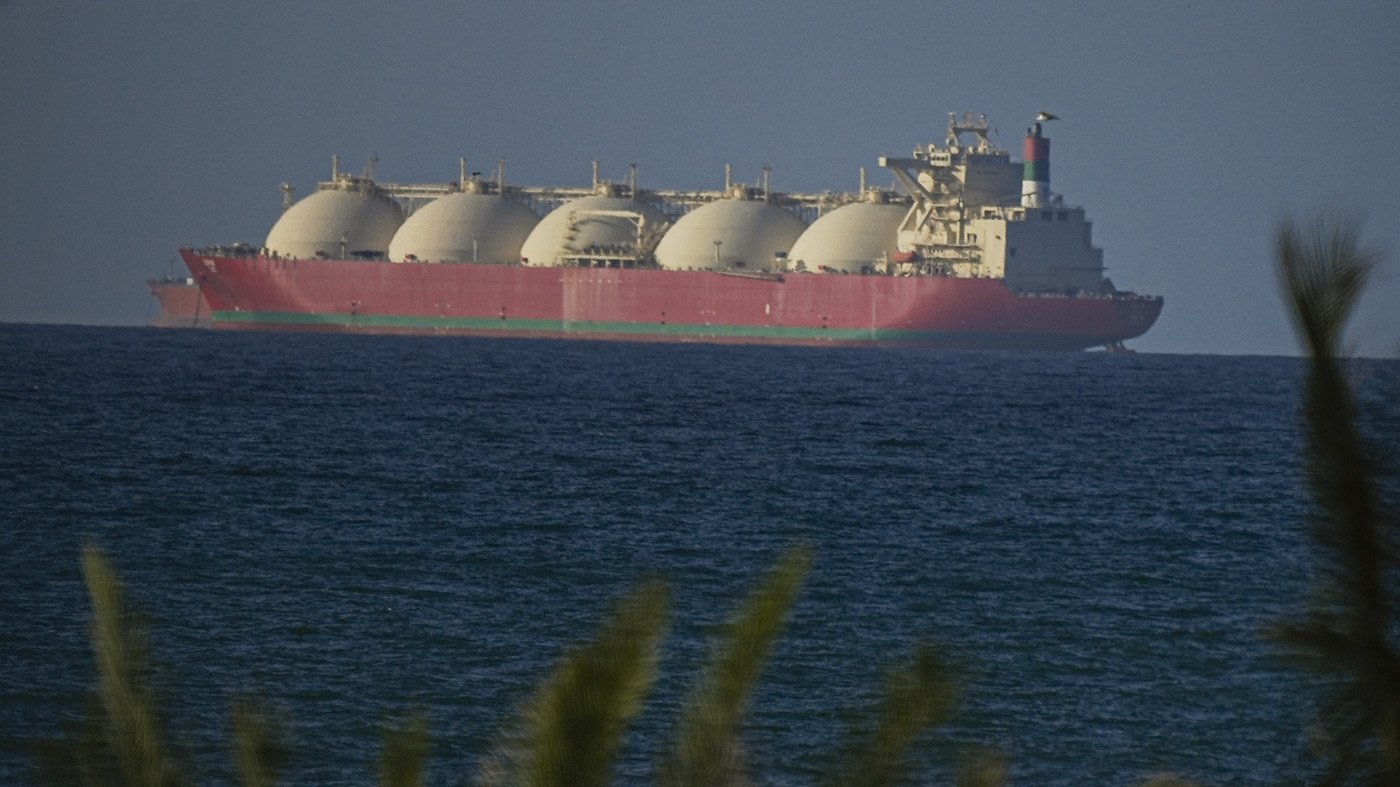
Iran has maintained effective control over the narrow Strait, through which approximately one-fifth of global oil shipments pass. This de facto blockade triggered a spike in oil prices, raised U.S. gasoline costs by roughly a dollar per gallon, and rattled international financial markets. While prices retreated on news of the ceasefire, the U.S. has not displaced Iranian authority over the chokepoint. Trump's ambiguous social media post about "helping with the traffic buildup" and his reported comment to ABC's Jonathan Karl about a potential "joint venture" toll arrangement have fueled concerns that Washington may concede Iran's enduring leverage. As military analysts have warned, Iran retains a commanding strategic position in the waterway.
Leavitt stated that long-term progress depends on the Strait remaining "open with no limitations or delays," language that implicitly acknowledges Iran's continued capacity to impose both. This reality underscores a central critique: that the conflict may have bolstered rather than diminished Tehran's strategic hand regarding global energy flows.
Unresolved Nuclear Ambitions
A core stated U.S. objective was to permanently deny Iran a nuclear weapons capability. Leavitt declared that Iran's plan "to build a nuclear bomb... is no longer going to be allowed." Yet, Iran retains a significant stockpile of highly enriched uranium—reportedly around 970 pounds, according to the International Atomic Energy Agency. Hegseth claimed the material is "buried, and we're watching it," adding the ultimatum that Iran "will either give it to us or we'll take it out." Given Tehran's defiant posture, a voluntary surrender of its nuclear assets appears highly improbable, leaving a critical unresolved issue. This ongoing threat has prompted bipartisan concern in Congress about the durability of any agreement.
The most fundamental outcome, however, may be the survival of the Islamic Republic itself. Predictions that U.S. and Israeli strikes would catalyze a popular uprising against the regime have not materialized. The succession of Supreme Leader Ali Khamenei by his son, Mojtaba, following Khamenei's death on the first day of the conflict, demonstrated the resilience of the theocratic leadership structure. While Iran's military infrastructure sustained heavy damage, the regime's hold on power was never seriously broken.
This outcome has led to a growing debate over whether the conflict resulted in a strategic defeat for the United States, despite tactical military successes. The administration's apparent search for an off-ramp, coupled with Iran's retention of key strategic cards—control of the Hormuz chokepoint, a viable nuclear program, and regime stability—suggests the ceasefire may simply formalize a new, tense status quo that favors Iranian endurance. The political fallout is already being felt, as the president's approval ratings have suffered amid the economic consequences of the crisis.