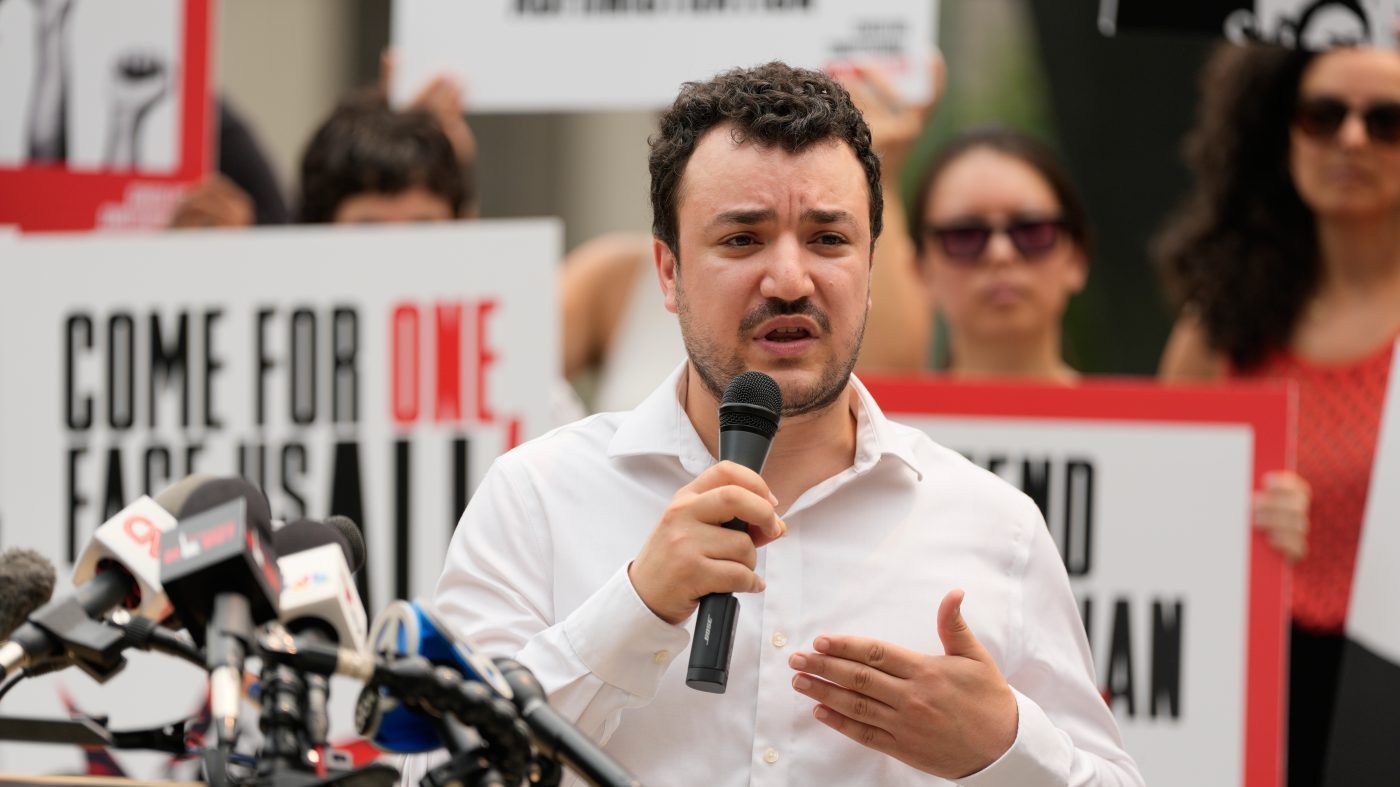
Mahmoud Khalil, the Columbia University activist whose arrest became a symbol of the Trump administration's push against pro-Palestinian foreign students, filed an emergency appeal with the Supreme Court on Monday, his lawyers confirmed. The green-card holder, who spent months in federal custody last year, argues his detention was an unconstitutional retaliation for speech protected under the First Amendment.
Khalil's petition does not ask the justices to rule on the merits of his free speech claim directly. Instead, it targets a procedural ruling from the U.S. Court of Appeals for the 3rd Circuit, which held that a federal judge lacked authority to order his release until he exhausts his remedies within the immigration system. That system, Khalil's lawyers argue, is controlled by the executive branch and effectively allows the government to punish him indefinitely without judicial oversight.

“If the decision stands, the government would be handed a powerful and unprecedented weapon to silence its critics, and to chill the speech of countless others, including citizens, who wish to avoid the government's wrath against themselves and their loved ones,” the petition reads.
The Supreme Court rejects the vast majority of petitions it receives, but Khalil's case arrives amid a broader legal battle over the administration's deportation efforts targeting noncitizen students and scholars. The justices are expected to consider the petition at a private conference in the coming months. Khalil's legal team expressed hope the case could be heard this term, but until then, he remains free.
Immigration authorities arrested Khalil in March 2025, and a federal judge later ordered his release. The 3rd Circuit's ruling, issued in December, sided with the government, concluding that federal law strips courts of jurisdiction to hear Khalil's habeas petition until after immigration proceedings conclude. His attorneys contend that interpretation gives the administration a green light to drag out cases and silence critics in the meantime.
“This administration knows all too well that its baseless allegations and smears against me cannot survive the slightest scrutiny in federal court,” Khalil told reporters. “That's why it's doing everything it can to keep the federal courts away from looking at my case, and they're trying to channel it into their kangaroo immigration courts.”
The issue has already reached the Supreme Court from another angle. The administration previously asked the justices to review a separate appeals court decision in the case of Badar Khan Suri, an Indian national and Georgetown University postdoctoral scholar facing deportation. The government has acknowledged that the court may want to consolidate Khalil's case with Suri's, which touches on similar questions about judicial review during immigration proceedings.
Legal analysts say the outcome could have broad implications for how courts handle First Amendment challenges from noncitizens in deportation cases. The case also echoes other high-profile disputes over executive authority, including recent litigation over race-conscious admissions policies and political fundraising legal battles.
Khalil's lawyers argue that the 3rd Circuit's ruling effectively immunizes the administration from judicial review, a position that civil liberties groups have criticized as an overreach. They say the case raises fundamental questions about due process and the separation of powers, and they are urging the Supreme Court to intervene before the administration can complete Khalil's deportation.
For now, Khalil remains in the United States, but his future hangs on the justices' decision. If they decline to hear the case, he will be forced to continue his fight within the immigration court system, where his free speech arguments may never be fully considered.