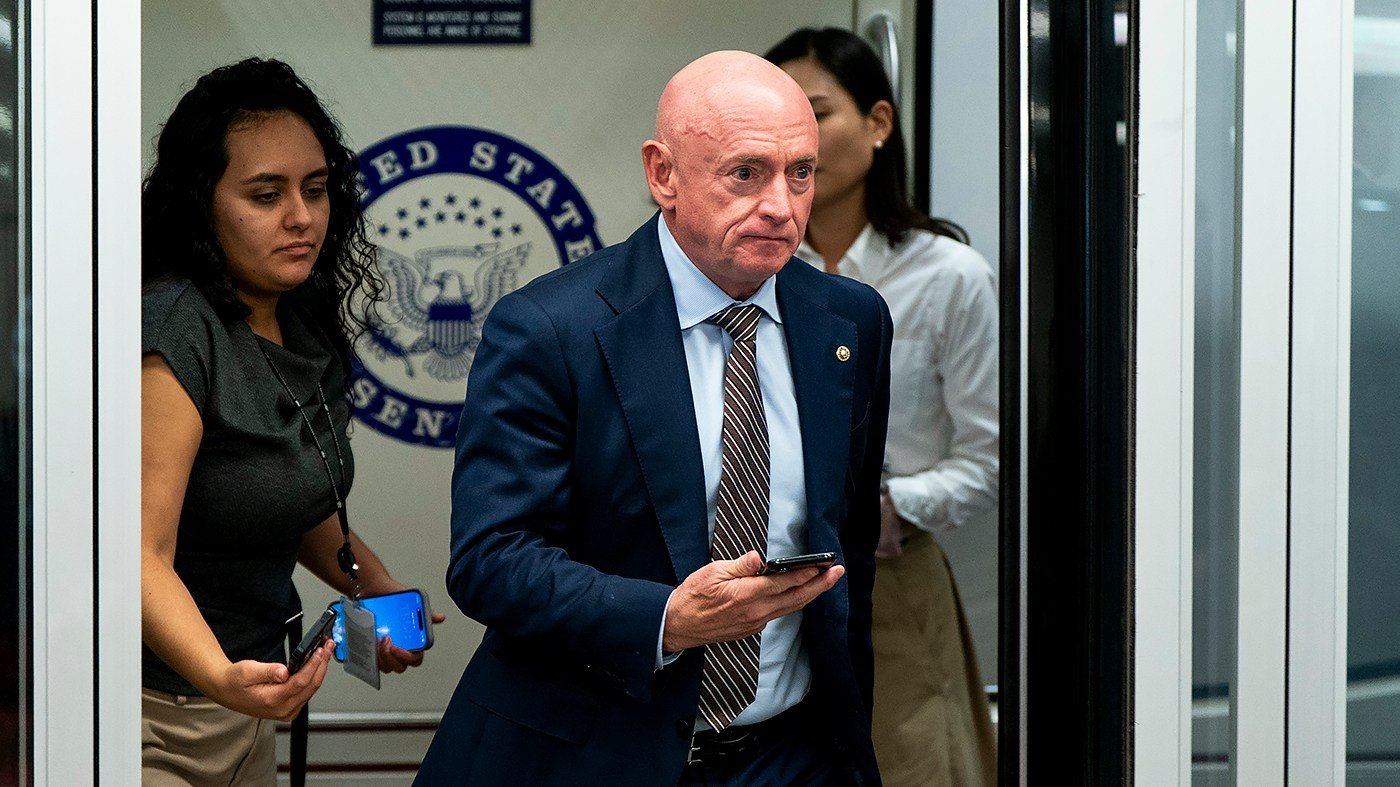
Sen. Mark Kelly (D-Ariz.) is steadily positioning himself as a top contender for the 2028 Democratic presidential nomination, leveraging an aggressive national travel schedule and a prominent role in the fight against the Trump administration's national security policies.
By the end of the current midterm cycle, Kelly will have stumped for Democratic candidates in nearly 20 states, including crucial presidential battlegrounds like Arizona, Georgia, Michigan, Nevada, New Hampshire, New Mexico, North Carolina, Ohio, Pennsylvania, South Carolina, and Virginia. These states are not only key Senate battlegrounds but also early primary states that will shape the next Democratic nominating contest.
In an interview, Kelly told The Hill that he is nearing a decision on a presidential run, but will not announce until after the 2026 elections. He emphasized that his motivation stems from a personal encounter with a Phoenix woman whose son with Down syndrome faced losing healthcare coverage, which prompted his initial Senate run.
Economic Anxiety and Political Messaging
Kelly has been vocal about the economic struggles facing American families, criticizing Republicans in Washington for being out of touch. “Folks can’t afford their lives anymore, people getting kicked off of Medicaid and SNAP, rent prices are up, young people don’t really consider buying a home now until their 40s. I bought my first house when I was 28, I was in the Navy,” he said.
His message appears designed to resonate with working-class voters in swing states, a demographic that has drifted from Democrats in recent cycles.
National Security Credentials and Hegseth Feud
Kelly, a former Navy combat pilot and NASA astronaut, has used his military background to sharpen his attacks on Defense Secretary Pete Hegseth. He has repeatedly called for Hegseth's removal, citing the use of the Signal app for sensitive military discussions and the Pentagon's rapid missile expenditure during the Iran conflict.
Kelly's most controversial moment came when he and other Democrats urged military personnel to disobey illegal orders, prompting Hegseth to attempt to demote him and reduce his retirement pay. The move was blocked by a federal judge, and a grand jury declined to indict Kelly on seditious conspiracy charges.
Early Primary Calendar and Fundraising
Kelly's travels have allowed him to build relationships with donors and activists in states that will host early primaries. South Carolina, Nevada, New Hampshire, New Mexico, Michigan, and Virginia are all set to hold Democratic contests in early 2028, and Kelly has been cultivating support in each.
Democratic strategists see Kelly as a formidable potential candidate. Tad Devine, who worked on Al Gore and John Kerry's campaigns, noted Kelly's temperament, background, and proven ability to win in a battleground state. “He has the temperament, the background, the experience and the proven ability to win states in a battleground state,” Devine said.
Personal Story and Gun Safety Advocacy
Kelly's personal narrative includes his marriage to former Rep. Gabby Giffords, who survived an assassination attempt in 2011. Together, they founded Americans for Responsible Solutions to combat gun violence, a story that resonates with many Democratic voters.
As Kelly weighs a bid, he is also focused on helping Democrats flip the Arizona state legislature, hosting events for 18 endorsed candidates this week. After that, he will travel to New Mexico to campaign with gubernatorial nominee Deb Haaland and Sen. Ben Ray Luján.
The coming months will be crucial for Kelly as he decides whether to enter the 2028 race. His national profile is rising, and his message of economic fairness and national security credibility could make him a leading voice in the Democratic primary. However, he faces a crowded field of potential contenders, and the party's internal dynamics could shift depending on the outcome of the 2026 midterms. For more on how Senate races could shape the 2028 landscape, see this analysis.