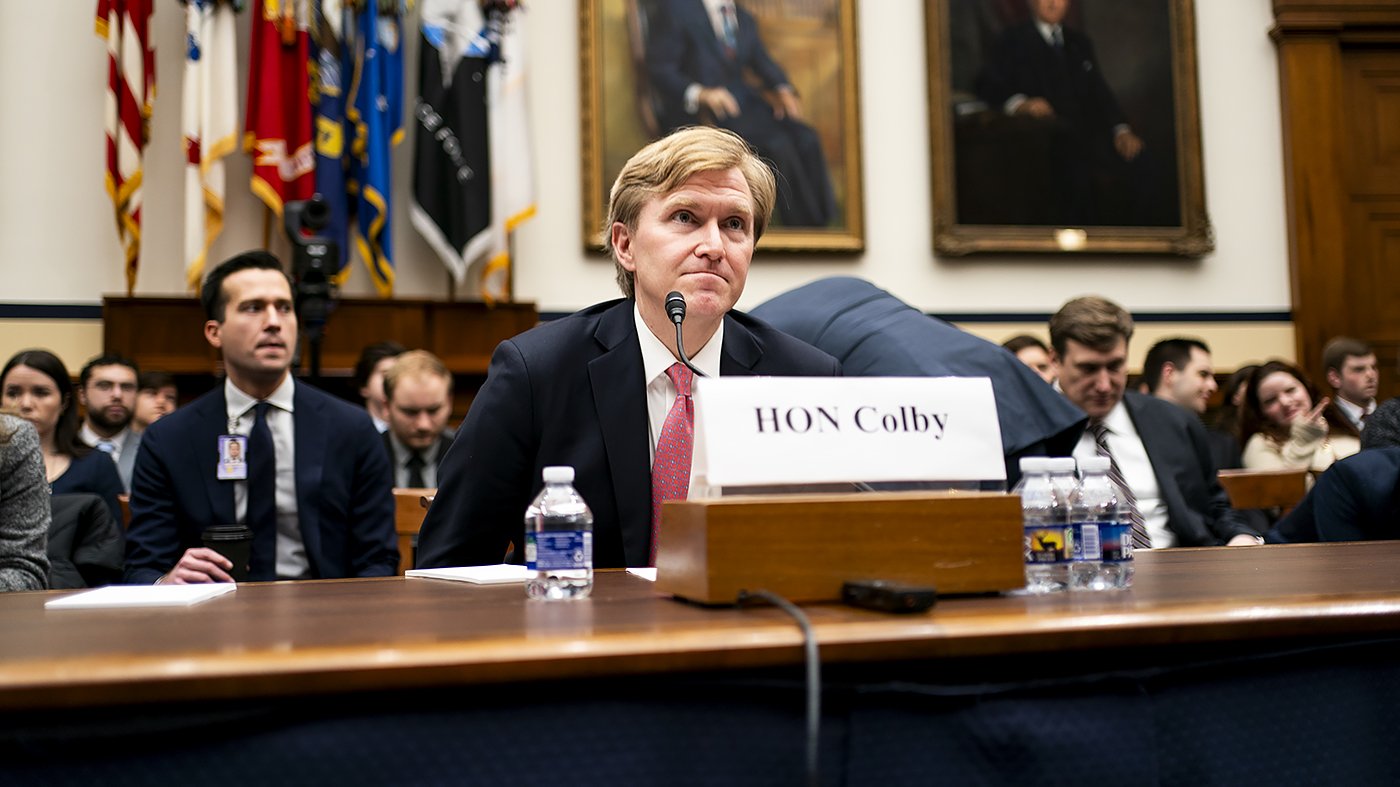
House Armed Services Committee Chair Mike Rogers (R-AL) has accused the Pentagon's top policy official of deliberately misleading him about a plan to reduce U.S. troop levels in Romania by thousands. The accusation, leveled against Under Secretary of Defense for Policy Elbridge Colby, has escalated into a public feud over congressional oversight and force posture decisions in Europe.
Rogers told The Washington Post that during an October meeting at the Pentagon, he directly asked Colby whether any troop reductions were in the pipeline. According to Rogers, Colby replied that he was unaware of any such plans. Two weeks later, the Trump administration announced it was pulling a U.S. combat brigade from Romania. “I took him at his word,” Rogers said.
Colby denies the charge, telling the Post that at the time of the meeting, no final order had been issued to remove the brigade. “I was not in a position to commit the department one way or the other,” Colby said. The Pentagon’s policy office maintains the decision was reached through normal channels and based on “best military advice.”
The clash has simmered for months, boiling over during a March 5 hearing before Rogers’ committee. Rogers pressed Colby on the timeline: “The decision, as I understand it, to remove that brigade was made on Oct. 24. Our committee was formally notified on the 27. How can you characterize telling us three days later that that’s consultation with Congress, which you are constitutionally required to do?”
Rogers went further, accusing Colby of sidelining both Congress and the president. “It’s clear to me that you decided that pushing your agenda on U.S. force posture without interagency coordination and without regard to the president’s opinion or Congress’s was the way to go,” he said. Colby countered that his office is “one of the leaders in congressional engagement,” a claim Rogers dismissed: “We see that completely differently. It’s been like pulling teeth trying to get information.”
Rep. Mike Turner (R-OH) also took aim at Colby during the hearing, calling his testimony “gross” and “disingenuous.” Turner said, “The chairman has said he feels like you’re dishonest, right? You have been so disingenuous every time you answer a question… These clarifications that you give make us all concerned about your commitment to the truth.”
The controversy extends beyond Romania. Colby has faced scrutiny over a July decision to halt shipments of certain air defense missiles and precision munitions to Ukraine. That move, which followed a June 2025 review by Colby’s team aimed at conserving munitions for a potential conflict with China over Taiwan, was later reversed after President Trump denied ordering the pause. The Pentagon ultimately sent additional defensive weapons to Kyiv.
The dispute underscores broader tensions between Congress and the Pentagon over force posture changes and the flow of information. Rogers has spoken repeatedly with top military officials at U.S. European Command, who advised keeping the brigade in Romania. The episode has also drawn attention to the Pentagon’s handling of sensitive decisions, as highlighted in recent reports on how ad data can expose troop locations.
As the Pentagon continues to navigate post-Iran war replenishment—including a $35 billion contract for THAAD interceptors—and faces pressure to consult lawmakers on troop movements, the Rogers-Colby clash may signal deeper fractures in the defense decision-making process.