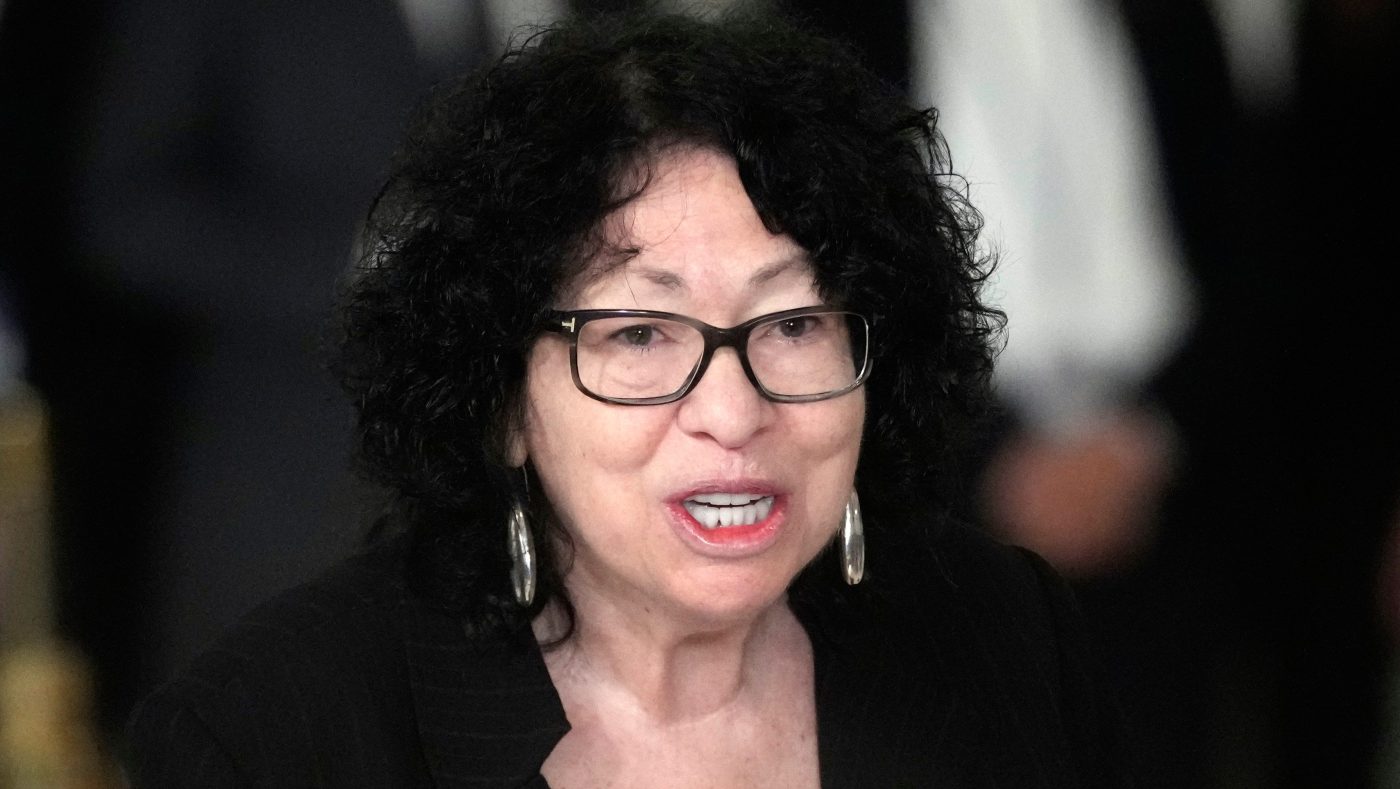
Justice Sonia Sotomayor delivered a blistering dissent from the bench Monday, warning that the Supreme Court's conservative majority had handed President Donald Trump and future presidents what she called “unbridled authority” to fire officials from independent federal agencies, upending nearly a century of settled law.
The Court, in a 6-3 ruling along ideological lines, held that Trump could fire Federal Trade Commissioner Rebecca Slaughter, a Democratic appointee, without cause. The decision overturned the landmark 1935 case Humphrey’s Executor v. United States, which had allowed Congress to restrict the president’s ability to remove the heads of certain agencies at will.
“Put simply, today the majority reshapes our Government,” Sotomayor wrote in a 49-page dissent joined by fellow liberal Justices Elena Kagan and Ketanji Brown Jackson. She argued that the ruling effectively transforms dozens of independent commissions into executive agencies, concentrating vast power over American life in the presidency. The decision gives Trump sweeping authority to reshape the federal bureaucracy.
Sotomayor’s dissent was notably read from the bench, a rare move signaling deep disagreement. She predicted the ruling would “unleash only chaos” for agencies, Congress, and lower courts, because the majority “simply refuses to explain where its theory leads or where it ends.”
“Today, the majority replaces 90 years of proven, workable practice with a half-baked theory of executive power that is simultaneously all encompassing yet also subject to necessary but undefined exceptions,” she wrote. “The one thing that does appear to be clear going forward is that chaos will follow.”
The liberal justice also argued that even if the Court believed Humphrey’s Executor was wrongly decided, the principle of stare decisis — respect for precedent — should have prevented its reversal. “Nothing in the text, history, or values of the Constitution shows that Humphrey’s was wrong or that FTC Commissioners cannot enjoy for-cause removal protection,” she wrote. “Yet even if the majority were right about all of that, it still would not be enough to justify today’s destabilizing decision.”
While the ruling does not eliminate the FTC or similar agencies, Sotomayor acknowledged it fundamentally alters their operation. “It is undeniable, however, that those agencies will be transformed in ways that those who created them never could have expected and actively sought to avoid, fundamentally recalibrating the balance of power in this country in the process,” she concluded.
The decision marks a major victory for Trump, who has long sought to expand presidential control over the federal bureaucracy. Trump hailed the ruling as a validation of his executive authority. The case also comes amid broader legal battles over the president’s power, including a temporary block on Trump’s firing of a Federal Reserve governor.