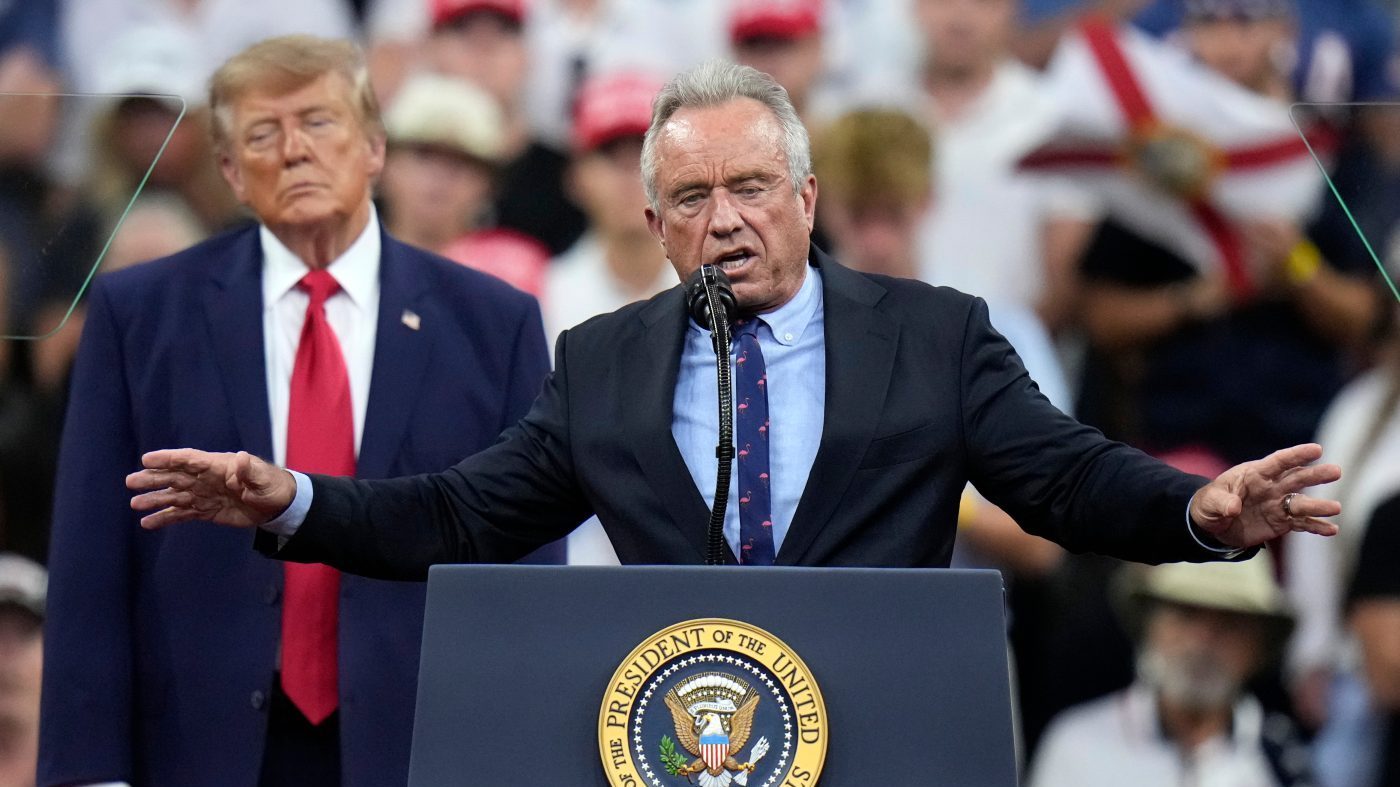
The Trump administration rolled out a pair of initiatives on Friday aimed at boosting the domestic fishing industry, including a new government website and a voluntary labeling program for seafood caught by American fishermen. The announcement came during a rally in Fort Myers, Florida, where Health and Human Services (HHS) Secretary Robert F. Kennedy Jr. touted the quality of U.S. seafood over imported alternatives.
Kennedy revealed that the Food and Drug Administration (FDA) had begun offering the new label for U.S.-caught fish, which will be available to producers on a voluntary basis. The label is designed to help consumers identify domestically sourced seafood, a move that aligns with the administration's broader push to reduce reliance on foreign imports.
Speaking to the crowd, Kennedy took aim at imported shrimp, claiming that European countries reject such products. "No European country will take them, so they ship them all over here," he said. He also praised President Trump's efforts to rebuild infrastructure and reopen markets for commercial fishermen, framing the initiative as part of a larger economic strategy.
The timing of the announcement is notable given the ongoing trade tensions with Canada, which have raised concerns among U.S. fishing communities. Data from the National Oceanic and Atmospheric Administration (NOAA) shows that in 2023, roughly 80% of the seafood consumed in the United States was imported, underscoring the scale of the domestic deficit the administration hopes to address.
Industry groups responded positively to the news. The New England Fishermen's Stewardship Association (NEFSA) called the label a "major win" for Americans. In a statement shared on X, NEFSA director of advocacy Jason Joyce said, "We believe U.S. seafood is the most sustainably harvested in the world, and this label gives consumers a simple, recognizable way to identify American-caught seafood while supporting our domestic fishing, processing, and retail industries."
The initiative comes as some in the fishing industry have expressed unease over the president's trade war with Canada. The Maine Lobstermen's Association warned in August that it feared becoming "collateral damage" in the dispute, as Canada purchases large quantities of lobster from Maine fisheries. The new label could offer a lifeline by encouraging more domestic consumption of U.S. seafood, but its impact remains to be seen.
Seafood.gov, the newly launched website, is expected to serve as a central resource for consumers and industry stakeholders, providing information on sourcing, sustainability, and the new labeling program. The administration hopes the combination of the website and the label will help shift consumer behavior toward American-caught products.
Political observers note that the move is likely to resonate with the administration's base, particularly in coastal and fishing-dependent states. However, critics question whether a voluntary label can meaningfully alter import patterns without stronger regulatory measures. The administration has not indicated whether it will pursue mandatory labeling or other trade restrictions in the future.
For now, the focus is on marketing and consumer awareness. As Kennedy put it, the goal is to make it easier for Americans to choose U.S. seafood, which he argues is superior in quality. Whether that message will translate into increased domestic consumption remains an open question, but the administration is clearly betting on it.