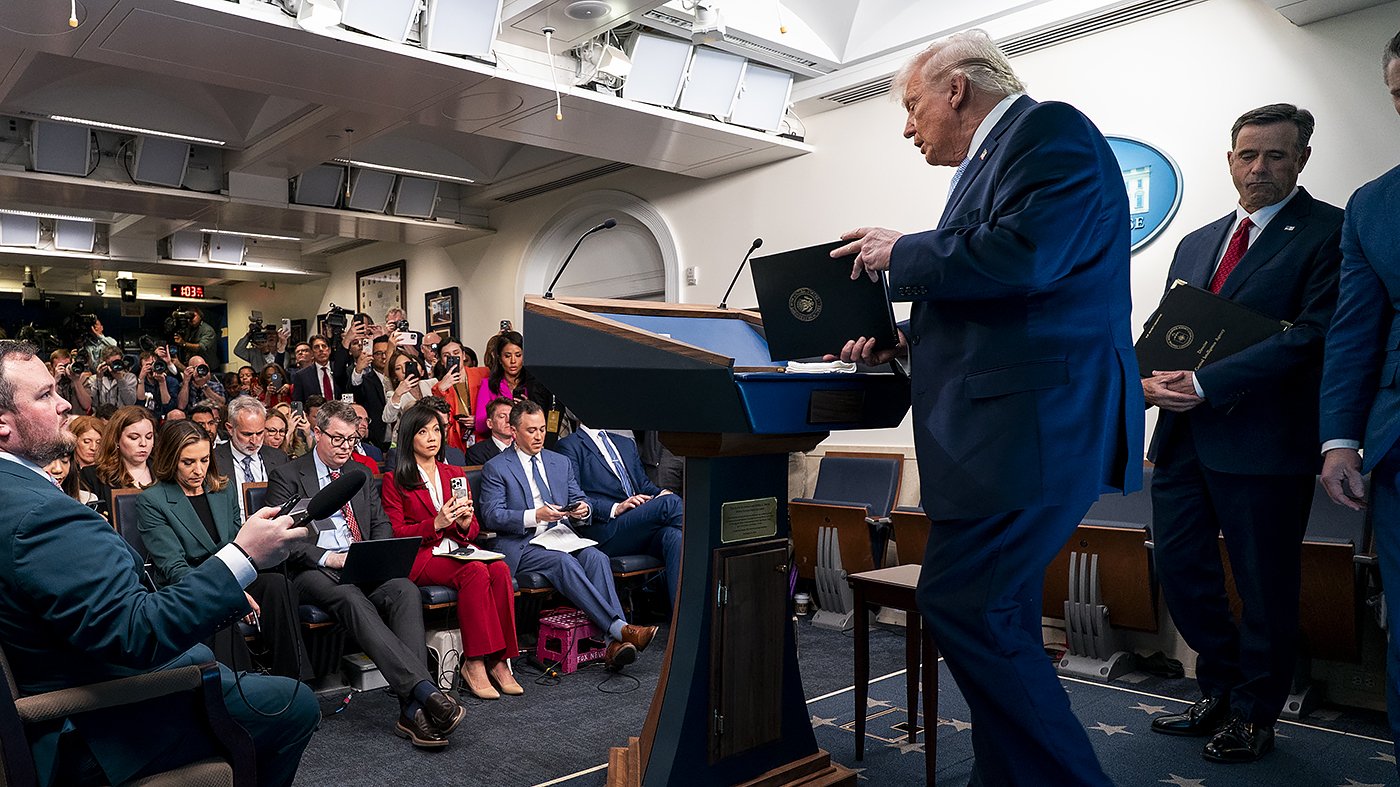
President Trump used a lengthy White House briefing on Monday to deliver a stark ultimatum to Iran while simultaneously muddying his administration's strategic objectives. The president, appearing with Defense Secretary Pete Hegseth, began by detailing the successful rescue of a downed U.S. airman but quickly pivoted to the escalating conflict that has seen over 11,000 targets struck by U.S. and Israeli forces since February 28.
Contradictory Threats and Reconstruction Promises
Trump's remarks were characterized by profound ambiguity regarding future military action. He described a devastating plan where "every bridge in Iran will be decimated by 12 o'clock tomorrow night" and "every power plant in Iran will be out of business—burning, exploding." Yet moments later, he suggested such destruction would be counterproductive, stating, "We may even get involved with helping them rebuild their nation [after the war]." This created confusion about whether the administration seeks Iran's capitulation or its eventual rehabilitation.
The president offered only vague hope for a ceasefire, claiming negotiations were "going fine" but providing no substantive details. He clarified that any acceptable deal must include both a political settlement and the reopening of the Strait of Hormuz, where Iran's blockade has sent global oil prices soaring. This stance mirrors previous administration positions on leveraging economic pressure, as seen when Trump previously suggested U.S. toll collection in the strategic waterway.
Dismissing International Law Concerns
When pressed about the legality of targeting civilian infrastructure like power plants and water desalination facilities—which under the Geneva Conventions could constitute war crimes—Trump dismissed the concerns entirely. He told a New York Times reporter he was "not at all" worried about potential violations, pivoting instead to criticize the media outlet. This follows a pattern of the administration dismissing legal scrutiny of its military threats.
Legal experts note that Article 54 of the Geneva Conventions specifically prohibits attacks on "drinking water installations and supplies" intended to deny sustenance to civilians. However, with the United States not a member of the International Criminal Court, practical consequences for such actions remain uncertain.
Threats Against Media and Allies
Trump launched an unusually specific attack on press freedom, vowing to prosecute journalists and their sources over a story revealing details about the downed F-15E jet and rescued airman. "The person that did the story will go to jail unless she or he identifies their source," he declared, adding that media companies would be compelled to "give it up or go to jail" on national security grounds. This escalation in rhetoric against the press comes amid broader administration conflicts with other institutions, including recent attacks on Supreme Court rulings.
The president also renewed his criticism of NATO allies, expressing "very disappointed" in the alliance for not directly joining the conflict. He claimed this failure would leave a permanent "mark on NATO that will never disappear—never disappear in my mind." This continuing friction with traditional partners underscores the administration's unilateral approach to foreign policy.
Strategic Context and Pressure Campaign
Iran has responded to the military campaign with strategic defiance, significantly reducing shipping through the Strait of Hormuz and driving up global energy costs. This economic pressure creates domestic political challenges for the administration as gasoline prices rise. The situation represents perhaps the most severe international crisis of Trump's presidency, with the Tuesday night deadline for infrastructure destruction creating immediate escalation risks.
Observers note the president's contradictory messaging—simultaneously threatening annihilation and offering reconstruction—creates uncertainty about U.S. objectives. This ambiguity has drawn criticism from foreign policy veterans, including former officials who have characterized shifting deadlines as demonstrating weakness. As the clock ticks toward Trump's stated deadline, the international community watches for whether military action will follow his apocalyptic rhetoric or whether diplomatic channels might yet prevail.