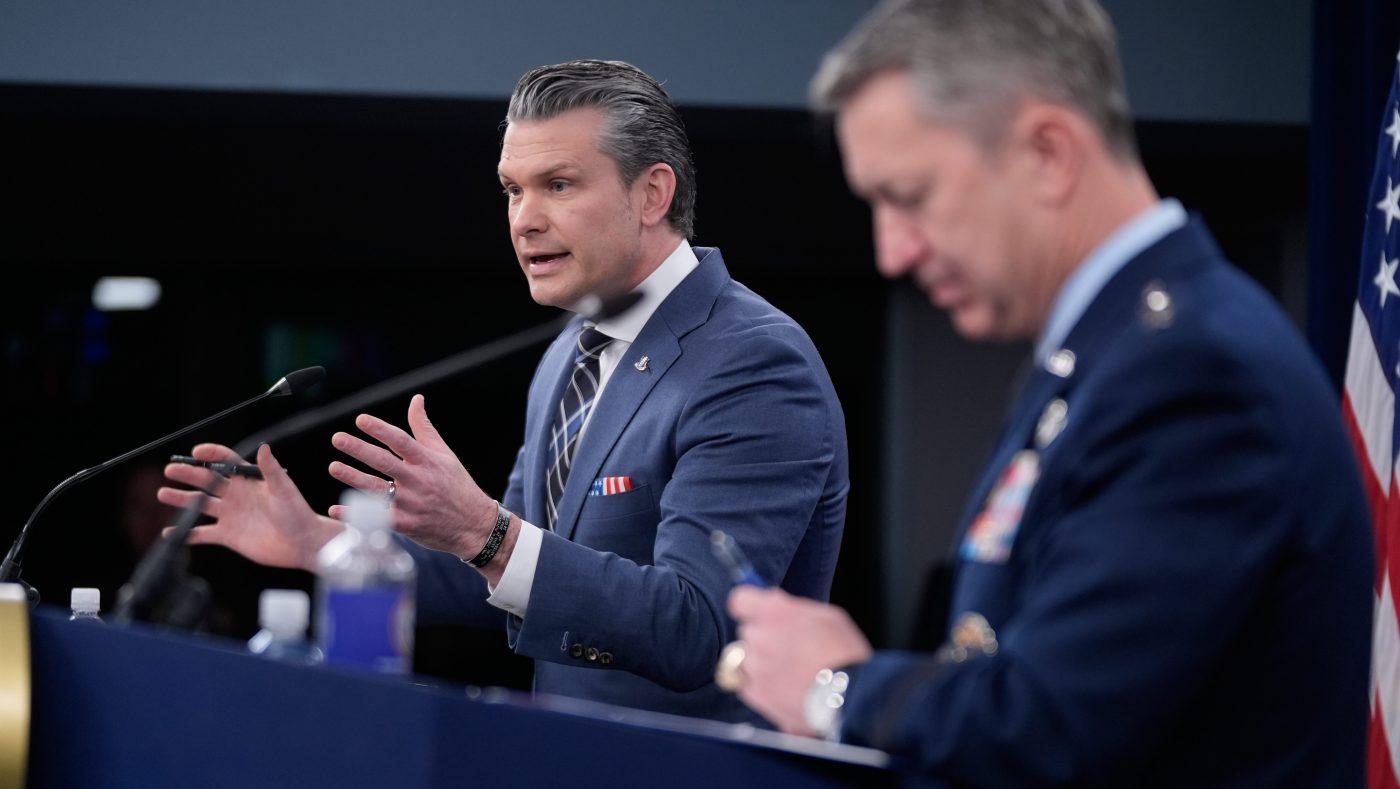
The Pentagon has abruptly canceled a high-stakes press briefing scheduled for Tuesday morning with Defense Secretary Pete Hegseth and Chairman of the Joint Chiefs of Staff General Dan Caine. The briefing was slated to occur a mere twelve hours before a midnight deadline set by President Donald Trump for Iran to reopen the Strait of Hormuz.
No official reason was provided for the last-minute cancellation. The move eliminates a planned public appearance by the nation's senior defense officials at a moment of extreme geopolitical tension, leaving questions about the administration's immediate next steps unanswered through official channels.
Trump's Ultimatum and Escalating Rhetoric
The canceled briefing was to follow a weekend of incendiary rhetoric from President Trump, who issued a stark public ultimatum to Tehran. On his Truth Social platform, the President declared, "Tuesday will be Power Plant Day, and Bridge Day, all wrapped up in one, in Iran." In a subsequent post, he demanded Iran "Open the F---in' Strait" and warned Iranian leaders they would "be living in Hell."
During a White House briefing on Monday alongside Hegseth and Caine, Trump elaborated on the threat, outlining a potential plan "where every bridge in Iran will be decimated by 12 o'clock tomorrow night, where every power plant in Iran will be out of business — burning, exploding and never to be used again." He did not, however, provide a definitive statement on what action he would take if Iran failed to comply, leaving military options explicitly on the table. This confrontation follows Tehran's firm rejection of earlier U.S. demands.
Global Economic and Strategic Stakes
The crisis centers on Iran's closure of the Strait of Hormuz, a narrow maritime chokepoint through which roughly one-fifth of the world's seaborne oil exports pass. The blockade, now in its sixth week, has severely disrupted global energy markets, sending gasoline prices and other costs soaring and creating significant economic headwinds worldwide.
The United States has been militarily engaged in the region since the strait's closure, a period that included a dramatic rescue mission on Sunday for an American airman who ejected over Iranian territory. The incident underscores the persistent risk of direct combat between U.S. and Iranian forces.
Context of Pentagon Leadership
The canceled briefing was to feature Defense Secretary Pete Hegseth, whose tenure has been marked by significant internal controversy, including a widely criticized purge of senior military leadership. His appearance alongside the top uniformed officer, General Caine, was poised to be a rare joint address as the Pentagon faces simultaneous external conflict and internal scrutiny over its policies and procurement strategies, such as its ongoing legal battle over AI contractor blacklisting.
The administration's approach suggests a strategy of applying maximum pressure, a tactic some analysts believe could, over the long term, force Iranian concessions. A separate analysis argues the U.S. can prevail in a prolonged conflict with Iran through sustained strategic and economic pressure coupled with support for internal opposition groups.
With the Pentagon briefing canceled, the world now watches to see if Tehran will relent before the President's deadline passes, or if the United States will follow through on its threats, triggering a major new phase of military conflict in the Middle East with profound consequences for global energy security and international stability.