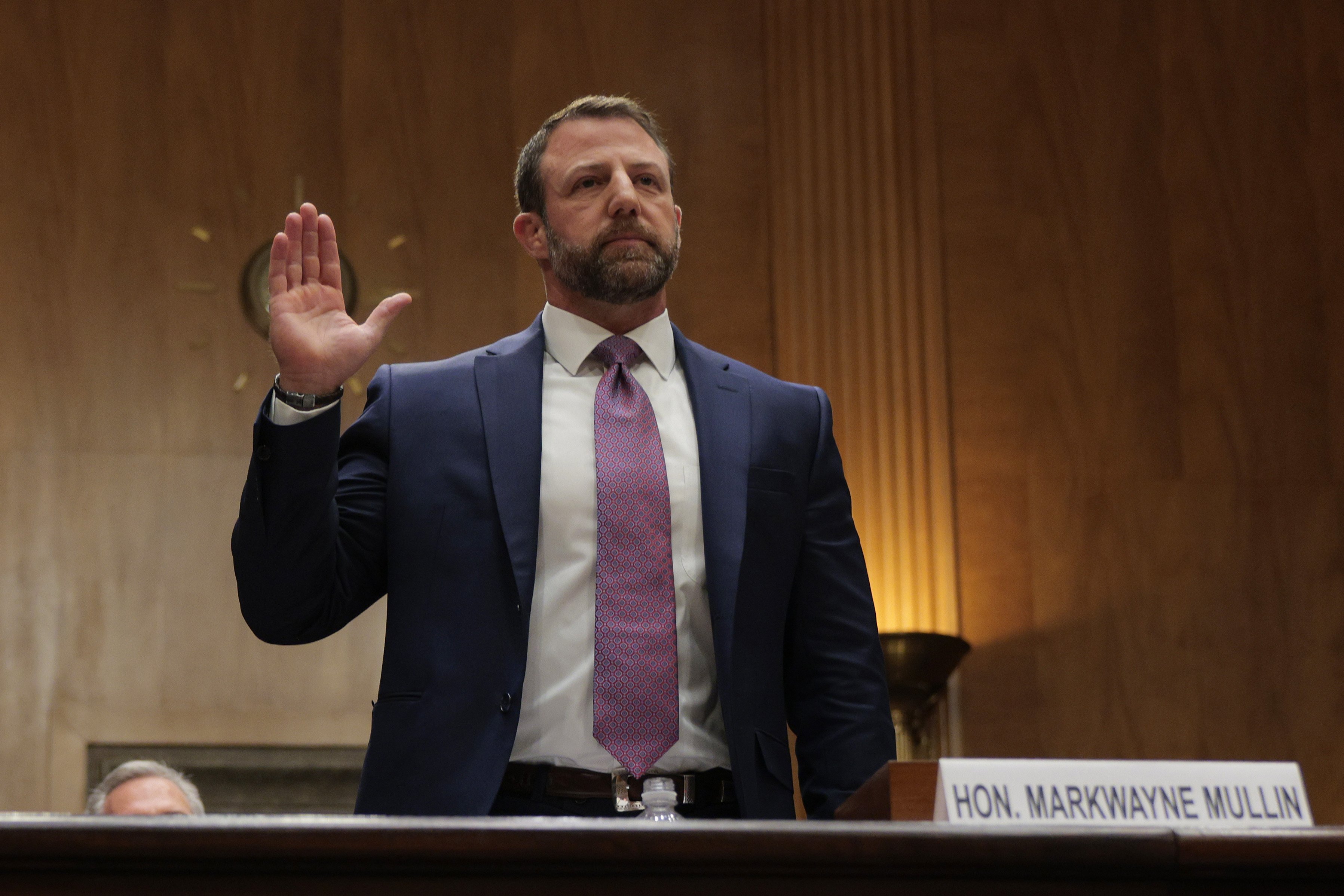
Homeland Security Secretary Markwayne Mullin issued a stark warning to municipalities with sanctuary policies on Monday, suggesting cities that refuse to cooperate with federal immigration enforcement could face the loss of customs processing at their international airports. In a televised interview, the newly confirmed cabinet member questioned the logic of allowing jurisdictions that limit local enforcement of immigration laws to serve as ports of entry.
A Question of Partnership
"If a city declares itself a sanctuary and receives international flights, we ask them to partner with us at the airport," Mullin stated during an appearance on Fox News. "But once individuals walk out of that airport, local authorities won't enforce immigration policy. We need to take a hard look at that situation. Our focus must be on cities willing to work with us."
The secretary's comments represent an escalation of Trump administration efforts to pressure sanctuary jurisdictions. His approach aligns with that of his predecessor, former Homeland Security Secretary Kristi Noem, who previously identified approximately 500 cities, counties, and states she claimed were obstructing immigration law enforcement. This ongoing conflict between federal authorities and local governments continues to define a significant portion of the administration's domestic security agenda.
Funding Battle Intensifies
Mullin connected his enforcement stance to the contentious congressional battle over Department of Homeland Security funding. He criticized a Senate-passed bill that would fund most DHS operations while excluding specific allocations for Immigration and Customs Enforcement (ICE) and Border Patrol, characterizing it as an effective defunding of critical agencies. House Republicans have rejected this approach, proposing instead to fund the department in its entirety.
"The Senate proposal creates a fundamental problem," Mullin explained. "It essentially defunds ICE and Customs and Border Patrol. Our strategy is to move this funding through reconciliation to secure it for three years, preventing Democrats from using it as political leverage during future budget negotiations." The secretary revealed he spent over five hours in the Oval Office with President Trump developing this approach, expressing concern that political opponents might "hold the country hostage" again when the fiscal year ends on September 30th.
Legal and Political Precedents
The administration's posture builds upon established legal pressure. Last August, former Attorney General Pam Bondi sent warning letters to 32 sanctuary jurisdictions urging compliance with federal law. President Trump reinforced this position with an executive order outlining a White House crackdown on non-cooperative cities. Mullin indicated he intends to continue and potentially expand these efforts, stating he would be "forced to make hard decisions" about prioritizing resources for willing partners.
This confrontation occurs alongside other significant security policy debates, including a deepening Republican divide over homeland security funding that has stalled legislative progress. The secretary's management style has also drawn attention, particularly his decision to scrap a contract review rule implemented by his predecessor, which he criticized as causing unnecessary delays.
Broader Enforcement Context
Mullin's airport-focused strategy represents a novel approach in the sanctuary city conflict, potentially affecting major metropolitan centers that rely on international travel for economic vitality. The secretary emphasized his actions would remain within congressional mandates while demanding cooperation from local authorities. "I'm not going outside the policies Congress passed," he stated. "But we're saying that you've got to partner with us."
The announcement comes amid heightened scrutiny of the secretary's background and policy decisions, with some critics, including late-night host Jimmy Kimmel, doubling down on examinations of his qualifications. As the administration prepares for another potential funding showdown, the threat to airport customs operations signals a hardening of the federal government's position in its long-running dispute with sanctuary jurisdictions across the United States.