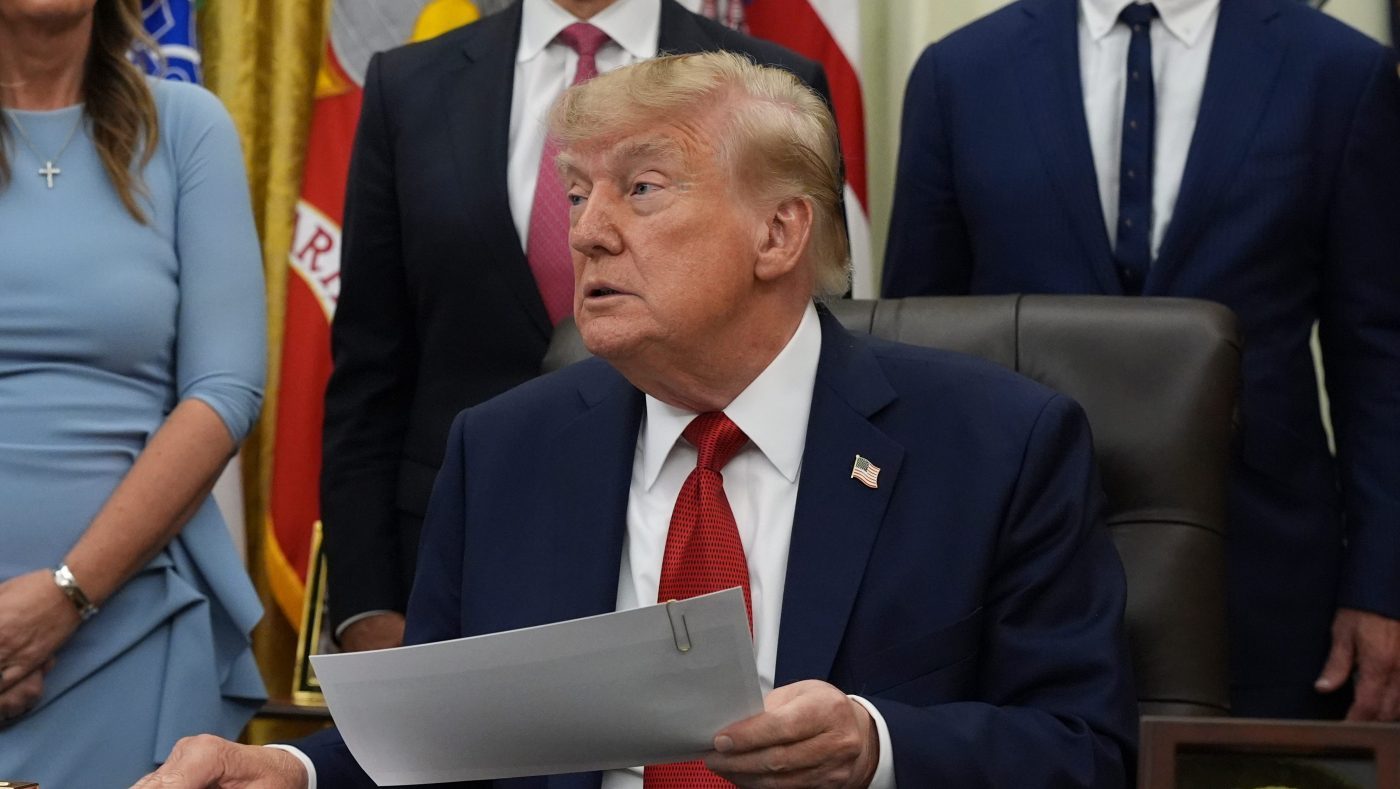
President Trump on Friday signed into law a sweeping Russia sanctions package, granting the administration authority to impose tariffs of up to 100 percent on the largest buyers of Russian energy and on countries that assist Moscow in evading existing sanctions. The legislation, named in honor of the late Sen. Lindsey Graham (R-S.C.), also extends current sanctions on Iran.
The measure, championed by Graham and Sen. Richard Blumenthal (D-Conn.), was designed to cut off the revenue streams that Russian President Vladimir Putin relies on to sustain his military campaign in Ukraine. The bill passed both chambers with overwhelming bipartisan support, though it faced notable Democratic opposition in the House over concerns about granting the president sweeping tariff powers.
House Minority Leader Hakeem Jeffries (D-N.Y.) voted against the bill, warning that handing the president unchecked authority to impose tariffs could drive up costs for American consumers. "Life is way too expensive in the United States of America," Jeffries said. "Why in the world would this Congress or the People's House give this president unfettered authority to visit more tariffs on the world that will have an adverse economic impact on the American people? I can't do it."
Trump had delayed signing the bill for months, arguing that he needed flexibility to negotiate with Putin. In September, special envoys Steve Witkoff and Jared Kushner, Trump's son-in-law, traveled to Moscow and Kyiv in an effort to broker a ceasefire. Witkoff expressed confidence that trilateral talks would yield a "good resolution" to the conflict, and the envoys' visit coincided with a weekend-long truce.
However, the fighting has since intensified. Russian strikes hit Kyiv and other major Ukrainian cities earlier this week, wounding more than 20 people, according to Ukrainian officials and Reuters. The renewed attacks underscore the fragility of the peace process and the urgency behind the sanctions legislation.
Ukrainian President Volodymyr Zelensky thanked Trump on social media for signing the "critically important" law. "I thank all the senators and members of the House of Representatives who supported it," Zelensky wrote. "The best way to honor Lindsey's memory will be to implement the provisions of this law fully and swiftly. And the best reward for everyone helping us put pressure on Russia to end its war will be peace."
The law's enactment comes as the Trump administration continues to navigate a delicate balance between pressuring Moscow and pursuing diplomatic engagement. Critics, however, argue that the president's reluctance to sign the bill earlier signaled a softer stance toward Russia, a concern that has been amplified by tensions with the media and other controversial moves.
The new sanctions package is expected to have significant implications for global energy markets, particularly for countries like India and China that have increased purchases of Russian crude. The law also directs the administration to identify entities that help Russia circumvent sanctions, potentially targeting financial institutions and shipping companies.
As the war enters its third year, the legislation represents a rare show of bipartisan resolve in Washington, even as debates over tariff authority and the administration's broader trade policy continue. The law's implementation will be closely watched by allies and adversaries alike, with the potential to reshape the economic landscape of the conflict.