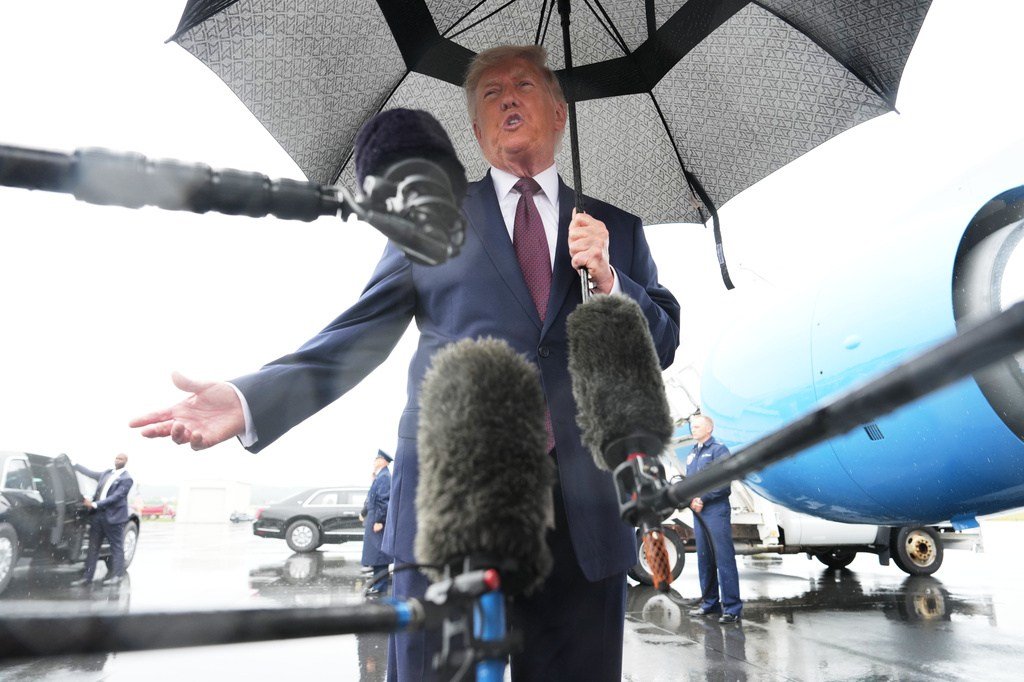
President Trump's announcement that he intends to block three major news organizations from White House access has ignited a firestorm of criticism from press freedom advocates, Democratic lawmakers, and media figures. In a Friday afternoon post on his social media platform, Trump said he was banning CNN, Politico, and MS NOW from the White House "effective immediately," citing what he called their "constant 'reporting' FAKE NEWS!"
The president did not point to a single story or incident that prompted the ban, instead describing it as a response to years of coverage he found objectionable. "It's really just cumulative stories over the last two years. You get sick of it," he wrote, while also suggesting that additional outlets could be added to the exclusion list in the future.
As of Friday evening, no reporters from the named outlets had reported being physically removed from White House grounds, and the White House Correspondents Association had not yet issued a formal response to the president's threat. But the three organizations quickly pushed back, with at least one signaling it would consider legal action if the ban is enforced.
CNN: A Constitutional Right to Report
CNN, owned by Warner Bros. Discovery, issued a forceful statement defending its White House coverage and warning that barring its journalists would be unlawful. "CNN stands fully behind our White House team and their fair and accurate reporting," a spokesperson said. "We have a right under the U.S. Constitution to do that reporting without hindrance or interference from the government."
The network went further, suggesting that if the president follows through on his threat, it would constitute "an illegal assault on that fundamental and constitutionally-protected right." The statement stopped short of announcing a lawsuit but left little doubt that litigation is on the table.
Trump has a long history of targeting CNN, and in recent weeks he has specifically clashed with White House correspondent Kaitlan Collins over her pointed questioning in the Oval Office. The president's latest broadside appears to escalate that feud to an institutional level.
Politico: Defending Its Reporting and Its Funding
Politico, which has become a lightning rod for conservative criticism during Elon Musk's cost-cutting initiatives, was also named in the president's post. Musk had previously taken issue with Politico Pro subscriptions purchased by government agencies, a service that provides detailed reporting on federal policy and operations.
In his social media post, Trump accused Politico of publishing "fake news" while benefiting from what he characterized as government subsidies. The outlet rejected that framing outright. "Politico will continue to fairly report on this White House and future ones," a spokesperson said. "We will vigorously defend our First Amendment rights against any attempt to restrict them."
The statement also addressed the subsidy claims directly: "The claims that Politico received government subsidies are false and have been thoroughly debunked."
MS NOW: No Comment, but a History of Tension
MS NOW, the progressive cable channel formerly known as MSNBC, declined to comment on the president's threat. But the network's hosts and programs have been consistently critical of Trump for years, and the president has repeatedly attacked the channel and its flagship morning show, "Morning Joe."
The outlet is also home to former Biden press secretary Jen Psaki, who has become a frequent target of Trump's ire. The lack of an official statement from MS NOW may reflect a strategic decision to avoid amplifying the president's attack, but the network's on-air personalities have already begun discussing the implications for press freedom.
The standoff comes as Trump continues to test the boundaries of presidential power over the media. Legal experts note that while the White House has broad discretion in credentialing reporters, a blanket ban based on content could raise serious First Amendment concerns. The situation remains fluid, and the named outlets are expected to challenge any actual enforcement in court.
This dispute also intersects with broader debates over media access and government transparency. As Democrats warn about reversals of post-9/11 security reforms, the administration's approach to press access is drawing renewed scrutiny. Meanwhile, the Kennedy family's clash with Trump over the Kennedy Center underscores the administration's willingness to confront cultural institutions.
For now, the three outlets continue to operate normally, but the threat of exclusion hangs over their White House coverage. The coming days will likely determine whether the president's rhetoric translates into action—and whether the courts will be asked to intervene.