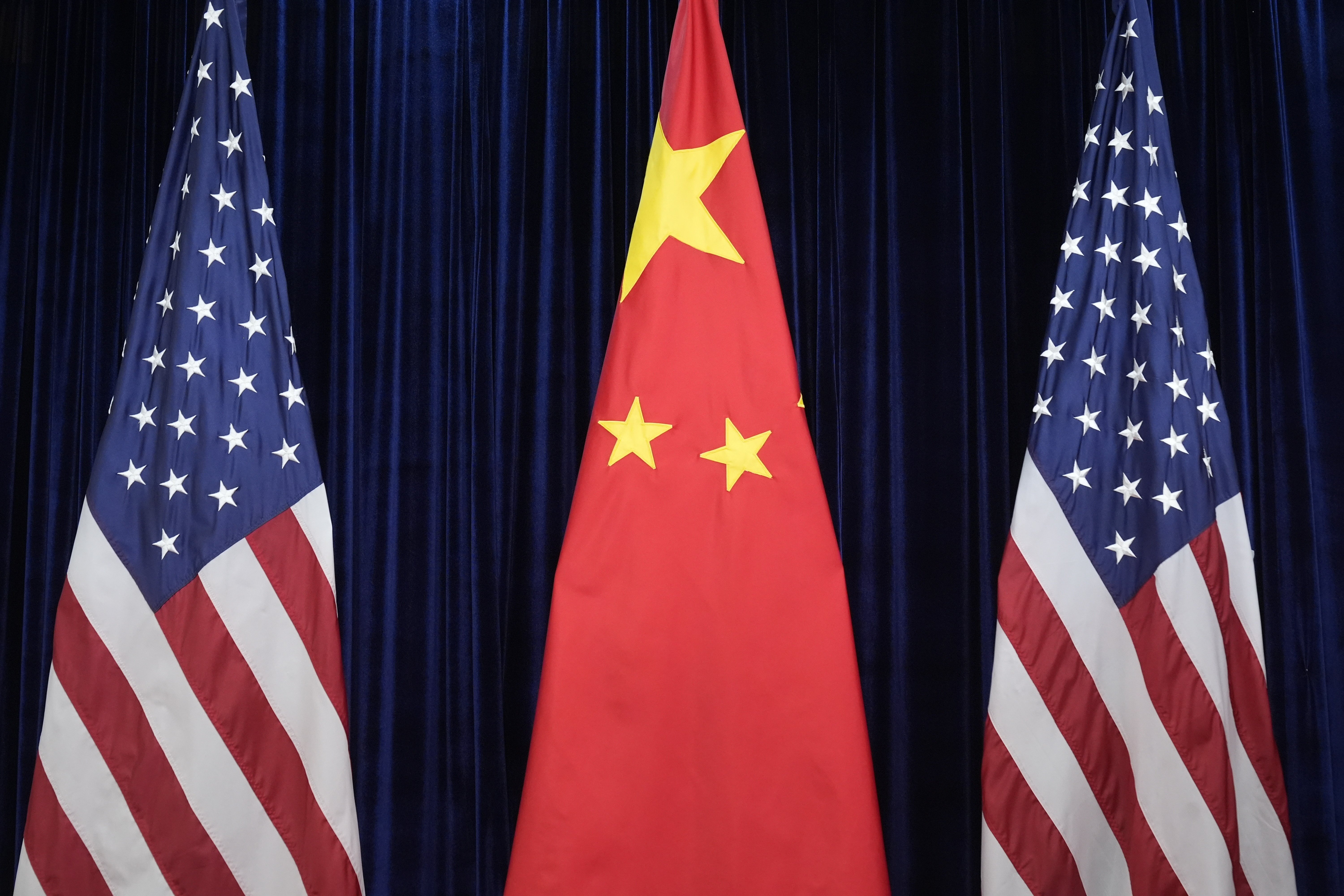
A bipartisan group of senators is pressing President Trump to formulate a comprehensive response to China's growing footprint in Latin America, just weeks before his high-stakes meeting with Chinese President Xi Jinping in Beijing. The resolution, spearheaded by Senator Jeanne Shaheen (D-N.H.) and Senator Ted Budd (R-N.C.), was obtained exclusively by The Hill.
The measure, while non-binding, details nearly two dozen areas where Beijing has outpaced Washington—from infrastructure investment to military partnerships—and demands sustained U.S. engagement. Shaheen, the ranking Democrat on the Senate Foreign Relations Committee, stressed the need for the United States to present itself as a credible alternative to what she called China's coercive approach. “We must show up as a reliable partner through sustained investment, stronger diplomatic engagement, and deeper security cooperation,” she said in a statement.
Budd echoed that sentiment, warning that China's Belt and Road Initiative is luring Latin American nations with predatory deals. “The United States must be a steadfast neighbor, partner, and leader for the Western Hemisphere,” he said. “We cannot afford to cede leadership in our own hemisphere.”
A key flashpoint is China's heavy spending on infrastructure projects across the region. The Trump administration has already cautioned countries like Peru about the risks of granting Beijing access to commercial sites with potential military uses. The resolution urges the administration to bolster U.S. development finance tools—specifically the Millennium Challenge Corporation and the Development Finance Corporation—to compete more effectively.
The resolution also takes aim at the administration's downsizing of Voice of America, arguing it has opened the door for Chinese propaganda to fill the information void. “Leaving many people in the region without independent media as the PRC escalates its dissemination of malign propaganda,” the text reads.
Trump has made countering China in Latin America a hallmark of his second term. Early moves included a 10 percent tariff on Chinese goods tied to fentanyl-related chemical exports, and aggressive rhetoric over the Panama Canal, which he alleged Beijing sought to control through Chinese-linked port operators. Tensions have since escalated: Panama canceled those concessions, and Beijing reportedly retaliated with increased inspections of Panamanian ships. The State Department recently issued a joint statement with five Central American and Caribbean nations condemning China's “targeted economic pressure.”
While Democrats have criticized Trump for using military force in the region without congressional approval—including strikes on alleged drug-trafficking vessels and the operation that captured Venezuelan President Nicolás Maduro—there is broad bipartisan agreement that decades of U.S. neglect allowed China to fill a vacuum. The resolution calls out Beijing's efforts to sever Latin American ties with Taiwan, its military partnerships with nearly every country in the region, and its dominance as South America's top trade partner, with investments concentrated in energy, mining, surveillance, and port infrastructure.
Trump is scheduled to meet Xi in Beijing on May 14-15, a trip postponed from April due to the ongoing U.S. war with Iran. The president faces a tough negotiating environment, with disagreements over Iran, Taiwan, Russia's war in Ukraine, trade imbalances, and fentanyl chemicals. He has signaled he may consult Xi before approving a $14 billion arms sale to Taiwan, a move that worries Taipei and its congressional allies. Meanwhile, the U.S. has yet to respond to Beijing's new trade rules that could penalize foreign companies for shifting sourcing away from China—a policy that analysts say could undermine supply-chain diversification efforts. For more on the dynamics shaping the summit, see our analysis of Trump's weakened hand as energy crisis and war strain reshape the Beijing agenda.
The resolution underscores the urgency for a unified U.S. strategy, as China continues to expand its reach in the Western Hemisphere. With the clock ticking toward the Beijing summit, the pressure is on Trump to deliver a concrete plan.