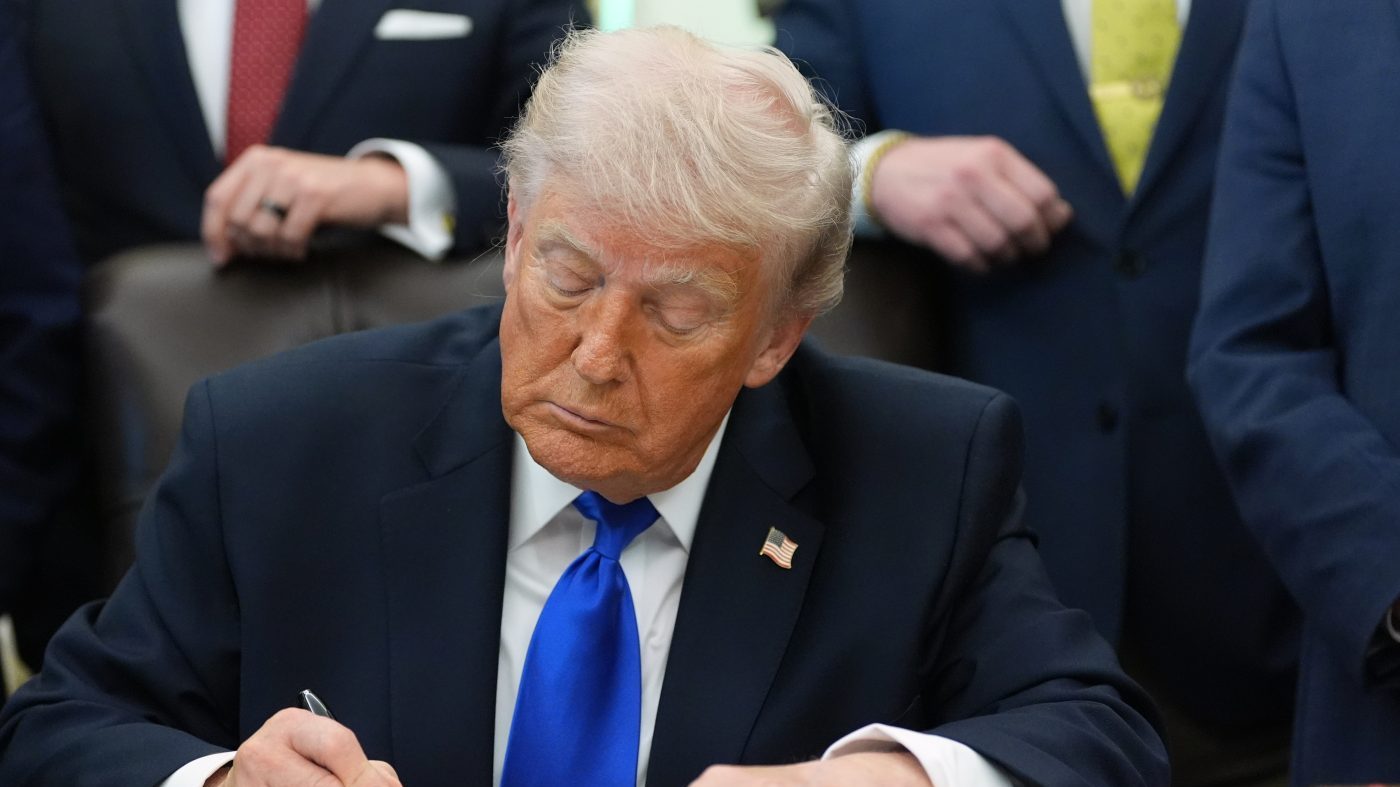
President Trump signed an executive order Thursday aimed at expanding retirement benefits for employees who lack access to such plans through their employers. The order does not establish a new government retirement program but instead connects workers with existing private-sector plans.
Under the directive, the Treasury Department will launch TrumpIRA.gov, a website where workers can select their own retirement accounts. Americans earning less than $35,500 individually or $71,000 as a couple can use the site to claim the Saver's Match, a federal contribution that matches their retirement savings.
“I’m thrilled to sign a historic executive order expanding access to high quality retirement savings accounts for millions of Americans,” Trump said before signing the order in the Oval Office.
He added, “In my State of the Union earlier this year, I promised to make the same types of retirement accounts enjoyed by federal employees available to all Americans, so that’s what we’re doing.”
The new federal retirement contribution stems from legislation Congress passed in 2022 during the Biden administration, which authorized matching contributions for low-income workers. The executive order operationalizes that provision.
The move comes as the Trump administration seeks to bolster its stance on affordability ahead of the midterm elections. A Gallup poll released this week found that 55 percent of respondents view their personal financial situation as worsening, a high not seen since 2001.
Critics note that the order relies on existing law and does not create new funding streams. Supporters argue it simplifies access to retirement savings for those who need it most.
Meanwhile, the administration faces other challenges. Trump recently blamed Senator Cassidy for the collapse of his surgeon general pick and warned of a primary challenge. Separately, bipartisan senators are pushing Trump to counter China's influence in Latin America ahead of a Beijing summit.
The executive order is part of a broader push to demonstrate economic relief, but with midterm anxieties rising, its impact may be limited by the scale of the program.