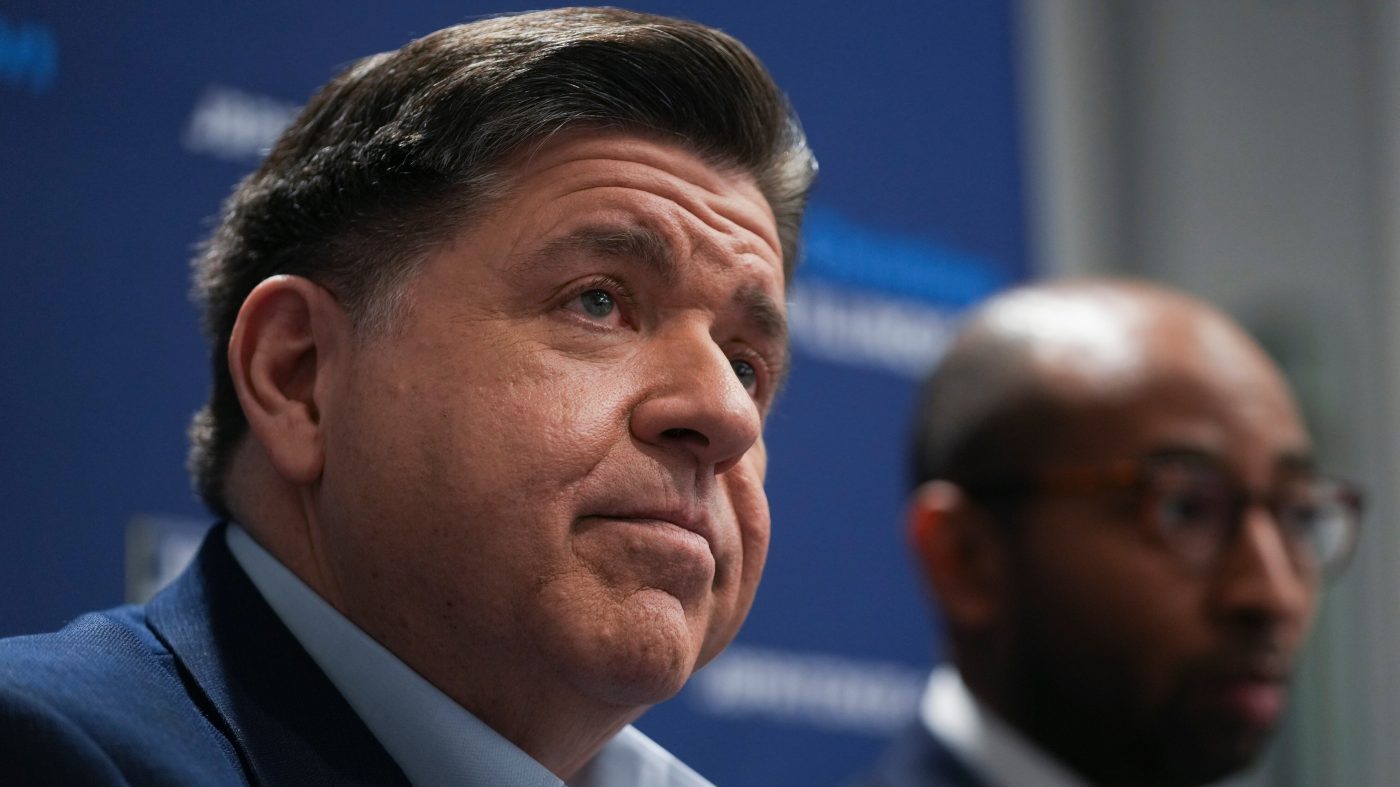
Illinois Governor JB Pritzker (D) sharply criticized the U.S. Supreme Court's decision to invalidate Louisiana's congressional voting map, describing it as an "abomination" and a direct assault on a fundamental pillar of American democracy. Speaking at a press conference Wednesday, Pritzker declared the ruling "an attack on a crown jewel of our democracy," signaling his intent to resist any erosion of voting protections in his state.
Supreme Court's Louisiana Ruling Reshapes Redistricting Landscape
The high court's 6-3 decision, handed down Wednesday, struck down Louisiana's creation of a second majority-Black congressional district, deeming it an unconstitutional racial gerrymander. Legal experts anticipate the ruling will significantly narrow the scope of Section 2 of the Voting Rights Act, which has long served as a key tool to combat racial discrimination in voting. This marks the latest in a series of conservative legal victories that have chipped away at the landmark civil rights law.
Pritzker, a prominent Democratic voice on voting rights, did not mince words about the stakes. "We're not going to stand for it in Illinois," he told reporters. "We're going to push back. We have options for pushing back. And that is under discussion with the legislature even today." The governor's remarks come as Illinois prepares for its next redistricting cycle, currently scheduled for 2031.
The Illinois state House has already moved to preemptively shield minority representation, passing a constitutional amendment that would require voter approval to change redistricting laws. The measure is now before the state Senate, which faces a May 3 deadline to advance it to the November ballot. If approved, it would enshrine protections against the kind of map-drawing the Supreme Court just endorsed.
Democrats and Republicans Split on Ruling's Implications
The ruling has drawn sharp partisan lines. Senate Minority Leader Chuck Schumer (D-NY) blasted the decision as "awful," warning that it would empower politicians to draw maps that silence voters, particularly those from historically disenfranchised communities. "The consequence is as clear as it is dangerous: fewer protections for voters, more power for politicians to draw maps that silence them," Schumer said in a statement.
Republicans, by contrast, celebrated the outcome. Florida Governor Ron DeSantis (R) praised the ruling as a validation of his own redistricting efforts, noting that it directly affects a Florida district whose legal flaws have been corrected in a newly drawn map now heading to his desk. "The decision implicates a district in FL — the legal infirmities of which have been corrected in the newly-drawn (and soon to be enacted) map," DeSantis posted on X.
The decision also clears the path for new GOP-drawn maps in Mississippi. Governor Tate Reeves (R) has pledged to call a special legislative session within 21 days of the ruling, while state Senate Leader Delbert Hosemann (R) hailed the decision as a reaffirmation of states' rights. "Today's Supreme Court ruling reaffirms one of Mississippi's fundamental states' rights and puts an end to years of federal overreach from Washington, D.C.," Hosemann wrote on X. "Redistricting should be accomplished by the legislators Mississippians elect to represent them."
The ruling is expected to ignite further redistricting battles across the South, with implications for the 2026 midterms and beyond. For critics, it represents a systematic dismantling of the Voting Rights Act's core protections, a trend that has accelerated under the current conservative majority on the bench.
As Pritzker and other Democrats mobilize, the fight over voting maps is far from over. Illinois' push for a constitutional amendment underscores a broader struggle to preserve minority representation in an era of increasingly aggressive partisan redistricting. The outcome of this battle will likely shape the political landscape for years to come.