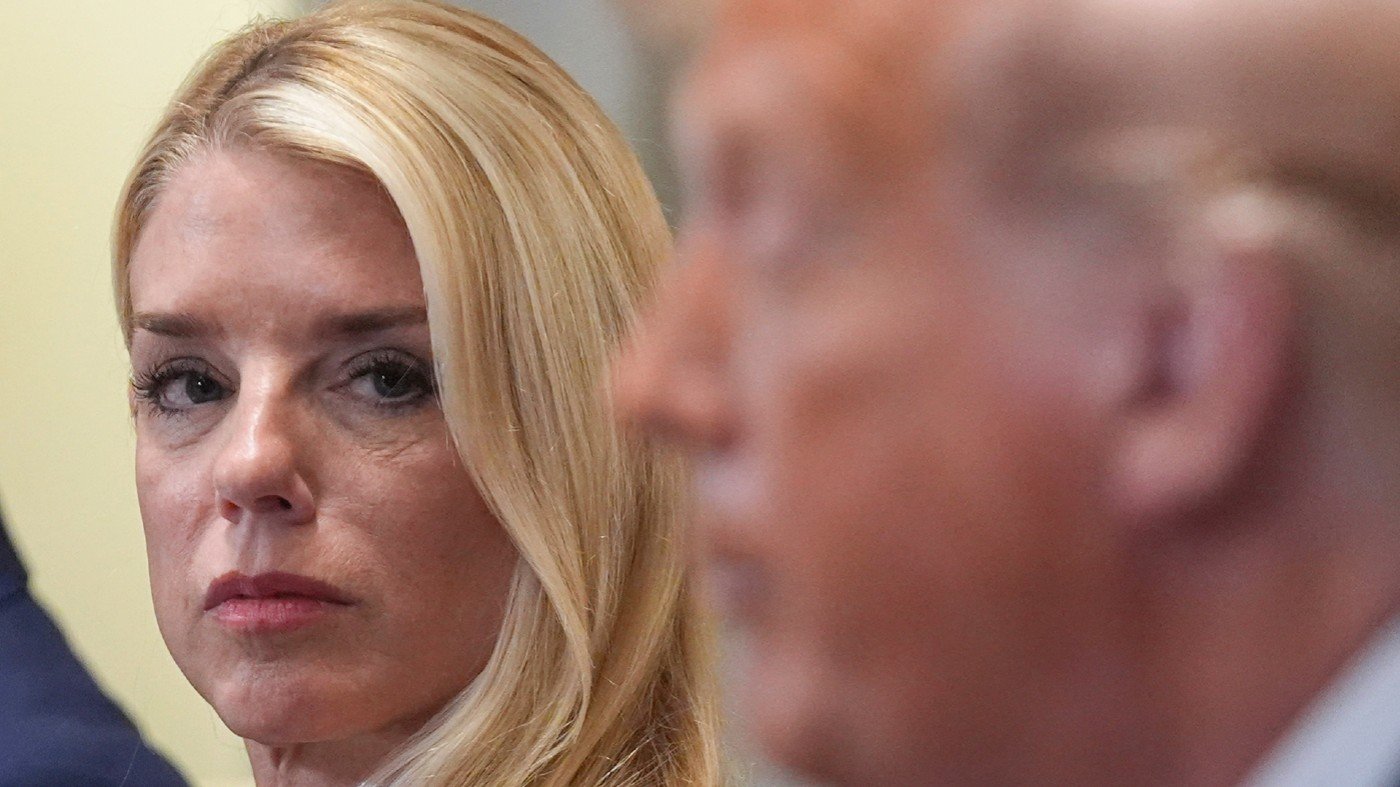
President Trump's abrupt dismissal of Attorney General Pam Bondi has removed her from office but not from congressional scrutiny. Her termination, attributed to both unsuccessful prosecutions of Trump's political targets and mishandling of the Jeffrey Epstein case files, leaves a critical oversight process unresolved. While the president praised her as a "Great American Patriot" in a social media post, her tenure ended with the Justice Department facing accusations of evading legislative mandates regarding Epstein documents.
Subpoena Stands Despite Dismissal
The Republican-led House Oversight Committee issued a bipartisan subpoena compelling Bondi to testify about the Justice Department's failure to comply with the Epstein Files Transparency Act. Her status as a private citizen does not nullify this legal summons, though it remains uncertain whether she will ultimately appear. This follows a pattern of judicial criticism toward her department's handling of sensitive cases.
Unlike other fired officials from Trump's second term—such as former Homeland Security Secretary Kristi Noem and national security adviser Michael Waltz, who received new administration roles—Bondi has returned to private life. This suggests the White House views her loyalty as sufficiently secure without requiring a continued position within the administration, a strategy that contrasts with Trump's typical approach of retaining potential critics.
A Contentious Previous Appearance
Bondi's last congressional testimony before the House Judiciary Committee in February devolved into spectacle, marked by personal attacks on members from both parties. She called Representative Jamie Raskin (D-Md.) a "washed-up, loser lawyer" and told Representative Thomas Massie (R-Ky.) he was a "failed politician" and "hypocrite." When pressed by Representative Pramila Jayapal (D-Wash.) to apologize to an Epstein survivor present for the release of personal information, Bondi refused, stating she would not "get in the gutter with this woman."
Her substantive answers were equally problematic. When questioned about Epstein's co-conspirators, she responded irrelevantly by citing the Dow Jones index being "over $50,000," a statement both unrelated and factually incoherent—the Dow is measured in points, not dollars. This performance, described by observers as obstructionist, yielded little useful information for the committee.
The Art of Cross-Examination
Legal experts argue that effective cross-examination requires a "probing, prying, pressing form of inquiry," as articulated in a unanimous Supreme Court opinion. The Judiciary Committee's failure to control Bondi's testimony and force direct answers represents a missed opportunity. Should she testify again, lawmakers must employ sharper techniques to uncover the truth about several unresolved issues she previously evaded.
Key Unanswered Questions
Congressional investigators have identified specific areas requiring clarification:
- Why were FBI interview reports with a victim who accused Donald Trump of sexual misconduct withheld only after media reports described them? What investigation followed these allegations, and are other Trump-related records being concealed?
- Bondi claimed in a television interview that an Epstein "client list" was "sitting on my desk right now to review." Did this list exist? If so, where is it within DOJ systems? If not, why did she publicly assert its existence?
- Following a July 2025 interview by Deputy Attorney General Todd Blanche with convicted co-conspirator Ghislaine Maxwell—in which she absolved Trump of misconduct—Maxwell was transferred to a less restrictive prison camp. What prompted this transfer, and is she under consideration for a presidential pardon?
- The draft indictment of Epstein and four co-conspirators redacted the names of the four individuals. Who are they, and what justified the redaction?
Additional troubling details from the Epstein files include redacted email correspondences referencing Epstein's "littlest girl" and a comparison to "Lolita from Nabokov." The identities of the senders and the rationale for continued secrecy remain undisclosed, fueling demands for transparency that extend beyond Bondi's tenure. This lack of disclosure has prompted legal action from Epstein victims over privacy breaches.
Accountability Beyond Dismissal
Hours before firing Bondi, Trump publicly stated she was "a wonderful person, doing a good job." This contradiction underscores the political complexities surrounding her departure. Her firing, while addressing one aspect of administrative dissatisfaction, does not resolve the substantive legal and oversight questions hanging over her handling of the Epstein investigation.
As the White House moves to dismiss speculation about further cabinet changes, the focus shifts to Bondi's potential return to the witness stand. Lawmakers from both parties recognize that her dismissal does not equate to accountability for the transparency failures and unanswered questions that defined her final months in office. The coming confirmation process for her successor will likely see warnings from senators that loyalty alone does not ensure job security in this administration.