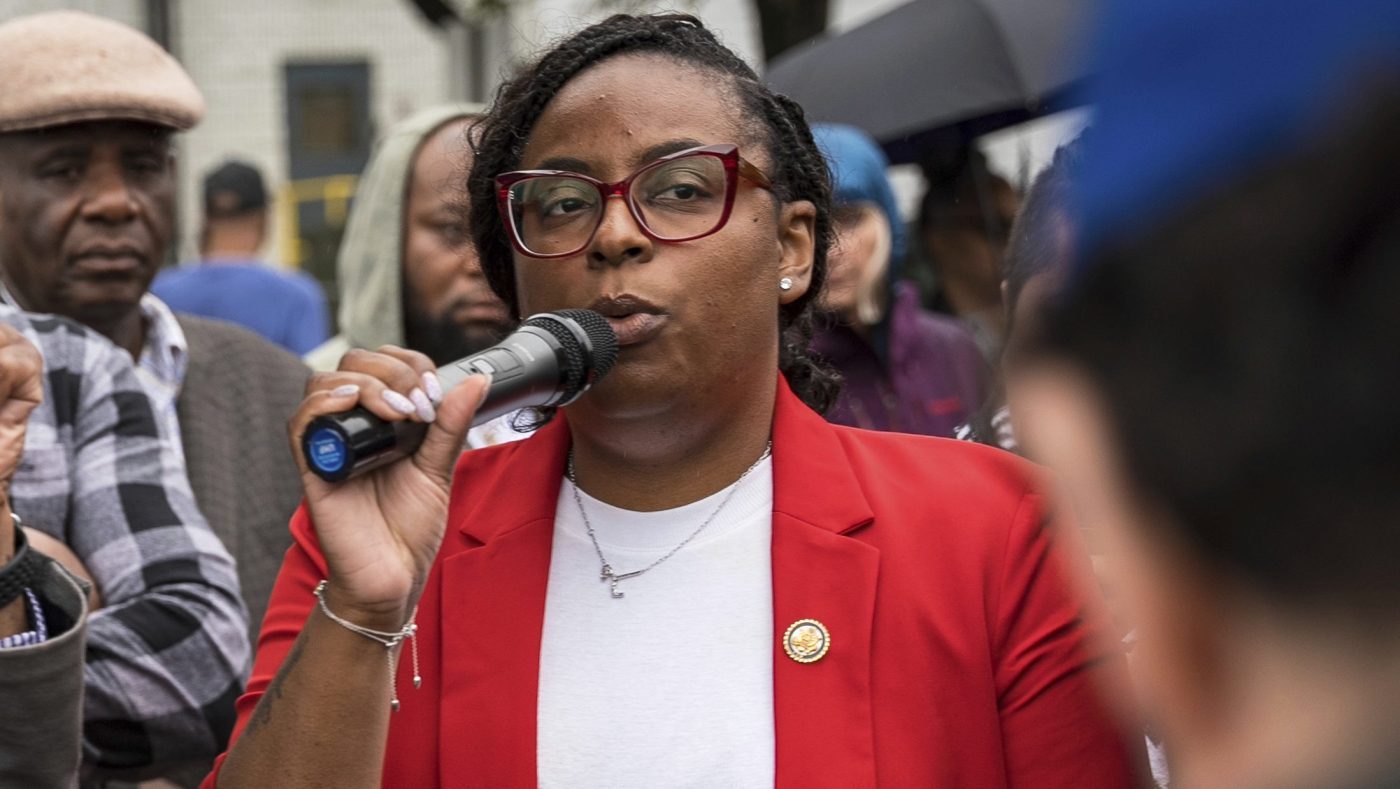
A federal appeals court has declined to throw out the criminal case against Rep. LaMonica McIver (D-N.J.), even as the judges split over whether her actions during a scuffle with immigration agents were part of her legislative duties. The ruling from the 3rd Circuit Court of Appeals on Wednesday keeps alive charges that McIver used her forearms to strike federal officers during a visit to a detention facility in Newark.
McIver had sought dismissal on multiple grounds, including her argument that the incident occurred while she was conducting oversight at the Delaney Hall detention center, and that she should be shielded by the Constitution's Speech or Debate Clause. That clause protects members of Congress from prosecution for legislative acts, but the appeals court found that her physical confrontation went beyond the scope of protected legislative activity.
Ruling and Dissent
The three-judge panel unanimously agreed that McIver's inspection of the facility was a protected legislative function. However, the majority determined that her intervention in the arrest of Newark Mayor Ras Baraka was not. Judge Cindy Chung, writing for the majority, said the clause does not cover "all things in any way related to the legislative process." She wrote that McIver's physical contact with an agent was not "integral" to the deliberative and communicative processes of congressional oversight.
Judge Thomas Ambro dissented in part, arguing that the case should be allowed to proceed on a broader reading of legislative immunity. He said McIver's actions were "plausibly incidental" to her effort to enter the facility, and that she was being blocked from performing her oversight duties. He also noted that McIver presented enough evidence to warrant discovery on whether the prosecution was politically motivated.
Ambro wrote that legislators must be free from "fear that the Executive will use criminal prosecution to punish legislators for their oversight and political opposition." He argued that allowing McIver to probe the government's intent would safeguard legislative independence.
The case stems from a March visit to Delaney Hall, where McIver and other Democrats were touring the facility. The visit turned chaotic when immigration agents attempted to arrest Mayor Baraka, who was later released without charges. McIver is accused of slamming her forearm into one agent and striking a second with both forearms.
The appeals court allowed charges related to those two incidents to proceed, but remanded a third count that broadly alleged she tried to obstruct the mayor's arrest. That count will be reviewed again by the lower court.
The decision highlights ongoing tensions between congressional oversight and executive enforcement, particularly in immigration matters. It also comes amid broader debates over the limits of executive authority on border policy and the use of deportation freezes that have sparked legal challenges.
McIver's office has not yet commented on the ruling. Her legal team had argued that the prosecution was selective and retaliatory, pointing to the fact that Mayor Baraka was not charged. The case will now return to the district court for further proceedings.