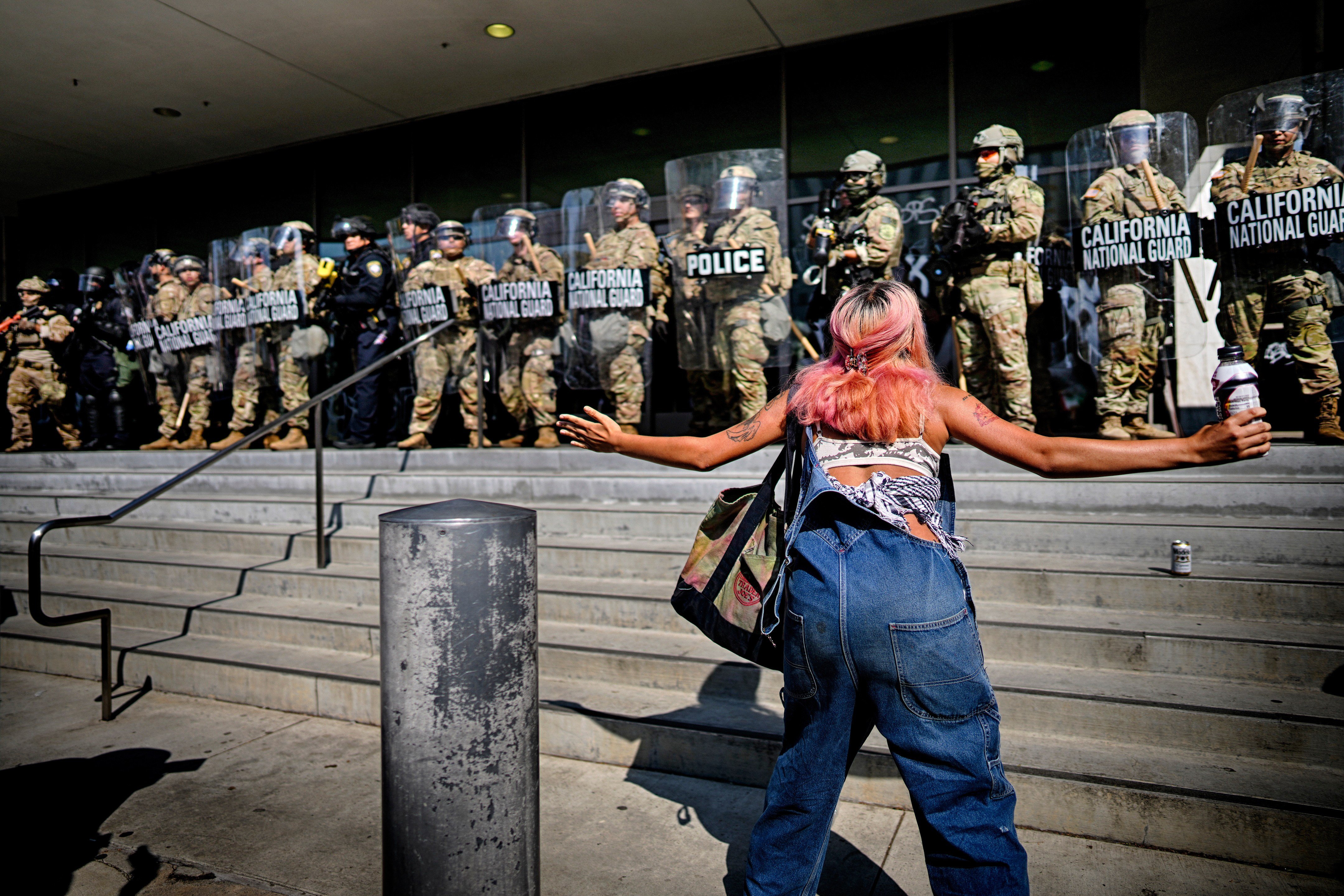
A divided federal appeals court ruled on Friday that President Trump's decision to send National Guard troops to the Los Angeles area last year was unlawful, delivering a rebuke to the administration's use of military force against domestic protests.
The U.S. Court of Appeals for the 9th Circuit, in a 2-1 decision, rejected Trump's argument that violent demonstrations against his immigration crackdown gave him the authority to take control of the troops from California Governor Gavin Newsom, a Democrat. The ruling marks a significant legal setback for the administration and could constrain future deployments in the region.
Although the deployment has ended, the decision concludes a year-long legal battle. Earlier in the case, the 9th Circuit had sided with Trump, but the panel changed course after the Supreme Court ruled in a separate case that the president did not meet the legal requirements to unilaterally deploy the National Guard to Chicago.
Writing for the majority, U.S. Circuit Judge Jennifer Sung, an appointee of former President Biden, stated, "Defendants have not made either of the required threshold showings here. Thus, they have not carried their burden." Judge Sung was joined by Judge Eric Miller, a Trump appointee, who also ruled against the president. Judge Mark Bennett, another Trump appointee, dissented.
In his dissent, Judge Bennett argued that the court should not have decided the case, noting that the administration had sought to dismiss the appeal and return to the trial court to consider the implications of the Supreme Court's ruling. "But the majority insists on pressing forward, relying primarily on outdated briefs prepared amid a shifting legal landscape," Bennett wrote.
The ruling now binds future 9th Circuit panels, meaning any similar attempt by Trump to deploy National Guard troops in California would face a significant legal hurdle. Last year, Trump sent National Guard units to several Democratic-led cities, including Washington, D.C., Memphis, and Portland, Oregon, to suppress protests against his immigration policies. In Los Angeles, demonstrations occasionally turned violent, with reports of looting and the use of Molotov cocktails.
The president justified the deployment by invoking a law that allows federalizing troops in cases of rebellion or when regular forces are unable to enforce the law. However, the Supreme Court last year indicated that "regular forces" likely refers to the U.S. military, not state National Guard units, and that Trump had not met the necessary criteria.
Trump's ongoing National Guard deployment in the nation's capital, which relies on a different legal authority, remains unaffected by this ruling.