Senators from both parties acknowledge that the Supreme Court has dramatically reshaped the political battlefield ahead of the 2026 midterms by ruling that majority-minority House districts amount to unconstitutional racial gerrymandering.
Democratic lawmakers erupted in fury, arguing the decision harkens back to the Jim Crow era of the 1950s and early 1960s, when poll taxes and literacy tests suppressed Black voter turnout. They also warn it could hand Republicans as many as 19 additional House seats, flipping the balance of power.
Republicans Seize the Moment
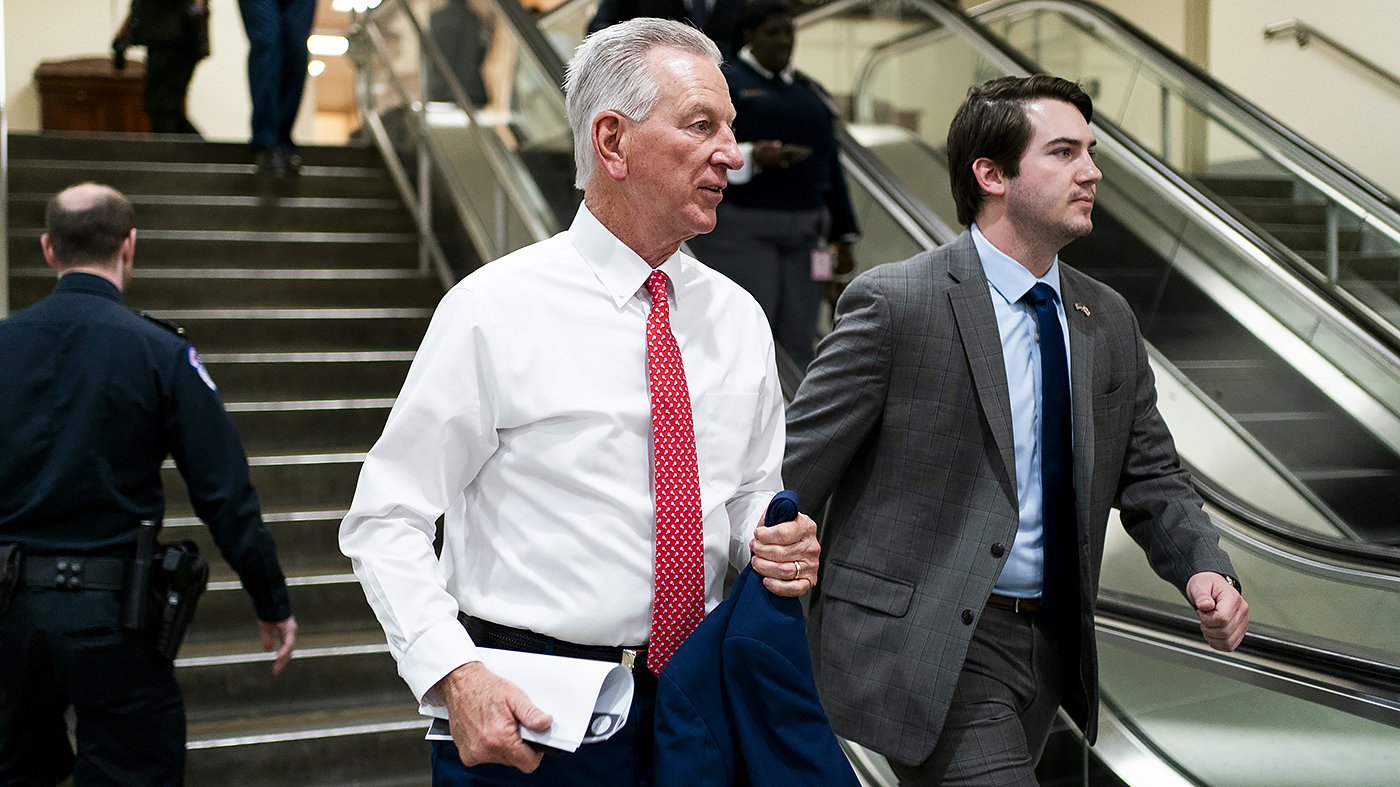
Republicans immediately celebrated the ruling as a political victory. Sen. Tommy Tuberville (R-Ala.) called on GOP-controlled state legislatures to redraw congressional maps without delay, even as House primaries loom just weeks away. "LET'S GO!" Tuberville posted on X, urging Alabama's attorney general and secretary of state to vacate a federal injunction that locks in the state's current map through 2030. Alabama, which gave Donald Trump 65% of the vote in 2024, currently has two majority-minority districts held by Democrats Shomari Figures and Terri Sewell.
Sen. Marsha Blackburn (R-Tenn.), running for governor, called for a special legislative session to eliminate the majority-minority district in Memphis represented by Rep. Steve Cohen (D). "It's essential to cement @realDonaldTrump's agenda and the Golden Age of America," she wrote on X, sharing a graphic of Tennessee entirely in red.
Sen. Jim Banks (R-Ind.) noted that while it's too late for Indiana to redraw its lines, the decision could ignite an "arms race" among states. "If both sides are doing it, you kind of have an arms race," Banks said. "The Supreme Court decision today I think further motivates that case."
Democrats Vow to Fight
Senate Democratic Leader Chuck Schumer (N.Y.) declared the ruling "upends half a century of precedent" and "defies the spirit of the American civil rights movement." He estimated it could lead conservative legislatures to draw as many as 19 additional GOP-leaning seats. Sen. Cory Booker (D-N.J.) called it "another evisceration of Section 2 of the Voting Rights Act," warning it further disenfranchises voters. "That's the whole reason why we have the Voting Rights Act, to stop legislatures from trying to undermine fairness of elections," Booker said.
Sen. Raphael Warnock (D-Ga.) labeled the decision "yet another assault on voting rights from the same Supreme Court that hobbled the Voting Rights Act in Shelby v. Holder." He added, "I'm deeply disappointed by the decision that we saw today, but I refuse to be discouraged."
Immediate Legislative Fallout
Within an hour of the ruling, the Republican-controlled Florida House approved a heavily gerrymandered map that could net the GOP four more House seats, endangering Democratic Reps. Kathy Castor, Darren Soto, Jared Moskowitz, and Debbie Wasserman Schultz. The decision is also expected to impact maps in Arkansas, Louisiana, Missouri, Mississippi, and South Carolina. Sen. Josh Hawley (R-Mo.) said, "It will certainly apply to Missouri."
The Supreme Court struck down Louisiana's second majority-Black congressional district. Writing for the conservative majority, Justice Samuel Alito argued that "the Constitution almost never permits the Federal Government or a State to discriminate on the basis of race" and that Louisiana lacked a compelling interest for its race-based map. In a forceful dissent, liberal Justice Elena Kagan accused the majority of gutting the Voting Rights Act, making it "nearly impossible" for plaintiffs to prove vote dilution. Kagan accused conservative justices of completing the Voting Rights Act's 'demolition'.
The ruling has already sparked new redistricting battles across the South. Supreme Court ruling sparks new redistricting battles across Southern states, with both parties bracing for a contentious cycle. Meanwhile, Pritzker vows fight after Supreme Court narrows Voting Rights Act, signaling continued Democratic resistance.