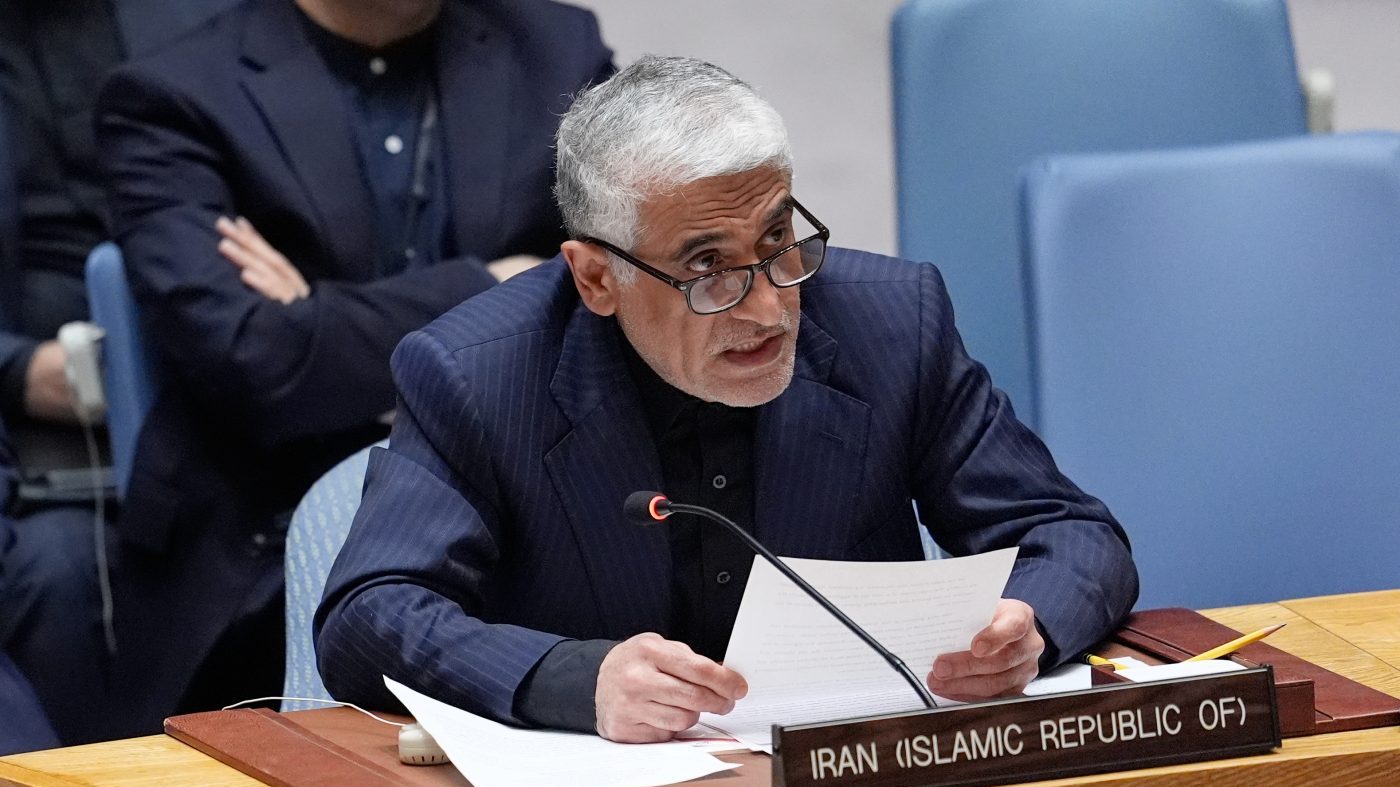
Iran's ambassador to the United Nations, Amir Saeid Iravani, told the Security Council on Tuesday that Tehran is prepared for serious diplomatic engagement to end the Middle East conflict but will not accept any temporary cessation of hostilities. This position comes as the Trump administration has issued an ultimatum demanding Iran reopen the Strait of Hormuz, a critical global shipping lane it has blocked, or face intensified military strikes.
Iravani stated Iran would engage constructively with "all genuine diplomatic efforts," specifically naming regional mediators Pakistan, Turkey, and Egypt, as well as initiatives from China and Russia. He emphasized support only for initiatives capable of delivering a "sustainable end" to what he termed an unlawful war. A UN-appointed diplomatic envoy is reportedly en route to Tehran.
Strait of Hormuz at Center of Standoff
The ambassador's remarks followed a failed Security Council resolution, led by Bahrain and vetoed by China and Russia, aimed at reopening the Strait. Iran's effective blockade of the waterway, a response to initial U.S.-Israeli strikes in February, has sent shockwaves through the global economy, disrupting supply chains and spiking energy prices.
According to diplomatic reports, a draft proposal delivered via Egyptian, Pakistani, and Turkish mediators offered a 45-day ceasefire in exchange for reopening the strait. Tehran has dismissed this plan as "unrealistic," with Iravani explicitly rejecting a temporary truce. He cited the collapse of a previous ceasefire in June, after which Israel resumed attacks, as justification for demanding permanent guarantees. "Any viable solution must ensure a definitive and irreversible end to the aggression," Iravani asserted.
Trump's Deadline and Threats of Escalation
The diplomatic stalemate is set against a backdrop of escalating threats from Washington. President Trump has threatened to strike Iranian bridges and power plants if Tehran does not comply with his demands by an 8 p.m. EDT deadline. In a social media post, Trump warned, "A whole civilization will die tonight, never to be brought back again," despite legal experts noting such strikes on civilian infrastructure could constitute war crimes.
Iranian leaders have shown no sign of capitulation. President Masoud Pezeshkian, in a social media post, vowed continued devotion to the nation's defense, claiming over 14 million Iranians had registered to sacrifice their lives. The Iranian government has pledged to continue its retaliatory campaign against U.S. and Israeli assets in the region.
Conflicting reports emerged on the status of backchannel talks. While The New York Times reported Iran had halted indirect negotiations with the Trump administration, Iranian state media denied this. Pakistani Prime Minister Shehbaz Sharif later confirmed diplomatic efforts were "progressing steadily." Sharif publicly urged Trump to extend his deadline by two weeks and called on Iran to reopen the strait temporarily as a "goodwill gesture," while advocating for a two-week ceasefire to allow diplomacy to conclude the war.
The crisis has exposed deep international divisions, with China and Russia backing Iran's call for a political solution over coercive measures. This aligns with a broader pattern where major powers are offering contrasting models of engagement, one favoring permanent arrangements and another reliant on temporary pressure. Meanwhile, the standoff is exacerbating domestic political tensions in Washington, where a funding impasse over Department of Homeland Security appropriations underscores the challenges of managing concurrent crises.
Analysts suggest Iran's refusal of a temporary deal is a calculated move to leverage its strategic position. As noted in prior analysis, Tehran may be withholding a ceasefire to extract maximum concessions related to the strait and its broader security posture. The immediate future hinges on whether the Trump administration follows through on its threats or heeds calls from mediators to allow more time for diplomacy, a scenario explored in coverage of the White House's response to Tehran's defiance.