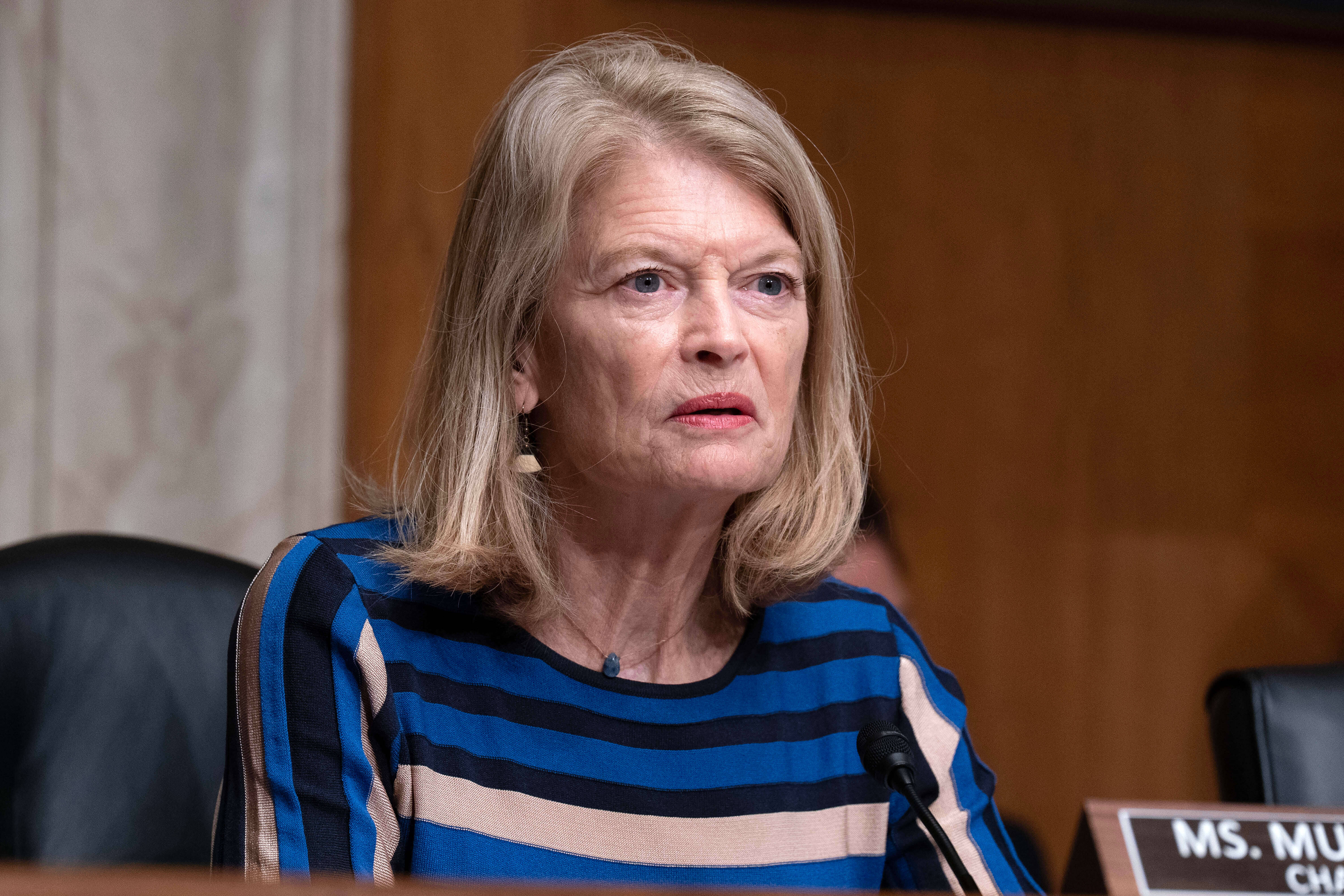
Senator Lisa Murkowski, a Republican from Alaska, issued a sharp rebuke Tuesday against President Trump's escalating rhetoric toward Iran, urging both nations to step back from the brink of confrontation. Her statement came hours after Trump warned that Iran's "whole civilization will die tonight" unless a diplomatic breakthrough occurs, referencing an 8 p.m. EDT deadline for Tehran to strike a new deal and reopen the Strait of Hormuz.
A Republican Voice of Dissent
In a post on the social platform X, Murkowski argued the President's threat cannot be dismissed as mere negotiating tactics. "This type of rhetoric is an affront to the ideals our nation has sought to uphold and promote around the world for nearly 250 years," she wrote. "It undermines our long-standing role as a global beacon of freedom and directly endangers Americans both abroad and at home." Her criticism adds to a growing chorus of concern, including from some of Trump's own allies who have warned that war with Iran would trigger regional chaos.
While condemning the Iranian government as an "oppressive, terror-spreading regime," Murkowski placed equal onus on Washington and Tehran to reduce tensions. "All involved in both countries, especially the President and Iran's leaders, must de-escalate their unprecedented saber-rattling before it is too late," she stated. Her remarks stood in contrast to more direct calls for action from Democratic lawmakers, who have demanded Republican opposition to the President or even discussed invoking the 25th Amendment.
International Appeals and Ominous Warnings
The international community reacted with alarm to the looming deadline. Pakistani Prime Minister Shehbaz Sharif publicly urged Trump to extend the timeline to allow diplomacy to resume, a plea that had not been formally accepted or rejected by the White House as of Tuesday evening. The crisis has prompted regional precautions, with Kuwait imposing a curfew as the deadline approached.
Trump's specific threat on Sunday to strike Iranian bridges and electrical infrastructure, coupled with his "civilization" remark, raised profound questions about the potential scale of U.S. action. This prompted Representative Joaquin Castro, a Democrat from Texas, to demand the administration explicitly rule out the use of nuclear weapons against Iran. The White House later dismissed the notion that such weapons would be used, but offered little clarity on the President's intentions.
"The Iranian regime has until 8 PM Eastern Time to meet the moment and make a deal with the United States," said White House press secretary Karoline Leavitt. "Only the President knows where things stand and what he will do." The ambiguity left allies and analysts grappling with the possibility of a major military escalation, with many condemning a threat they viewed as disproportionate against a nation of 93 million people.
Iran's Defiant Response
Iranian officials responded with defiance. Foreign Ministry spokesperson Esmaeil Baqaei warned that his "civilized" country would prevail over "brute force." In a post on X, Baqaei asserted, "A nation that has every faith in the righteousness of its path shall harness all its capacities and capabilities to safeguard its rights and legitimate interests." This stance aligns with Tehran's broader diplomatic posture, as it has rejected temporary solutions at the United Nations in favor of demanding a permanent end to hostilities.
The confrontation represents a critical test of Trump's "maximum pressure" strategy, which has brought the two nations to repeated crises since the U.S. withdrawal from the nuclear deal. Murkowski's intervention highlights the rare but significant fractures within the Republican Party over national security and the appropriate use of presidential power. As the deadline passed, the world awaited the President's next move, with the risk of a broader conflict hanging in the balance.