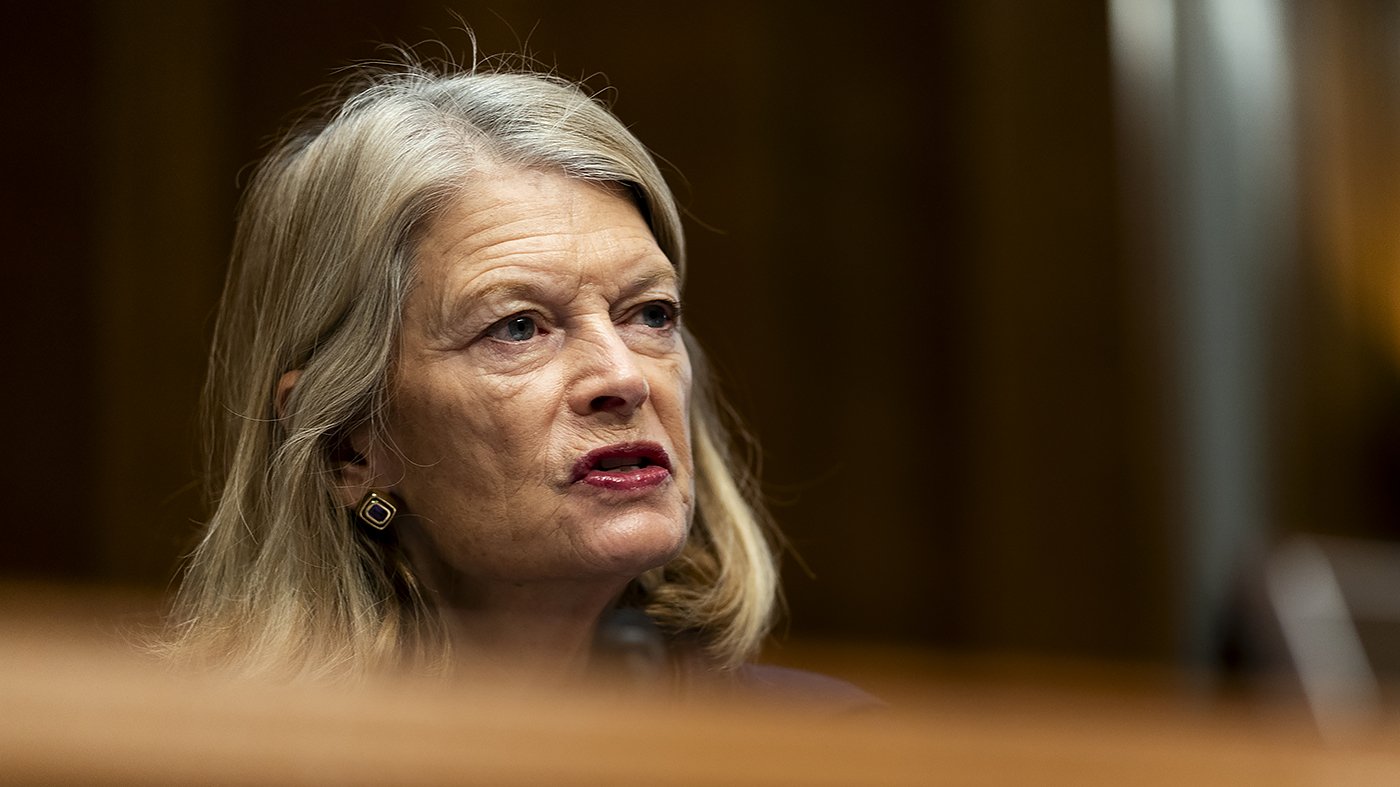
Republican Senator Lisa Murkowski issued a forceful condemnation Tuesday of President Trump's threat to annihilate Iranian civilization, declaring such rhetoric "cannot be excused away" as negotiating tactics and represents a fundamental breach of American principles.
The Alaska senator, who sits on the Senate Appropriations defense subcommittee, stated on social media that the president's language "is an affront to the ideals our nation has sought to uphold and promote around the world for nearly 250 years." She argued it "undermines our long-standing role as a global beacon of freedom and directly endangers Americans both abroad and at home."

A Threat and a Retreat
The controversy stems from a series of posts Trump made on his Truth Social platform Tuesday morning, in which he declared, "A whole civilization will die tonight, never to be brought back again," while referring to Iran. He had set an 8 p.m. Eastern deadline for Tehran to lift restrictions on shipping through the critical Strait of Hormuz, adding, "I don't want that to happen, but it probably will."
Trump suggested the threat was tied to potential regime change, writing, "now that we have Complete and Total Regime Change, where different, smarter, and less radicalized minds prevail, maybe something revolutionarily wonderful can happen." He framed the moment as potentially ending "47 years of extortion, corruption, and death."
Diplomatic Intervention and a Pause
Later Tuesday, the president reversed course, announcing he would suspend military strikes against Iran for two weeks following diplomatic outreach from Pakistani Prime Minister Shehbaz Sharif and Army Chief Asim Munir. Trump claimed on Truth Social that "all Military objectives" had been met and that the U.S. was "very far along with a definitive Agreement concerning Longterm PEACE with Iran."
He stated the U.S. had received a ten-point proposal from Iran that served as a "workable basis" for negotiation, with most contentious issues already resolved. The two-week window, he said, would allow finalization of the agreement.
The Iranian Supreme National Security Council confirmed it accepted the ceasefire and would begin negotiations with U.S. officials in Islamabad starting Friday, according to The Associated Press. However, the council cautioned that "this does not signify the termination of the war," warning that "our hands remain upon the trigger" should the U.S. commit "the slightest error."
Broad Political Backlash
Murkowski was not alone in her criticism. The president's initial threat drew rebukes from an unusual coalition including Democratic lawmakers, Republican Senator Ron Johnson of Wisconsin, former Representative Marjorie Taylor Greene, commentator Tucker Carlson, and even Pope Leo XIV, who denounced the ultimatum as morally unacceptable.
Murkowski emphasized in her statement that the Iranian regime must be distinguished from its people and civilization, urging all parties—"especially the President and Iran's leaders"—to "de-escalate their unprecedented saber-rattling before it is too late."
The episode highlights the deepening divisions within the Republican Party over Trump's foreign policy approach, even as he continues to exert significant influence over the party's direction, including in congressional races where he has targeted incumbent Republicans in primary contests.
Legal experts noted that intentional attacks on civilians or civilian objects not used for military purposes could constitute war crimes under the Rome Statute of the International Criminal Court, adding a layer of legal gravity to the president's public threats.