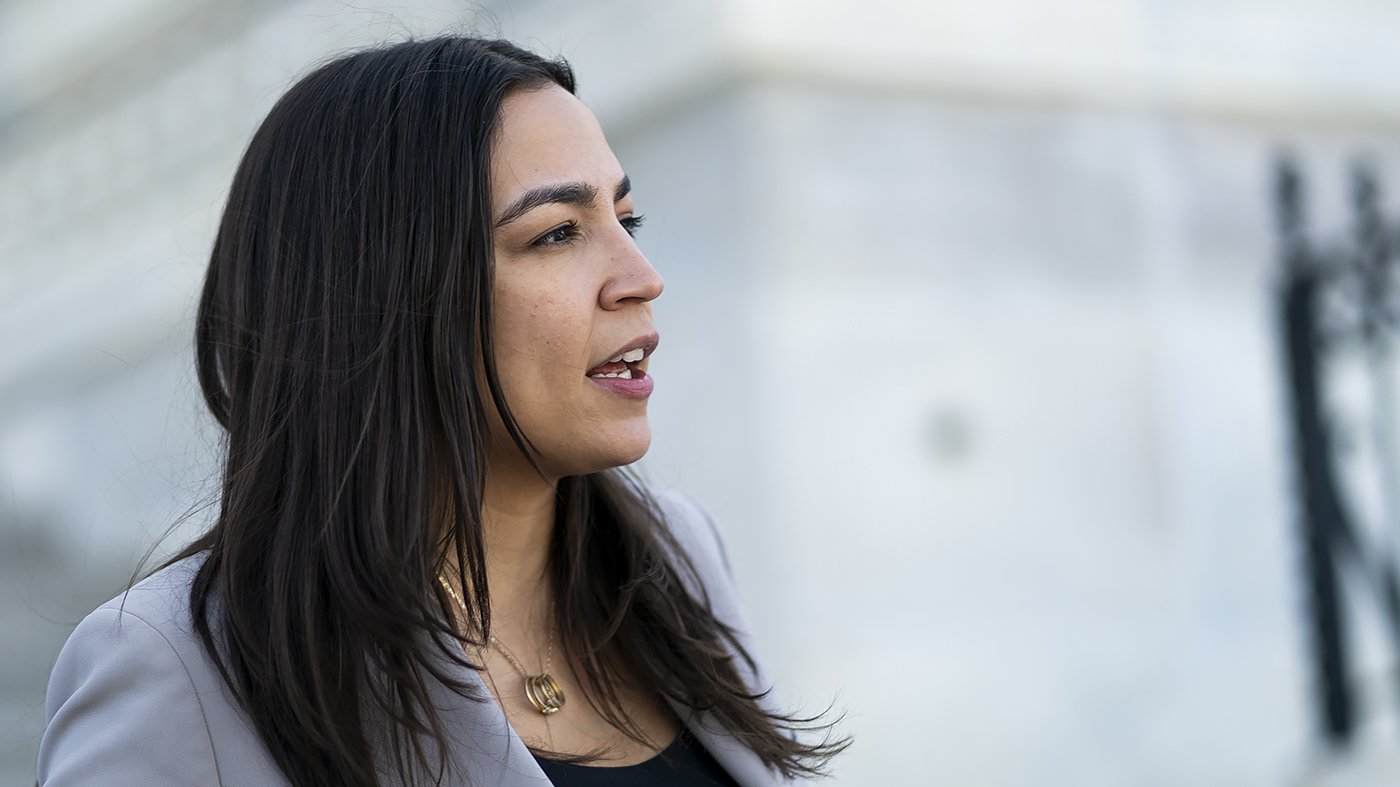
Representative Alexandria Ocasio-Cortez (D-N.Y.) has renewed her call to dismantle the largest technology firms, arguing they are amassing power akin to that of governments. In a Fox News interview aired Sunday, the progressive lawmaker asserted that these corporations operate as if they are sovereign entities, requiring aggressive antitrust action. “The problem that we have is that these big companies, they think they are governments, they want to be governments,” Ocasio-Cortez said. “We need to break up a lot of these companies that are far, far too big, and we also need to be instituting consumer protections for people.”
The remarks come as Apple Inc. faces scrutiny over its decision to raise prices on MacBooks and iPads, attributing the hikes to soaring costs for memory and storage chips. In an interview earlier this month, Apple CEO Tim Cook told The Wall Street Journal that the company is adjusting its pricing to offset rising component expenses. This move has reignited debate over market concentration and its impact on consumers, particularly as inflation continues to strain household budgets.
Ocasio-Cortez, alongside Senator Bernie Sanders (I-Vt.), has also introduced legislation aimed at halting the construction of new data centers until federal safeguards are established. The Artificial Intelligence Data Center Moratorium Act, unveiled in March, seeks to pause the buildout of AI infrastructure until Congress enacts measures mandating government reviews of AI systems, preventing mass job displacement, and capping increases in residential electricity rates.
“A moratorium will give us time — time to understand the risks, time to protect working families, time to defend our democracy and time to ensure that this technology works for all of us, not just the few,” Sanders stated at a press conference earlier this year. The bill reflects growing unease among progressives about the rapid expansion of AI and its potential to exacerbate inequality and erode privacy.
The push for stricter oversight of big tech and AI infrastructure is gaining traction at the state level as well. In a landmark move two months ago, the Maine Legislature became the first state legislative body to pass a bill blocking the development of large-scale data centers. Similar measures are being considered in other states, driven by local opposition to the environmental and economic impacts of these facilities.
Public sentiment appears to be shifting against the unchecked proliferation of data centers, with communities raising concerns about water usage, energy demands, and the strain on local grids. The debate over AI regulation has also intersected with broader political battles, such as the ongoing dispute over immigration policy and Temporary Protected Status (TPS) for Haitian nationals, a topic on which Ohio’s Republican governor broke with former President Donald Trump following a Supreme Court ruling.
Ocasio-Cortez’s antitrust stance aligns with a growing bipartisan chorus criticizing the dominance of tech giants like Apple, Amazon, and Google. However, her proposal to break up these companies faces stiff opposition from industry lobbyists and some lawmakers who argue that such actions could stifle innovation and harm the economy. The debate is likely to intensify as the 2024 election cycle approaches, with candidates on both sides staking out positions on tech regulation.
Meanwhile, consumer advocates are drawing parallels between tech price hikes and other sectors. For instance, a deadline is approaching for consumers to file claims in a $87.5 million beef price-fixing settlement, highlighting broader concerns about corporate consolidation driving up costs across industries.
As the Biden administration continues to pursue antitrust enforcement through the Federal Trade Commission and the Department of Justice, Ocasio-Cortez and Sanders are pushing for legislative action to complement those efforts. Whether their moratorium bill or breakup proposals can gain enough support in a divided Congress remains uncertain, but the debate over the power of big tech and the future of AI is unlikely to fade anytime soon.