U.S. Central Command has prepared a menu of potential military strikes against Iran, to be executed only if President Trump gives the order after next month's midterm elections, according to two sources familiar with the planning who spoke on condition of anonymity.
The plans, which would mark a resumption of hostilities after more than eight months of conflict, are being presented to Defense Secretary Pete Hegseth, one source said. The president, the source added, intends to keep all options on the table until a final decision is required.

"To me, it looks pretty likely that the U.S. goes back to military strikes on Iran once the midterm elections are passed," Gregory Brew, an Iran analyst at Eurasia Group, told The Hill.
Harrison Mann, a former executive officer at the Defense Intelligence Agency's Middle East/Africa Regional Center, outlined two escalation paths Trump could take: a return to strikes on Iranian military and political targets inland, or a campaign against civilian and energy infrastructure if Israeli forces participate.
"I emphasize inland because since April, the U.S. has basically not attacked anything except for targets on Iran's coasts," Mann said. "That was probably both to reduce the risk of escalation and because they were not willing to risk having more planes shot down."
The second path, he noted, is not mutually exclusive and becomes more likely with Israeli involvement. It would entail directly targeting civilian infrastructure, energy infrastructure, or, as Israel did early in the conflict, universities, police stations, and other civilian sites.
The Pentagon declined to comment on specific plans. "Our job is to develop and present military options to the President," a defense official said. "We don't speculate on hypothetical situations or future operations." Centcom did not respond to a request for comment.
The push for military options comes as the administration seeks major concessions from Tehran amid stalled diplomatic negotiations. Trump has warned that the U.S. could attack Iran after the November midterms, where Republicans are battling to hold both chambers of Congress.
The White House believes Iran's economy is deteriorating under sanctions and a U.S. naval blockade, with inflation climbing. "Basically, using force to add to the existing pressures that are on Iran, force them to capitulate, reach a deal, and allow the U.S. to exit the war," Brew said, adding that frustration with the lack of diplomatic progress is driving the consideration of strikes.
"The Iranians are not bending; they're not showing any flexibility," he said. "They have a negotiating position that they've been sticking to now for several weeks."
On Monday, Hegseth visited U.S. troops in the Middle East alongside Israeli Prime Minister Benjamin Netanyahu. "We've worked with the Israeli military quite a bit. That's nothing new," Hegseth told reporters Tuesday in Wisconsin, praising Israel as "good partners."
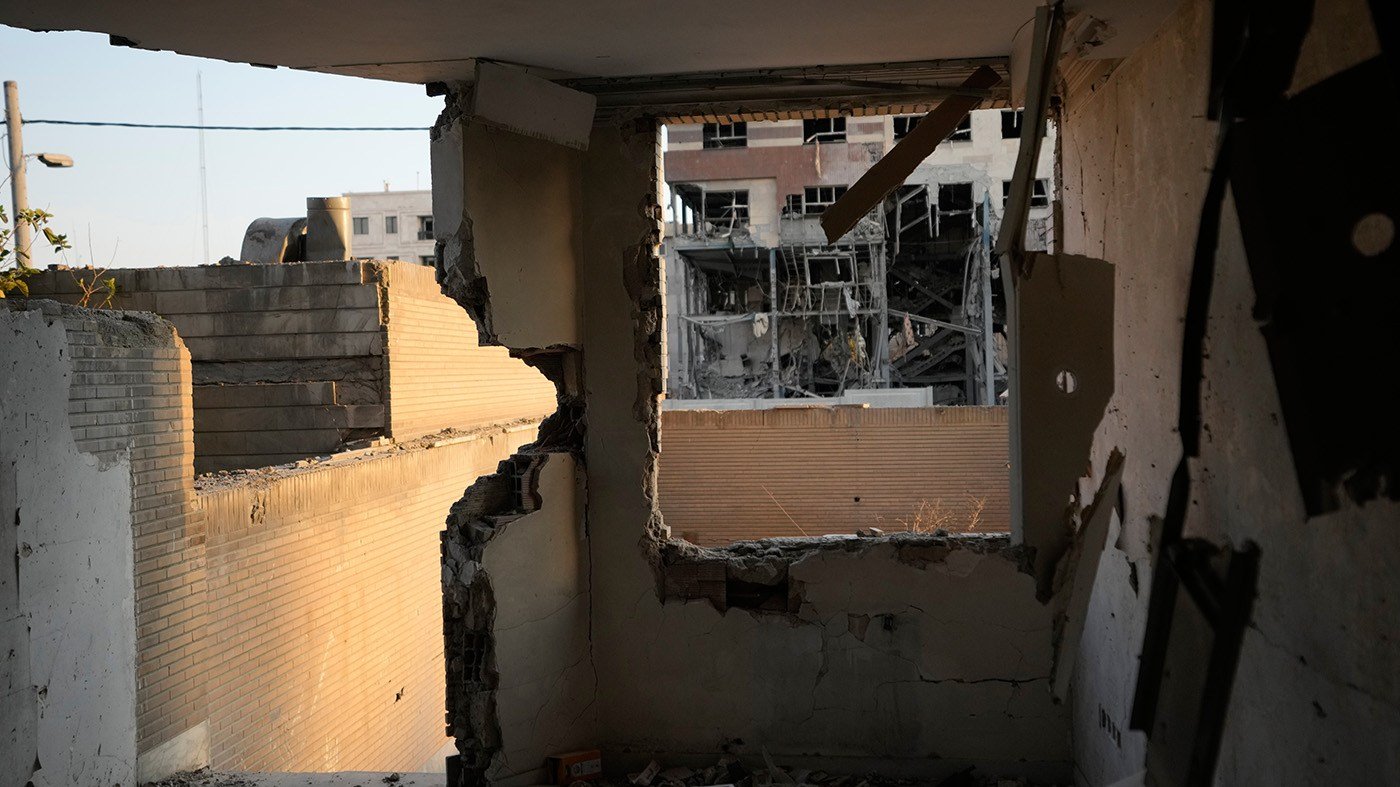
Some regional analysts doubt that another U.S.-Israel strike campaign—which previously depleted Pentagon stocks of missile interceptors and advanced offensive systems, spiked gas prices, and destabilized the Middle East—would force Iran's leadership to make concessions.
"There's no level of U.S. or Israeli strikes that is going to compel Iran to change course at this point," Mann said. "Iranian leaders not only saw themselves in a fight for personal survival and survival of their regime, they've increasingly come to understand that they have leverage, they have the upper hand, and they want to drive that advantage to try and get concessions from Trump."
He added: "I think we have already seen quite clearly what the limits are of U.S. and Israeli strikes. It could not destroy Iran's military capacity, could not destroy its political leadership, even though it assassinated key members."
During the active phase of the war, U.S. and Israeli forces destroyed or damaged Iranian launchers and missile magazines. Last month, the Pentagon said the U.S. military had destroyed upwards of 90 percent of Iran's ballistic missiles, naval industrial base, and drones.
Trump has previously pulled back from authorizing kinetic strikes after the Pentagon prepared strike packages. The U.S. currently has more than 50,000 service members and about 20 warships in the Middle East, some enforcing a naval blockade in the Arabian Sea. Two aircraft carrier strike groups are in the region, and a third, the USS Theodore Roosevelt, is heading to Centcom's area of responsibility, possibly to relieve the USS George Washington.