The Trump administration's request for OpenAI to postpone the release of its latest AI models has deepened confusion over White House policy and left private firms uncertain about the rules of the road.
Just weeks after assuring tech companies it would not let regulations stifle innovation, the government asked OpenAI and Anthropic to delay or suspend their newest models this month. The move marks an unprecedented intervention into the operations of leading AI developers and has baffled policy analysts across the political spectrum.

“I’m particularly struck by how this episode undermines the administration’s own successful, by my metrics, AI agenda. Trump has, since his first day in office, advanced a clear AI regulatory philosophy,” Neil Chilson, head of AI policy at the nonprofit Abundance Institute, told reporters. “Yet now, without any rules, transparency or meaningful process, the government has effectively cut off all access, including all access for Americans, to a leading U.S. model. China must be cheering.” Chilson is a former chief technologist at the Federal Trade Commission.
OpenAI announced last week it would preview its new GPT-5.6 model series—named Sol, Terra, and Luna—with a “small group of trusted partners” before a public rollout. The firm briefed the government on the plans and, at the administration’s request, agreed to hold back broad release for at least a few weeks due to cybersecurity concerns.
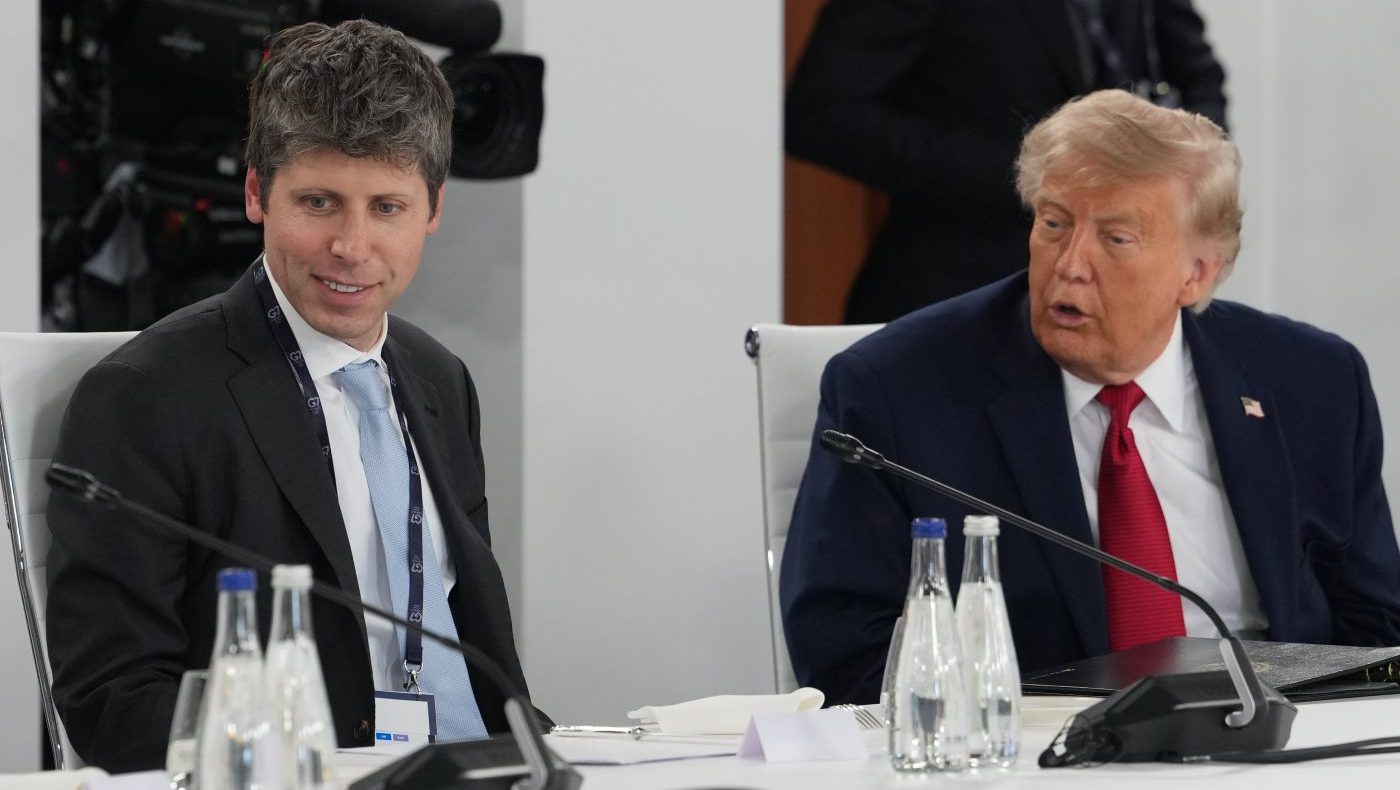
OpenAI CEO Sam Altman acknowledged the voluntary request but said it is not a long-term fix. “I think it is quite reasonable to roll out models—especially as they reach significant new levels of capability—in this way. It fits with our long-held strategy of iterative deployment. But this isn’t quite the process that we think is optimal,” Altman wrote on X. He clarified he does not oppose a required preview period for red teaming but added, “I don’t like the idea of the government picking the customers.” He expressed confidence they would “get to a better place.”
A White House official said the administration “continues to collaborate with frontier AI labs to develop shared approaches for addressing the challenges of scaling this technology.” The move echoes an earlier export control order against Anthropic that briefly restricted foreign access to its models, a decision the administration later reversed.
Critics were quick to voice alarm. “American AI innovation running into Trump’s patronage-and-tribute Admin is no bueno,” Adam Kovacevich, CEO of Chamber of Progress, a center-left tech lobby group, wrote on X. Dean Ball, a co-author of Trump’s AI Action Plan and incoming leader of OpenAI’s Strategic Futures team, noted the policy shift: “In a matter of weeks, U.S. federal AI policy has gone from implausibly libertarian to increasingly draconian and opaque.”
Ball wrote on his Substack that a major problem is the lack of clear criteria for approval. “One major problem with this, as implemented, is that nobody knows what the requirements to get licensed are. When I say ‘nobody’ I mean it literally: the administration itself does not seem to know what safety standards or best practices a company would have to observe” for the government to greenlight a broad release. Trump’s recent executive order called for safety standards to replace state laws, but no timeline has been set.
“This means that, every time a lab asks if they can release their model to the general public, the answer from the government will be ‘no.’ This will be true until there is some sort of safety standard,” Ball added.
The confusion builds on months of mixed messaging. Trump campaigned on cutting tech regulations, but amid cybersecurity concerns and political backlash over AI’s rapid growth, the administration has shifted away from its hands-off stance. The executive order Trump signed this month emphasized voluntary government testing, but the subsequent pressure on OpenAI and Anthropic suggests a more assertive approach.
“The models are powerful. This is not a pure political play, and the administration, which seems to be predisposed to be light touch, realizes that these models are so powerful and they need to do something,” said Sarah Kreps, director of the Tech Policy Institute at Cornell University. “I think it’s really difficult to know what that something is.”