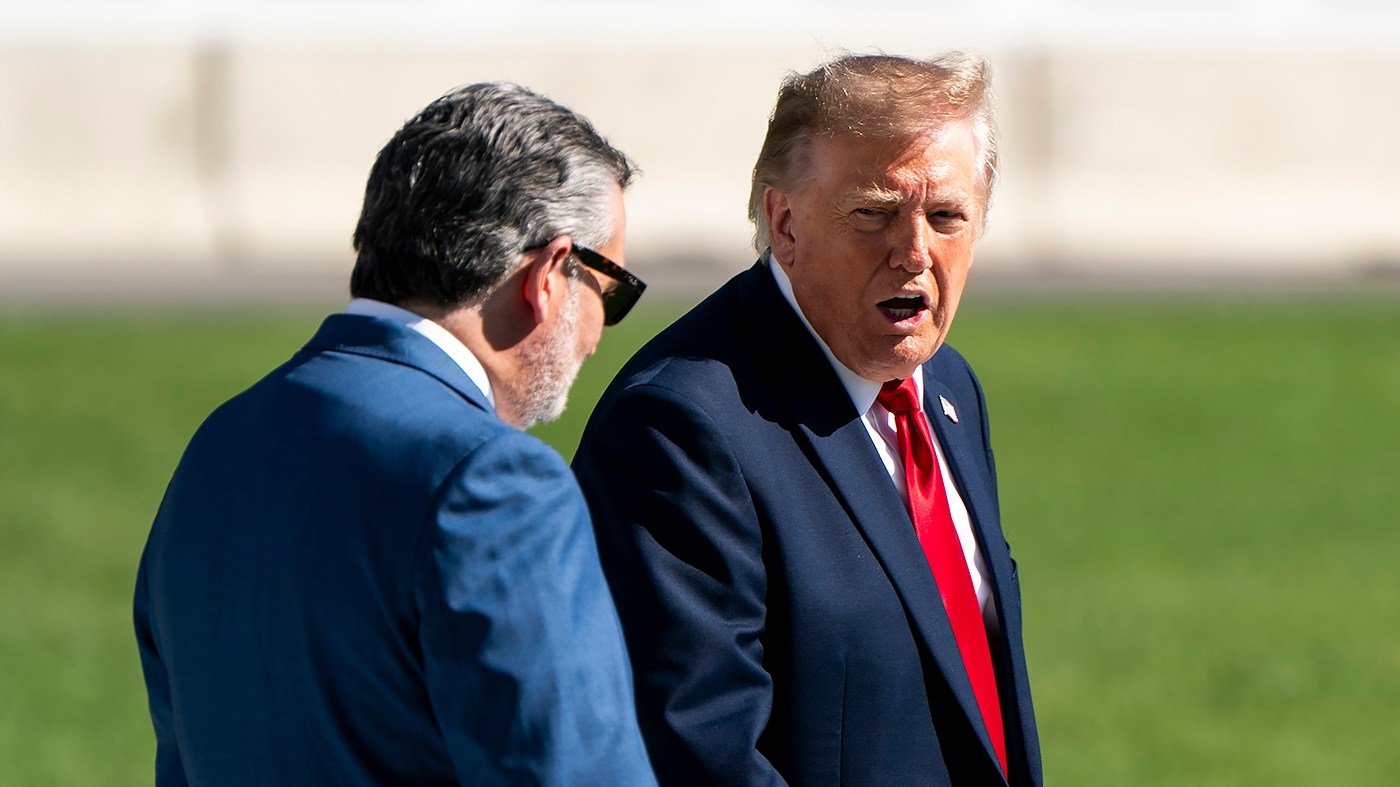
President Trump on Tuesday revived a familiar punchline, suggesting that Senator Ted Cruz of Texas would be his ideal choice for the next Supreme Court vacancy—and that the nomination would sail through the Senate with unanimous support, albeit for unconventional reasons.
Speaking at a midterm rally in Lubbock, Texas, Trump praised Cruz as a “brilliant lawyer” and claimed he had discovered a way to bypass the grueling confirmation battles that marked his first three appointments. “I picked three Supreme Court justices, and it’s very hard to get them approved,” Trump said, referencing Justices Neil Gorsuch, Brett Kavanaugh, and Amy Coney Barrett. “I said, ‘Look, I have an answer to it.’ Ted is a brilliant guy, brilliant lawyer, brilliant all that,” he added.
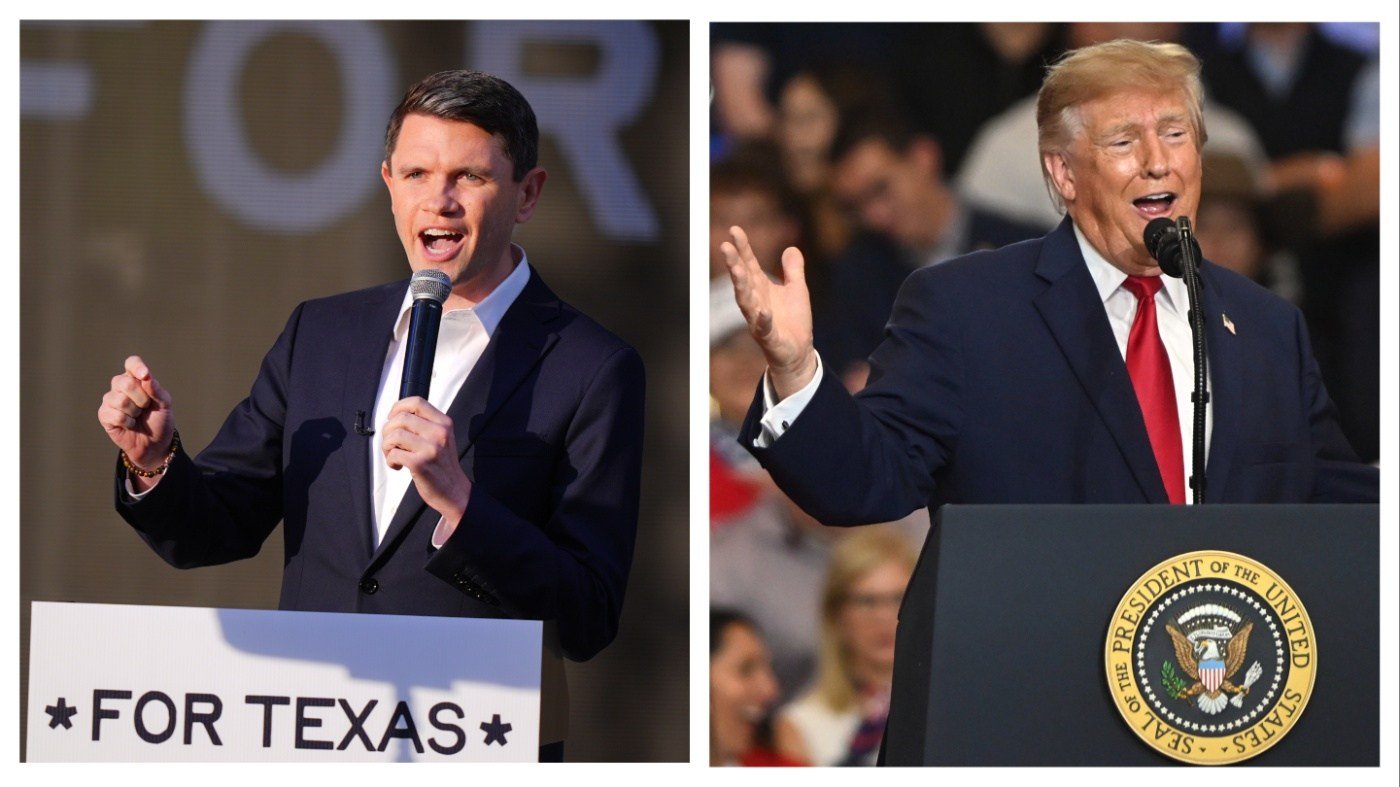
Trump went on to describe Cruz’s academic and legal credentials—top of his law school class, elite clerkships, and a career as a litigator before entering politics. “I said, ‘I have an answer to not being able to get it past the Democrats or the Republicans together.’ I would pick Ted Cruz to be the next Supreme Court justice,” Trump declared.
The president then offered a theory on why the nomination would be a rare bipartisan slam dunk. “The Democrats would 100 percent support it because they hate the guy and they want to get rid of him,” Trump said. “And the Republicans would 100 percent vote for it because they can’t stand him. So I’d get 100 percent of the vote, and he would be a Supreme Court justice, and he’d do a great job.”
This is not the first time Trump has floated Cruz for the high court. He made similar remarks at a White House event in July, joking that Cruz’s departure from the Senate might be the one thing both parties could agree on. The recurring quip appears to play on Cruz’s often-combative relationships with colleagues on both sides of the aisle, including his role in the 2013 government shutdown and his bitter 2016 presidential primary battle with Trump.
For his part, Cruz has repeatedly made clear he has no intention of leaving the Senate for a lifetime appointment. In an April interview with The Wall Street Journal, Cruz said Trump had raised the possibility “seriously” during each of the three vacancies in the first term, but he turned them down every time. “I don’t want to be out of the arena of the political battle,” Cruz said, emphasizing his preference for policy fights over legal ones.
The latest joke comes as Trump campaigns aggressively for Republican candidates ahead of the midterms, often using rallies to test material and energize his base. In Texas, he has also weighed in on the competitive Senate race, with recent polling showing a tight contest. Trump’s relationship with Cruz has evolved from personal attacks during the 2016 primary to a pragmatic alliance, though the president’s humor still carries a sharp edge.
No Supreme Court vacancy currently exists, and none is expected in the immediate future. But Trump’s repeated invocation of Cruz as a hypothetical nominee underscores both his influence over the judiciary and his penchant for using political rivals as rhetorical foils. Whether Cruz would ever accept such an offer remains a moot point—at least for now.