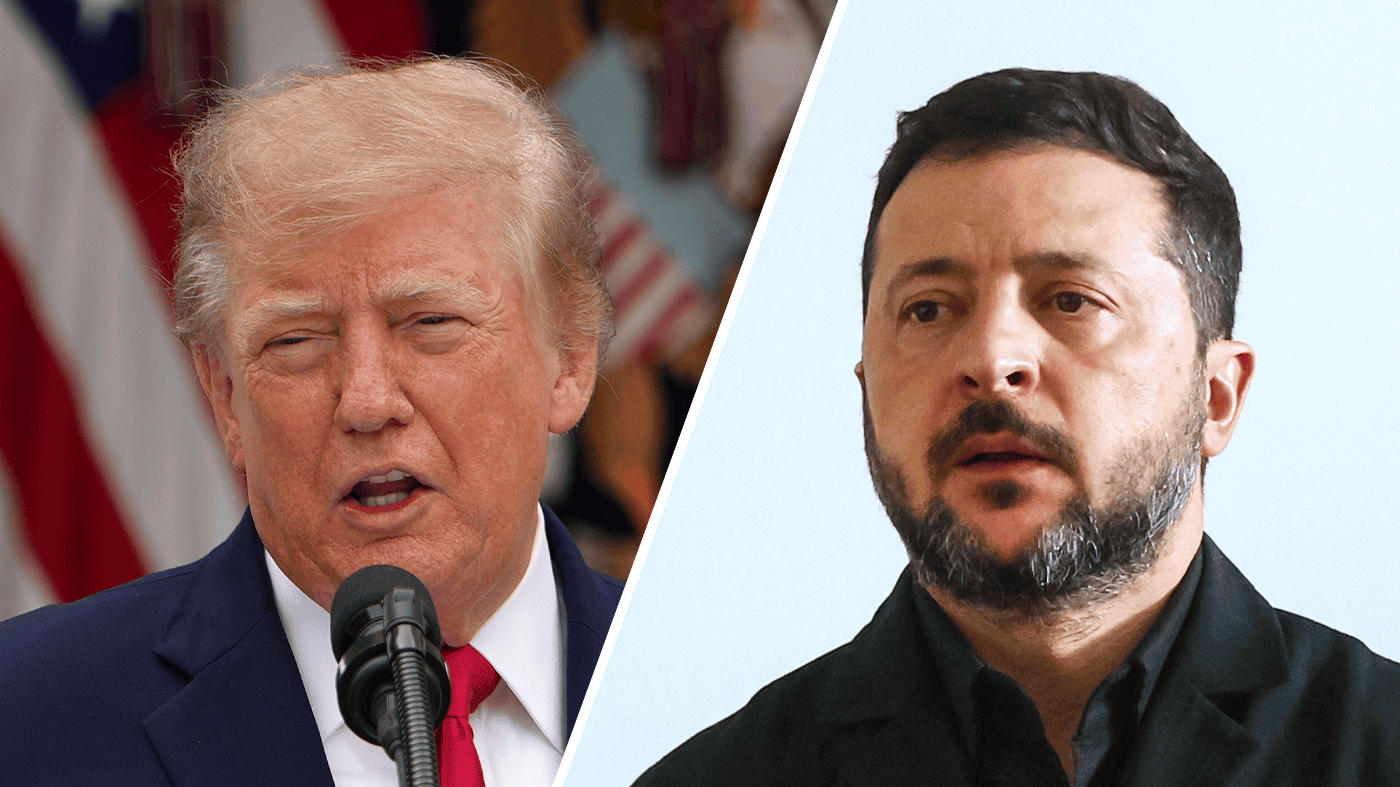
The past week has laid bare the deepening fractures in the U.S.-Ukraine alliance, as President Trump's unpredictable maneuvers and a series of contentious episodes have left Kyiv and European allies questioning the reliability of American support more than four years into Russia's full-scale invasion.
At the center of the storm is the Starshield satellite system, a critical tool for Ukraine's drone operations. Ukrainian officials insist that the system, which provides high-speed communications for military drones, was deliberately slowed down, a charge that President Trump and his ally Elon Musk have denied. Trump told reporters on Friday, "I didn't do that. No, we didn't do that at all. In fact, I don't even think it was slowed down from what I understood. Because I just checked this morning."

However, Ukrainian President Volodymyr Zelensky pushed back, calling the slowdown "a dangerous and unpleasant surprise" during a press conference in Brussels. He added that while the system was "coming back," it had not yet returned to previous speed limits. The dispute has intensified fears that Washington may be distancing itself from Kyiv, a sentiment echoed in a recent analysis of the Starlink disruption.
The Starlink issue is just one flashpoint in a broader pattern of friction. Trump's announcement on October 9 of a deal allowing Russian diesel imports sparked outrage, as it could ease economic pressure on Moscow. The move contradicted recent bipartisan efforts in Congress to tighten sanctions, including legislation named after the late Senator Lindsey Graham. Critics like Republican strategist Rick Tyler called the deal "amateur hour," arguing it would not lower U.S. diesel prices and would undermine American credibility. "Trump is sacrificing the credibility of the United States when he engages with a thug like that who is killing innocent civilians," Tyler said.
Trump has also suggested that Ukraine should consider replacing Zelensky, telling Newsmax that the Ukrainian leader is "not a good guy for us to deal with" and blaming him for the country's devastation. Zelensky, in turn, told British journalist Piers Morgan that he felt betrayed, particularly by the diesel deal, and expressed regret that Ukraine was "losing" the U.S. as a strong partner. These exchanges have brought relations to their lowest point since the contentious Oval Office meeting in February 2025.
The impact on the ground is tangible. Russian attacks have hit at least nine regions, leaving hundreds of thousands of households without power as winter approaches. The humanitarian toll is mounting, and Ukraine's ability to defend itself is increasingly in question.
Trump's focus on domestic fuel prices, which have risen sharply since the conflict with Iran, has further complicated matters. His social media posts touted the diesel deal as a way to bring down prices, but AAA data shows diesel prices have actually inched up since the announcement, from $6.28 to $6.33 per gallon. The disconnect between Trump's promises and reality has fueled criticism that his foreign policy is driven by domestic political considerations rather than strategic interests.
Meanwhile, confusion persists over who authorized the Starlink slowdown. Reuters reported that the order came from inside the White House, while a U.S. official told NewsNation that no such request was made by the president. Late Friday, The Telegraph reported that Musk had approached Trump with the idea, though Musk has previously denied any decisive role. The lack of clarity has prompted calls for investigation, including from some GOP senators, as detailed in a report on the Pentagon's potential involvement.
As the crisis deepens, European leaders are watching with alarm. The perception that the U.S. is wavering in its support for Ukraine could embolden Russia and destabilize the region. The coming weeks will be critical in determining whether the transatlantic alliance can withstand the strain.