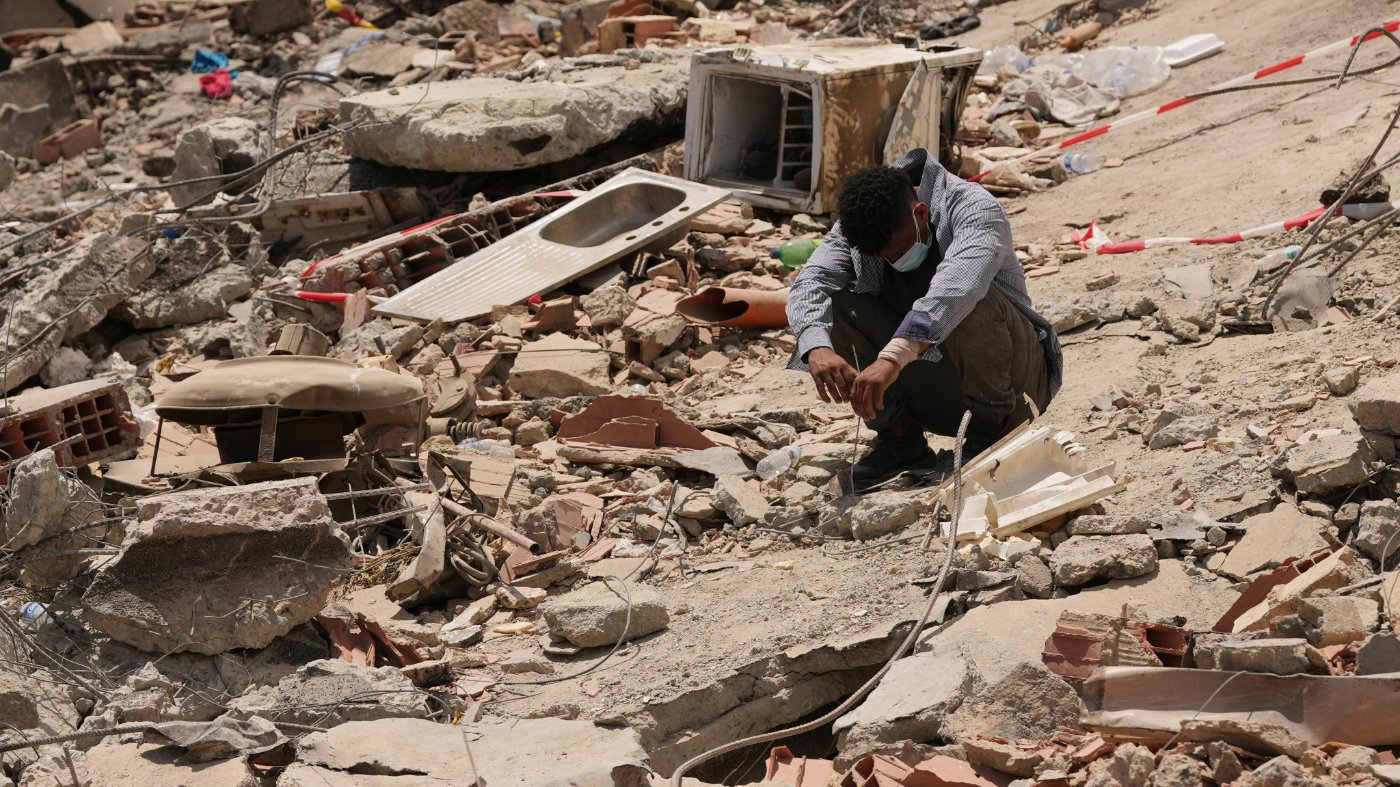
Just 48 hours after two powerful earthquakes flattened parts of Caracas, the images of collapsed buildings and desperate survivors digging with their hands tell only part of the story. Beneath the rubble, thousands are trapped in agony, waiting for a rescue that will never come. As Venezuela’s death toll climbs, Americans should take a hard look at their own preparedness—especially for cities like Los Angeles, San Francisco, Portland, and Seattle, all perched on active fault lines.
In Los Angeles, scientists recently reported that the southern San Andreas and San Jacinto faults are under more stress than at any point in the last millennium. After more than 160 years of silence, these faults are “critically loaded,” with a junction near Cajon Pass acting as an “earthquake gate” that could allow a rupture to jump from one fault to the other, tearing across Los Angeles, San Bernardino, Riverside, and the Coachella Valley simultaneously.
If such a quake struck today, California would fare better than most states—it has world-class search-and-rescue teams, robust fire services, and local governments that take seismic threats seriously. But when the Really Big One hits, the numbers are staggering: more than 20 million people would wake up in a disaster zone, with 1,800 dead, 50,000 injured, and 1,600 fires consuming 133,000 homes. Broken aqueducts and pipelines would leave large areas without reliable water for months.
Even the best state system would be overwhelmed. Earthquakes are uniquely unforgiving because they don’t just create victims—they disable the very systems built to save them. Studies of major earthquakes—from Mexico City in 1985, to Christchurch in 2011, to Turkey in 1999 and 2023—consistently show that local and state governments were overwhelmed within hours, not days.
The national disaster system is supposed to work like this: when a crisis exceeds a state’s capacity, the federal government steps in with money, logistics, and coordination. But that system is now caught between dismantling and reinvention. After cuts by the Department of Government Efficiency and former Homeland Security Secretary Kristi Noem’s push to shrink FEMA’s role, the agency is bruised, leaderless, and frozen in place. A FEMA Review Council recommended shifting responsibility to the states, but that raises the very question Caracas forces us to confront: What happens when the state itself is overwhelmed?
This isn’t reform—it’s Russian roulette, based on the fiction that all disasters are local. The Government Accountability Office has warned that the gap between what states are being asked to absorb and what they can actually handle is wide and measurable. The unfortunate reality is that the United States does not have the ability to come to the aid of its citizens in the worst instance. We have the equipment, the know-how, and the people—but we can no longer organize those resources for a catastrophe in Los Angeles or any other city.
When the San Andreas finally gives way, ripping a gash from the San Gabriel Mountains through Cajon Pass into San Bernardino, neighborhoods from the San Fernando Valley to East LA will be flattened. Dazed families will wander ruined streets, thousands will be trapped in rubble, and no one will be coming. That failure will be the catastrophe within the catastrophe.
Kelly McKinney, a former deputy commissioner at the New York City Office of Emergency Management and a former member of FEMA’s National Advisory Council, authored this warning. The question is whether Washington will listen before it’s too late.