Cambodia is taking an aggressive stance against the transnational online scam networks that have plagued Southeast Asia, with authorities deporting nearly 19,000 foreign nationals and shuttering dozens of casino-linked operations since early 2025. The crackdown, spearheaded by Prime Minister Hun Manet, marks a significant shift in the country’s approach to a crisis that has damaged its reputation and ensnared thousands of victims.
Online scams have become one of the most destabilizing transnational crimes, defrauding individuals worldwide and funneling illicit funds across borders. In Cambodia, criminal networks have exploited the country’s open borders and lax enforcement, luring job seekers with false promises and then forcing them into fraud under threat of violence. The government now acknowledges that it too is a victim, with these operations tarnishing its image and preying on vulnerable people within its territory.

“Scam networks have taken advantage of Cambodia’s openness and the ease of movement across the region,” a government statement said, underscoring the challenge of dismantling sophisticated cross-border enterprises. Under Hun Manet’s leadership, the fight against online scams has become a national priority, with a strengthened legal framework and expanded law enforcement capabilities.
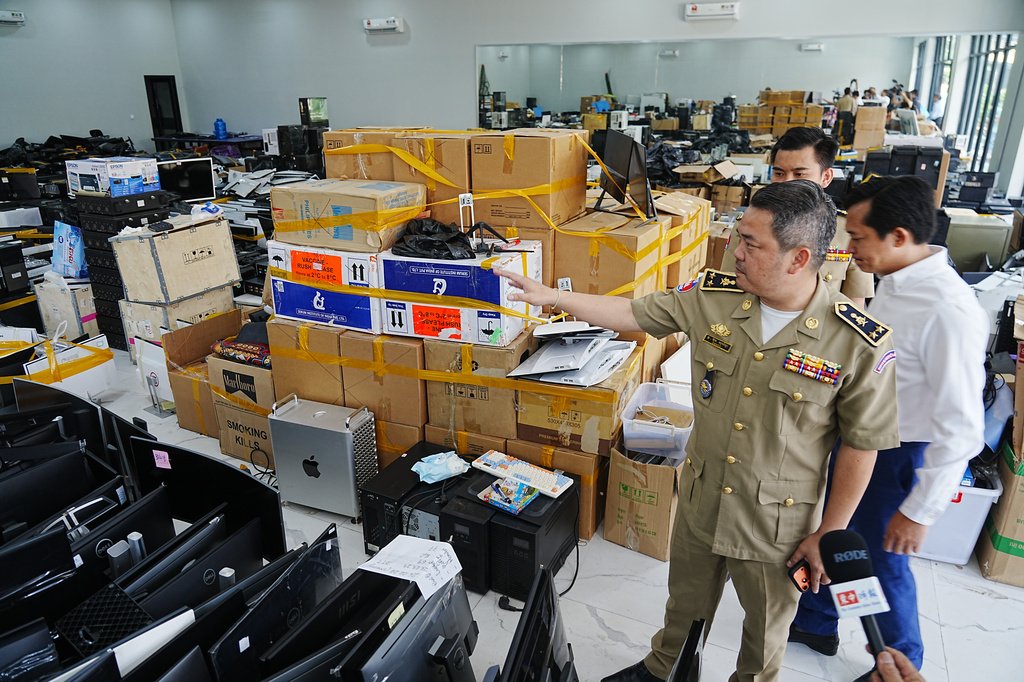
From July 2025 to May 2026, police investigated more than 400 cases in Phnom Penh and provincial areas. Twenty-five casino locations had their licenses revoked or suspended due to links to online scams, and were subsequently shut down. Authorities formally filed 143 cases involving 1,458 suspects from 19 nationalities. Between January 2025 and May 2026, nearly 19,000 foreign nationals from 33 countries were deported for their involvement in scam operations.
The crackdown comes as Cambodia seeks to rebuild trust with international partners and demonstrate that no one is above the law. Observers have long demanded tangible results, and the government is now pointing to concrete actions: closed sites, protected victims, and prosecutions of those behind the networks. Still, the scale of the problem remains daunting, with criminal groups quickly adapting to enforcement efforts.
Many of those caught in the dragnet were themselves victims, lured by false job advertisements and trafficked into Cambodia, where they were stripped of their passports and forced to commit fraud under duress. The government has emphasized that protecting these individuals is a key part of its strategy, though critics argue that deportation alone does not address the root causes of trafficking.
The crackdown also intersects with broader political dynamics in the region. As the U.S. Congress debates bipartisan measures like the House GOP-Dem deal on child online safety that has stalled in the Senate, Cambodia’s unilateral actions highlight the varying approaches to combating online crime. Meanwhile, progressive lawmakers in the U.S., such as Ro Khanna, have framed the fight against tech-enabled exploitation as part of a broader movement, as seen in the rise of left-wing primary wins.
For Cambodia, the next test will be sustaining this momentum. The government has vowed to keep pressure on scam networks, but experts warn that without regional cooperation and economic alternatives, the illicit industry may simply relocate. For now, Hun Manet’s administration is betting that a visible crackdown will restore confidence and deter future operations.