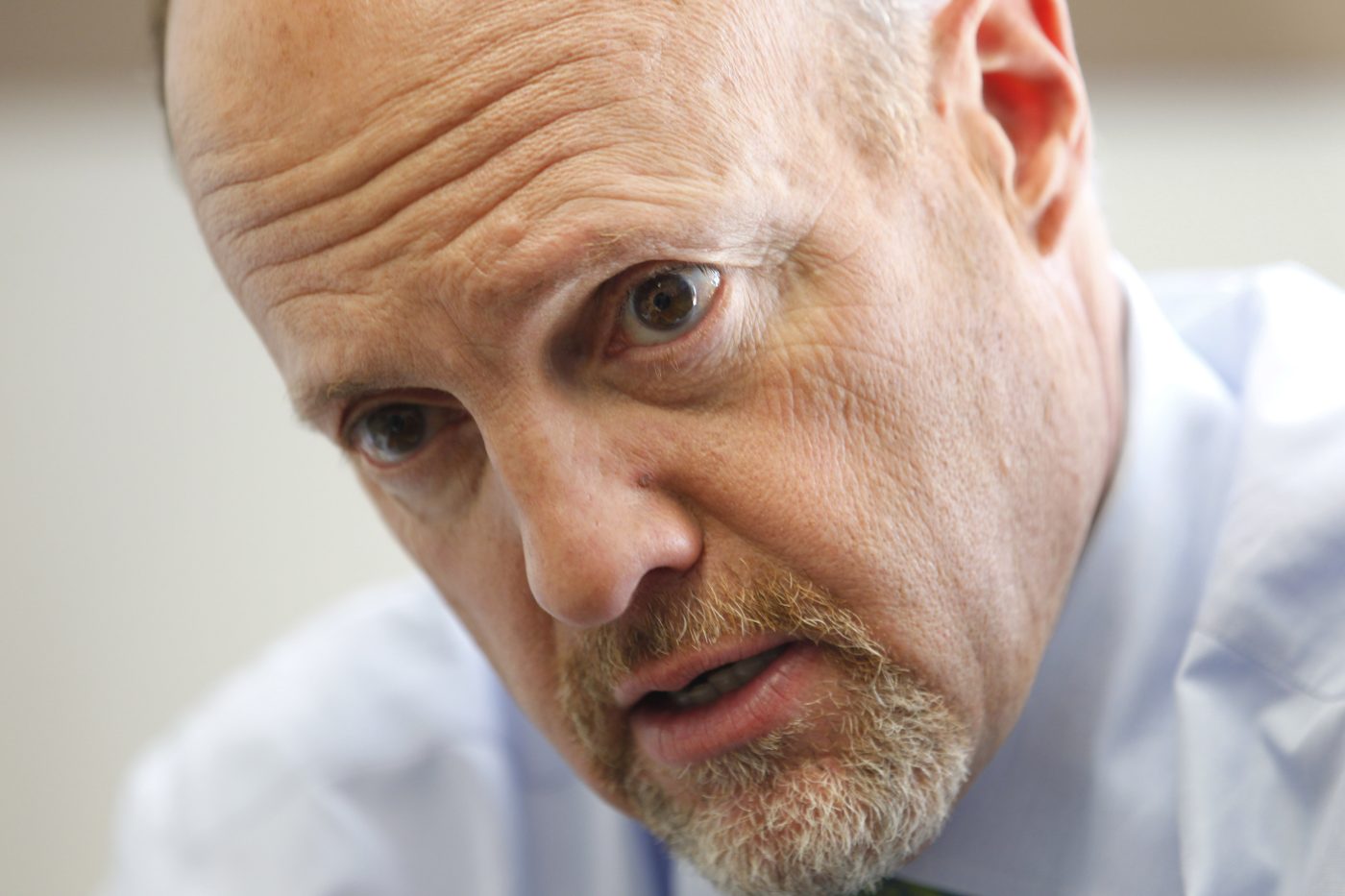
CNBC host Jim Cramer delivered a blistering assessment of the latest inflation data on Thursday, warning that the numbers point to sustained economic pain as the Iran conflict continues to roil global markets.
The Personal Consumption Expenditures index, the Federal Reserve's preferred inflation gauge, rose 0.7 percent from February to March, according to the Commerce Department's Bureau of Economic Analysis. Core inflation hit a two-year high of 3.5 percent in March, far above the Fed's target.
“Yeah, these numbers are just bad! And somehow we think that bonds and rates are going up,” Cramer said on CNBC's “Squawk Box.” “They're barely going up because people still believe that all this has to come down.”
The financial commentator pointed directly to the ongoing war with Iran as a key driver of rising prices. “The impact of the Iran war is reverberating through everything,” he said, taking aim at President Trump's claim that “everything costs less.” Cramer noted that gas, groceries, and energy prices are all climbing.
According to AAA, the national average for a gallon of gas stood at $4.30 on Thursday. Prices have topped $5 per gallon in Hawaii, Nevada, Oregon, and Washington, while California drivers are paying roughly $6 per gallon. Brent crude oil hit a four-year high as the Strait of Hormuz remains closed to commercial traffic and U.S.-Iran negotiations have stalled.
Cramer highlighted the real-world impact on corporate America, pointing to GE Healthcare's decision to lower its full-year profit outlook. The company cited rising costs from inflation, tariffs, and supply chain disruptions linked to the Iran war. “I mean, you know, GE Healthcare talked about it. GE Healthcare, that's like an MRI, MRI! I mean, you know, talk about impact,” Cramer said. “Like, you ever use an MRI? Do you ever imagine that that's going to be in the Gulf, you know? The Strait of Hormuz, if you know what I mean? That's … one of the myriad reasons why their numbers were so horrible.”
The inflation surge is creating political headaches for Republicans heading into the midterm elections. Voters are increasingly unhappy with the rising cost of living, and the party's message of affordability is under pressure. President Trump, however, has predicted that oil prices will drop “tremendously” by November. “When this is over I think the stock market is going to boom. It's already booming … Gas prices and gasoline are going to go down tremendously,” he told Fox News's Maria Bartiromo earlier this month.
Despite the gloomy inflation picture, the U.S. economy grew at a 2 percent annualized rate in the first quarter, just shy of projections. Personal income rose 0.6 percent, doubling expectations. But with prices climbing faster than wages for many households, the recovery remains uneven.
March inflation hit 3.5% as the Iran conflict drives up prices, stoking political pressure on Trump. Meanwhile, Trump's economic approval is sinking as inflation and hiring woes mount ahead of the midterms. The administration is also facing scrutiny over its handling of the Iran crisis, with Trump extending a ceasefire despite an IRGC attack, signaling a strategic retreat.