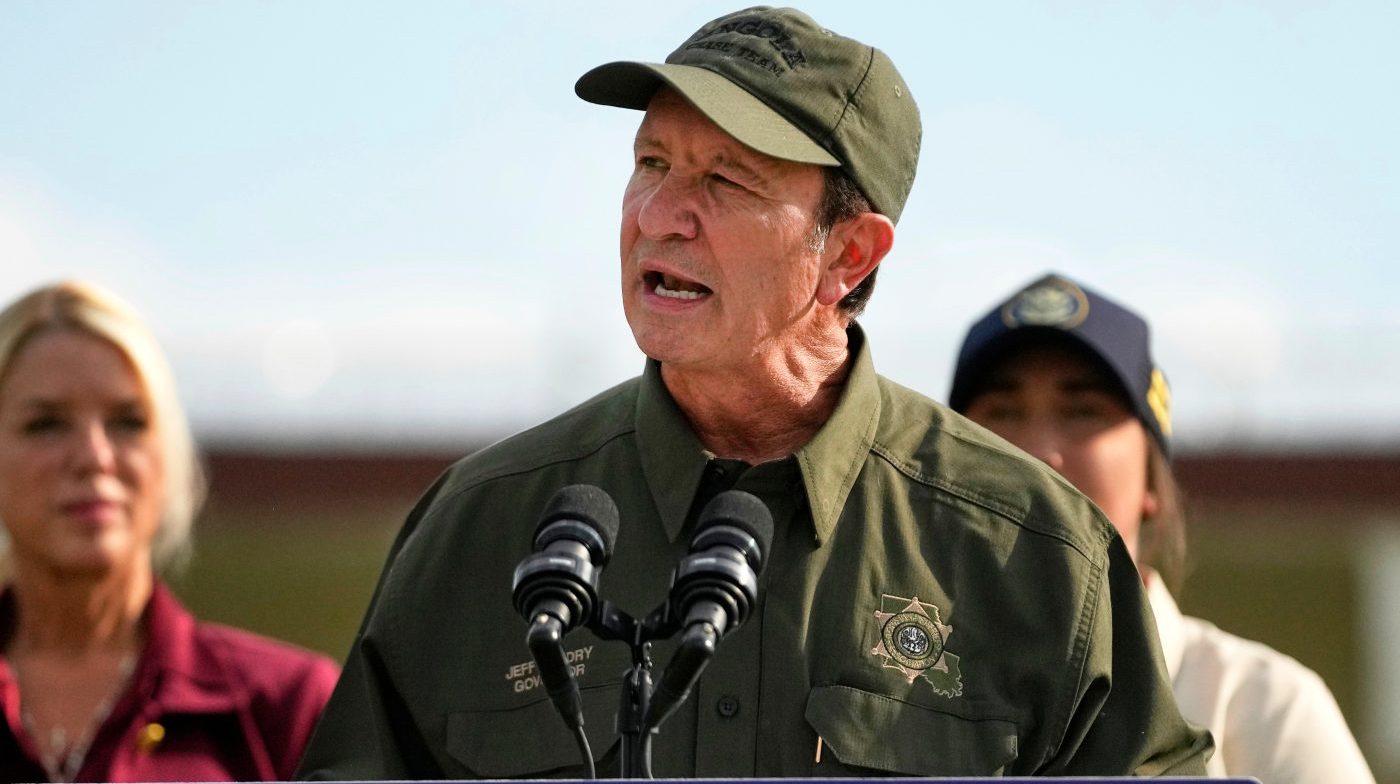
Louisiana Governor Jeff Landry (R) issued an executive order Thursday suspending the state's May 16 primary elections for the U.S. House, one day after the Supreme Court ruled that the creation of a second majority-Black congressional district amounted to an unconstitutional racial gerrymander. The move halts early voting, which was set to begin Saturday, and pushes the primary and its June 27 runoff to July 15 or later, pending action by the state legislature.
Landry, joined by Secretary of State Nancy Landry (R)—no relation—clarified that the suspension applies only to House races. Other contests on the ballot, including U.S. Senate and state Supreme Court races, will proceed as scheduled. The governor said the delay is necessary to allow lawmakers to redraw the map in compliance with the court's decision, arguing that allowing elections under the invalidated map would 'undermine the integrity of our system.'
Supreme Court's Narrowing of Voting Rights Act
The Supreme Court's ruling in Louisiana v. Callais upheld a lower court's decision barring the use of a 2024 map that added a second majority-Black district stretching from Shreveport to Baton Rouge. That district is currently represented by Democratic Rep. Cleo Fields, one of only two Democrats in Louisiana's six-member House delegation. The ruling did not dismantle Section 2 of the Voting Rights Act outright, but conservative Justice Samuel Alito described it as an 'update' to the provision. In dissent, Justice Elena Kagan, joined by Sonia Sotomayor and Ketanji Brown Jackson, accused the majority of engaging in a 'demolition' of the landmark civil rights law. This decision is part of a broader pattern of the high court narrowing the Voting Rights Act, which has significant implications for minority representation.
Earlier Thursday, Landry and Attorney General Liz Murrill (R) issued a joint statement noting that the court's decision bars the state from conducting congressional elections under the current map. Landry said, 'The best way to end race-based discrimination is to stop making decisions based on race,' adding that Louisiana is 'proud to lead the nation on this charge.'
Political Fallout and GOP Strategy
President Donald Trump praised Landry's swift action on Truth Social, calling it 'tremendous Vision, Strength, and Leadership.' Landry responded on X, writing, 'If there is one thing the Republican Party should learn from President @realDonaldTrump — it's to FIGHT! That's exactly what we are doing in Louisiana.' The ruling and Landry's suspension come as Republicans celebrate the decision as a potential midterm game-changer, potentially allowing the GOP to gain seats in states like Louisiana and Tennessee.
Trump also revealed he spoke with Tennessee Governor Bill Lee (R), who pledged to 'work hard' to redraw his state's congressional maps. Tennessee's House delegation is currently 8-1 Republican, with the lone Democrat representing most of Memphis. Trump wrote that the redrawing 'should give us one extra seat and help Save our Country from the Radical Left Democrats.' House Speaker Mike Johnson has also urged states to redraw maps in the wake of the ruling, aiming to consolidate Republican power.
The suspension and the broader Supreme Court decision are likely to intensify debate over voting rights and redistricting heading into the 2026 midterms. Critics argue the ruling undermines minority representation, while supporters see it as a necessary check against racial gerrymandering. Louisiana's legislature now faces a tight deadline to produce a new map that satisfies the court's standards.