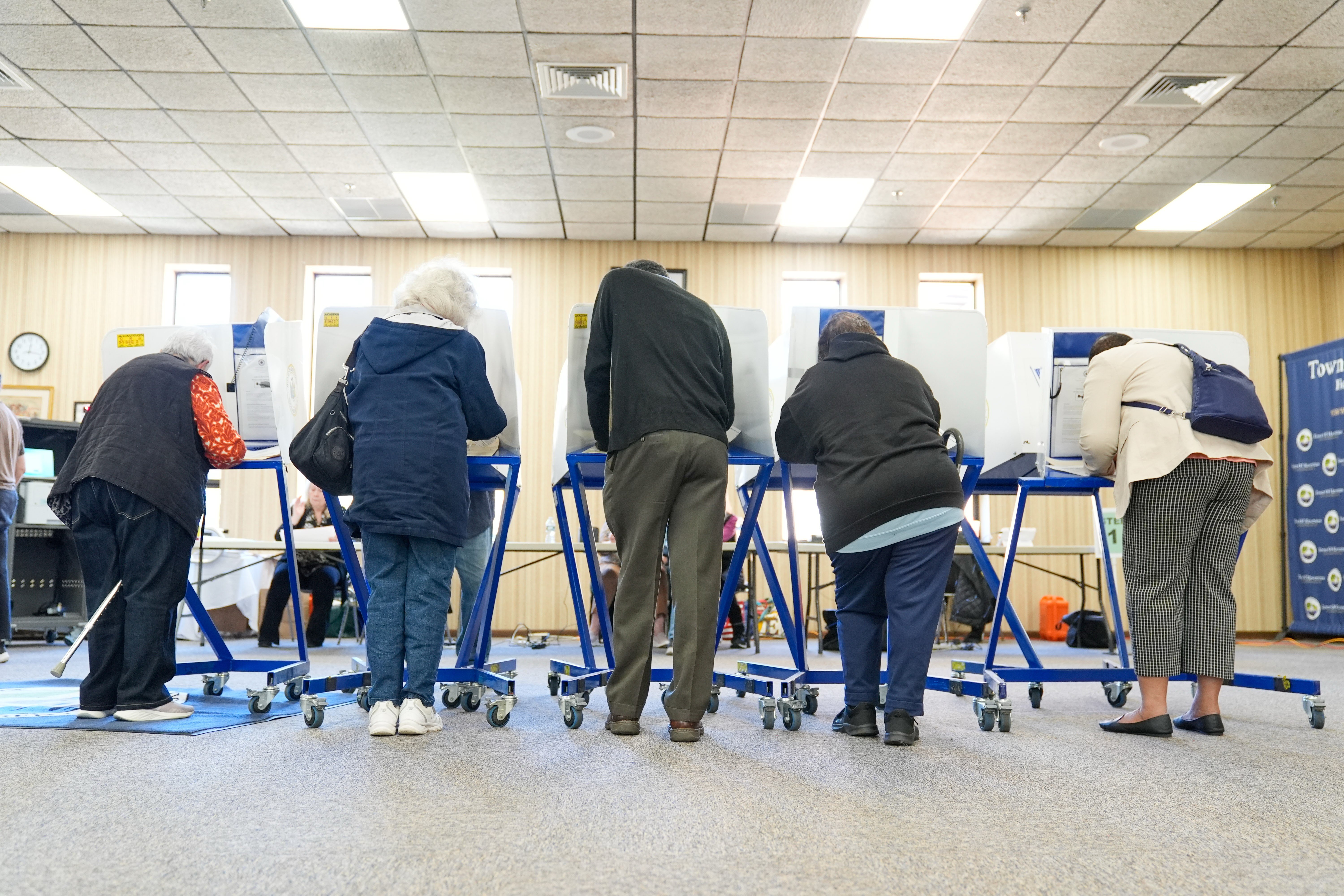
This week, I'll cast my ballot early in Connecticut, not because I'm in a rush, but because I'll be abroad on Election Day. My state has made room for my voice to be heard anyway. That's what democracy looks like when it expands—it meets people where they are.
Forty-seven states and the District of Columbia now allow every registered voter to cast a ballot early without needing an excuse. Three states do not: Alabama, Mississippi, and New Hampshire. That list should give us pause.
The framers left the 'Times, Places and Manner' of elections to the states. Nearly 250 years later, that design still means your access to the ballot depends on your ZIP code. New Hampshire proudly hosts the first presidential primary in the nation, drawing national attention every four years. Yet the state that leads the political calendar is among the last to let all its voters vote early. First in line for the cameras, last in line for the voters.
Then there's Alabama. On June 2, the Supreme Court voted 6-3 to allow Alabama to use its 2023 congressional map in the upcoming election, despite a lower court finding that it discriminated against Black voters by eliminating one of the state's two majority-Black districts. That ruling followed the Court's decision in Louisiana v. Callais, which narrowed Section 2 of the Voting Rights Act—the key tool used for decades to challenge maps that dilute Black voting power. The late Congressman John Lewis, who was beaten in Selma, Alabama, in 1965 while fighting for voting rights, once said, 'The vote is precious. It is almost sacred. It is the most powerful non-violent tool we have in a democracy.'
Mississippi is also feeling the fallout. In 2025, a federal court ordered the state to redraw its legislative maps to give Black voters a fair chance to elect candidates of their choice. But after Callais, those hard-won districts are now in question, and state leaders are weighing whether to redraw them again before the 2027 elections.
Here's the pattern: in two of the three states that refuse early voting to all their citizens, the fight over fair representation is fiercest. Fewer days to vote. Fewer districts where Black voters can elect a candidate of their choice. That's not an expansion of democracy—it's a contraction. In 1964, Fannie Lou Hamer, a sharecropper from Mississippi who had been beaten by police after attending a voter registration workshop, told the nation she was 'sick and tired of being sick and tired.' Sixty-two years later, in her own state, voters still cannot walk in early and cast a ballot without an excuse.
Some will say early voting is a convenience, not a right. I'd answer this way: the right to vote is only as strong as the ability to exercise it. A single Tuesday doesn't work for the nurse on a double shift, the caregiver who can't leave a parent alone, the soldier, the shift worker, or the woman who'll be on the other side of the ocean on Election Day. Early voting doesn't change who's eligible—it changes who's able. And Americans are using it: more than 18 million ballots have already been cast early, by mail or in person, and the count grows daily. In Louisiana, where Callais began, Black early turnout is at its highest in recent history. In Alabama and Mississippi, there's no early vote to count—their voters are still waiting for Tuesday.
The ballot is the door. Our job is to keep it open and open it wider. Forty-seven states have chosen to trust their voters with more time. The remaining three should join them. In America's 250th year, the question isn't whether the ballot box is open—it's for whom, and for how long.
The midterms are less than a week away. If your state offers early voting, use it. If it doesn't, demand answers from your leaders. When I board my flight, my ballot will already be cast. I'll carry a simple belief with me: in a democracy, the door to the ballot box should never be narrower than the people it was built for.