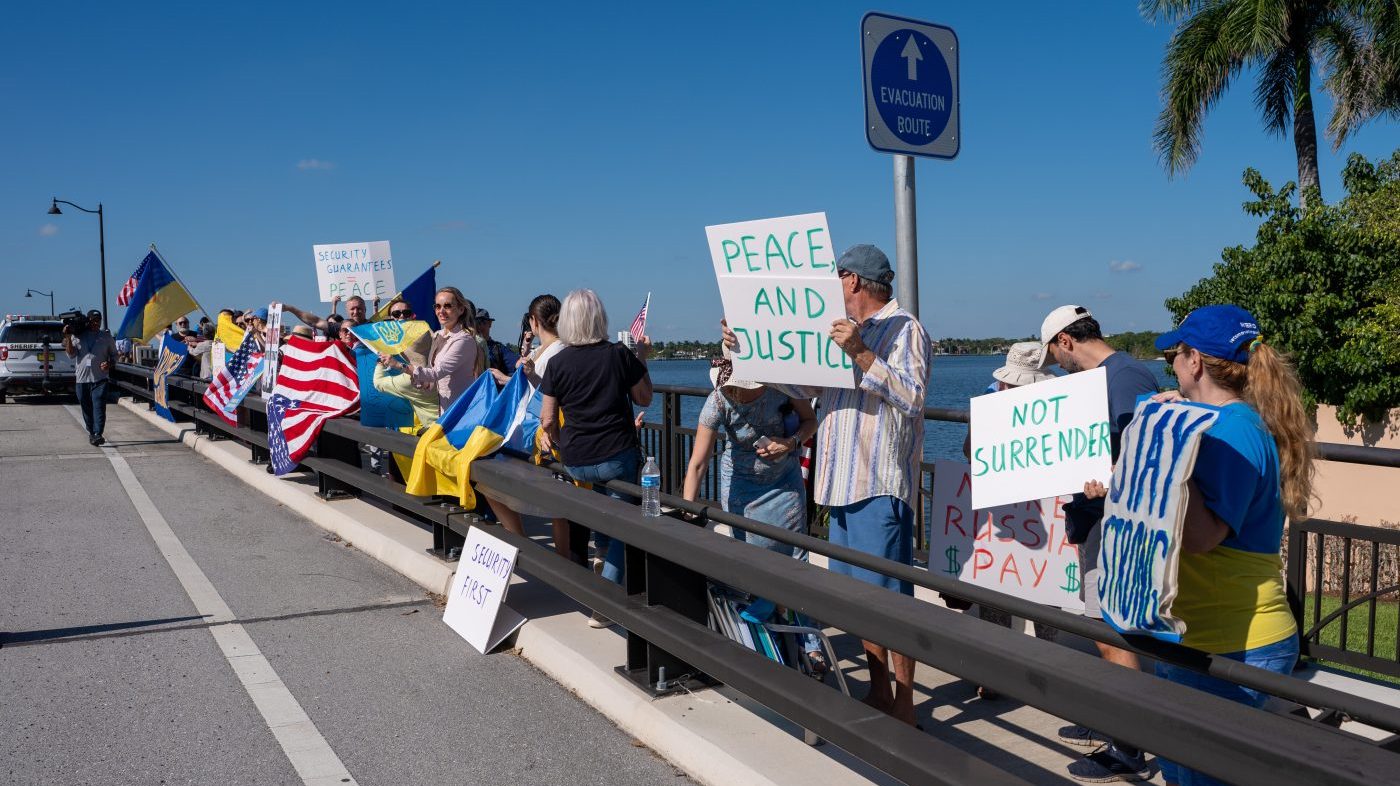
A Gallup survey released Tuesday reveals that only 7 percent of Ukrainians now approve of American leadership—a stunning reversal from the 66 percent approval rating recorded in 2022, when the full-scale Russian invasion began. The poll, conducted in April, shows disapproval has surged to nearly 80 percent, marking a 9-percentage-point drop in approval from 2025 to 2026.
The findings underscore a dramatic erosion of trust in Washington as the conflict approaches its fifth year. In 2022, the United States under former President Joe Biden rallied European allies to provide military aid and impose sweeping sanctions on Moscow, earning broad support among Ukrainians. But the landscape has shifted under President Donald Trump, whose second-term efforts to broker a ceasefire have so far failed to produce a breakthrough.
Trump has oscillated between criticizing both Ukrainian President Volodymyr Zelensky and Russian President Vladimir Putin. In a tense Oval Office meeting just weeks after his inauguration, Trump told Zelensky he did not “have the cards” in the war and was “gambling with World War III” by insisting on security guarantees before agreeing to a ceasefire. Since then, Trump has met once with Putin and multiple times with Zelensky, including at a G-7 summit in France earlier this month.
“Russia should make a deal. Russia’s lost tremendous amounts of people, and so has Ukraine,” Trump said after his latest meeting with Zelensky.
The war has taken a devastating toll. According to the Council on Foreign Relations’ Global Conflict Tracker, nearly 56,000 civilians have been killed or wounded, and 3.7 million Ukrainians remain internally displaced. The United States has provided roughly $188 billion in aid since January 2022, while the European Union has contributed $197 billion.
Ukraine’s top official responsible for recovering children abducted by Russia recently appealed for additional U.S. assistance. The International Criminal Court has indicted Putin for war crimes linked to the forced transfer of Ukrainian children to Russian-controlled territory.
The collapse in Ukrainian approval of U.S. leadership mirrors broader skepticism about Washington’s commitment to the region. Political analysts point to Trump’s unpredictable negotiating style and his administration’s mixed signals on continued military support as factors fueling discontent. Meanwhile, domestic political battles in the U.S.—including a standoff over child online safety legislation and debates within the Democratic Party over leadership, as seen in calls for an overhaul after 2024 losses—have diverted attention from foreign policy.
The Gallup data also comes amid a broader global reassessment of American influence. A separate Gallup poll published earlier this year found that 67 percent of Americans are feeling financial strain from rising gas prices linked to tensions in Iran, highlighting how foreign conflicts are hitting home. Yet in Ukraine, the perception is that U.S. leadership has waned just when it is needed most.