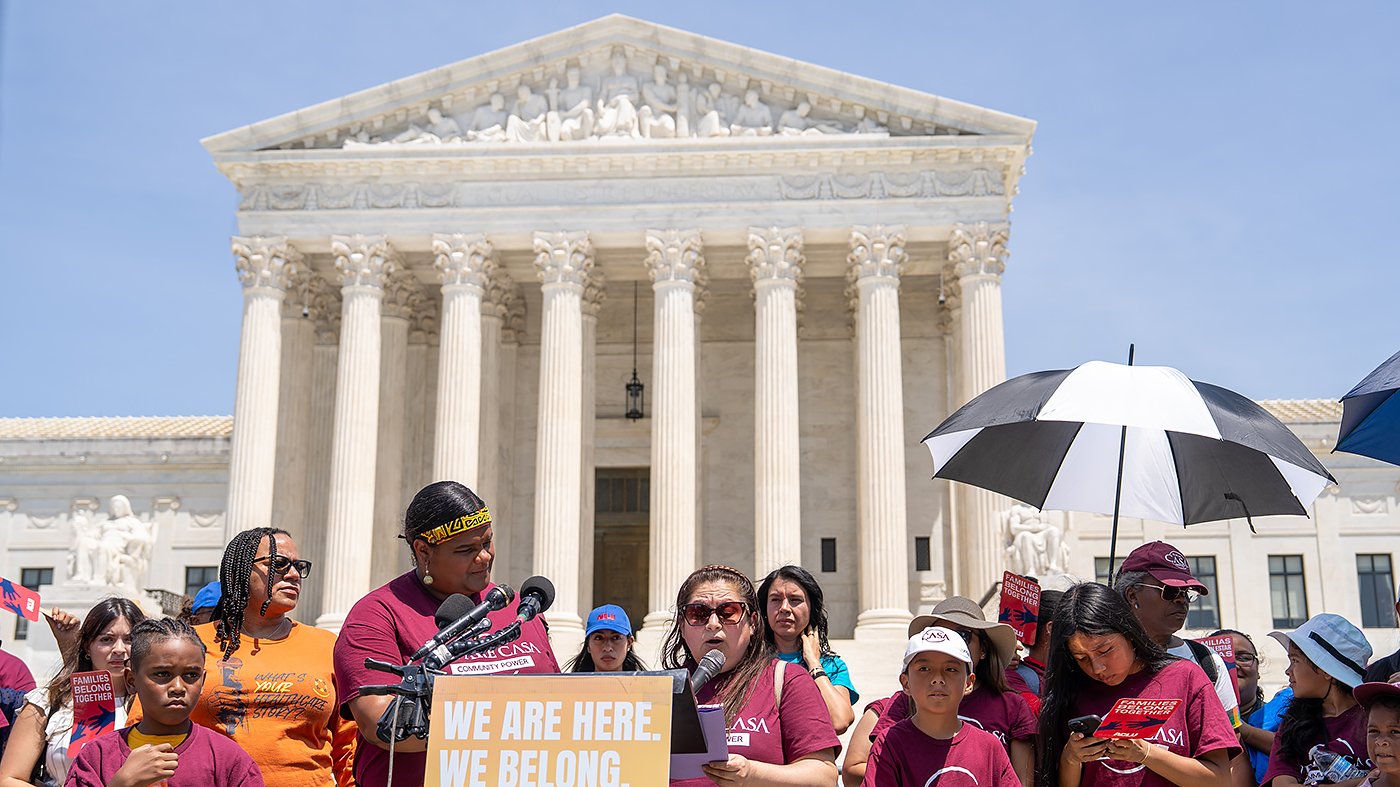
The Supreme Court closed its term with a flurry of landmark decisions, rejecting a cornerstone of President Trump's immigration policy, upholding state bans on transgender athletes, and dismantling a post-Watergate law that capped political party spending. The rulings, handed down on the court's final opinion day, set the stage for intense political and legal fights in the months ahead.
Roberts and Barrett Cross Ideological Lines on Birthright Citizenship
In a 6-3 decision, the court struck down Trump's executive order ending birthright citizenship, a move that split the conservative bloc. Chief Justice John Roberts and Justice Amy Coney Barrett joined the three liberal justices to rule that the order violated the 14th Amendment's guarantee of citizenship to anyone born on U.S. soil. Roberts wrote for the majority, grounding the decision in historical precedent from English common law through the Civil War era, stating, 'Citizenship, then and now, was the right to have rights — to freely participate in our political community.'
Justice Brett Kavanaugh dissented in part, arguing the order should be blocked on statutory grounds rather than constitutional ones. The ruling drew sharp criticism from Trump's base. Right-wing commentator Matt Walsh called Barrett a 'terrible pick,' while Sean Evans of The Federalist magazine blasted Roberts and Barrett for what he claimed 'completely destroyed the entire concept of citizenship.'
Immigration Agenda Takes a Hit, GOP Splits on Next Steps
The birthright citizenship ruling was a setback for Trump's immigration agenda, coming just days after the court upheld his administration's decisions to end temporary protected status for Haitian and Syrian immigrants and to allow border agents to block asylum seekers. Civil rights groups celebrated the birthright decision, but Republicans quickly began exploring workarounds. Trump suggested on Truth Social that Congress could act legislatively, a view shared by Senators Lindsey Graham, Katie Britt, and Ted Cruz, who have introduced bills to restrict birthright citizenship.
Others, like Florida Governor Ron DeSantis, argued that a constitutional amendment is the only path forward. 'Will need either a constitutional amendment or a future court to overrule this,' DeSantis wrote, calling the decision 'a major defeat.'
Supreme Court Upholds Transgender Athlete Bans, Broader Implications
The court ruled 6-3 along ideological lines to uphold Idaho and West Virginia's bans on transgender athletes competing in women's and girls' sports. Justice Kavanaugh wrote the majority opinion, while the three liberal justices dissented. Trump celebrated the decision on Truth Social, calling it 'a big win.' The ruling is expected to affect 25 other states with similar bans, though attorneys for the athletes noted the decision is narrower than what the states requested.
The ruling drew sharp commentary from Justice Clarence Thomas, who labeled transgender identity a 'lie' in a separate opinion, as covered in our analysis of Thomas's remarks.
Campaign Finance Caps Struck Down in Win for GOP
In a separate decision, the court dismantled a federal law enacted after the Watergate scandal that capped coordinated spending by political parties. The ruling, a win for Republicans including Senator J.D. Vance, removes limits on party spending in coordination with candidates. The decision is expected to reshape campaign finance dynamics ahead of the 2026 midterms.
What's Next: Key Battles Loom
As the term concludes, the court is already setting the stage for major cases next term, including a test of AR-15 bans under the Second Amendment. The birthright citizenship ruling has sparked legislative proposals from Republicans, with Representative Lawler calling for action on birth tourism, as detailed in his statement. Meanwhile, the Heritage Foundation blasted the birthright ruling as a 'betrayal,' underscoring the deep ideological divides that will continue to define the court's work.