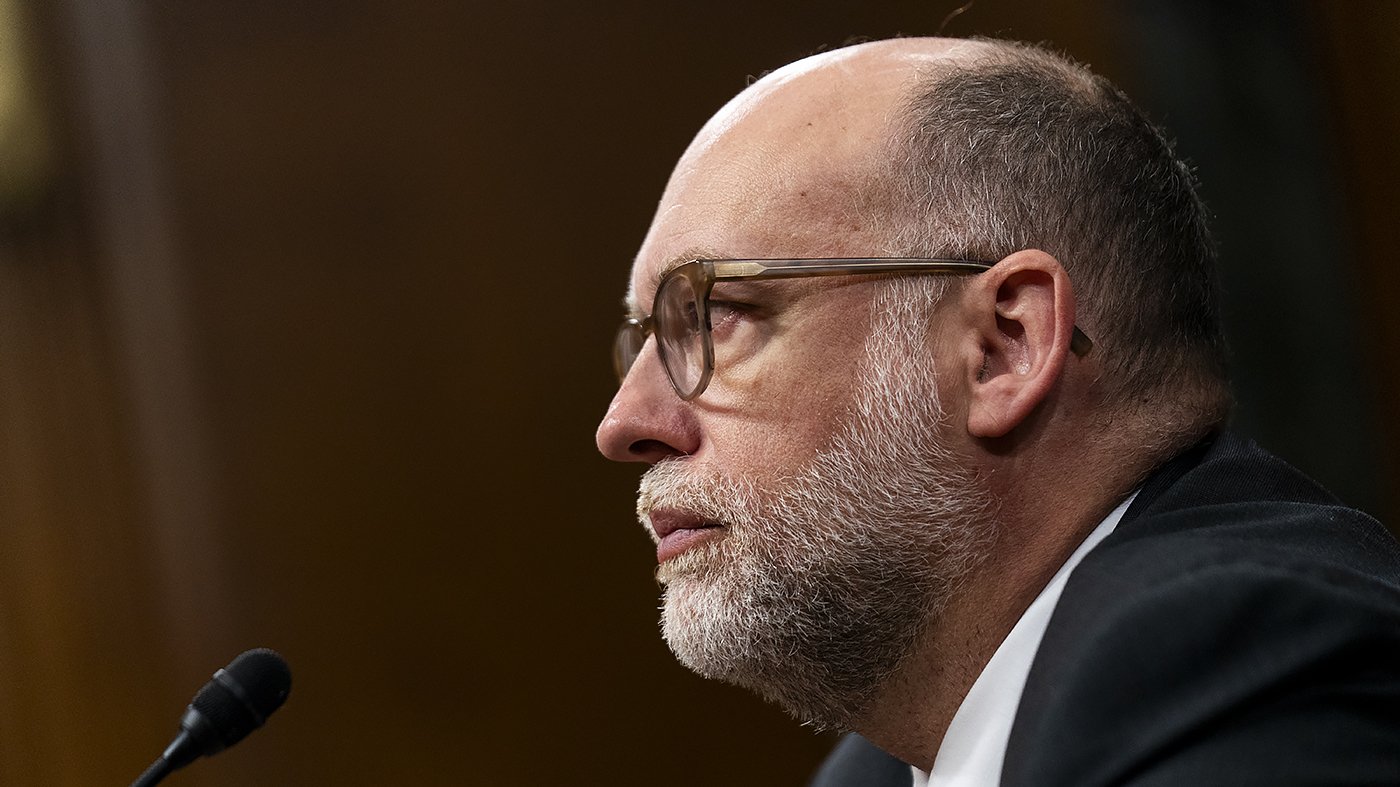
White House budget chief Russell Vought faced a barrage of criticism from House Democrats during a contentious hearing Tuesday, as lawmakers pressed him on the administration’s deep cuts to foreign aid and its overhaul of federal grant approvals. The session before the House Appropriations subcommittee on financial services and general government quickly devolved into a heated debate over morality, constitutional authority, and the Trump administration’s spending priorities.
The administration’s proposed fiscal 2027 budget, released earlier this year, calls for a 40% boost in defense spending—pushing the Pentagon’s budget past $1 trillion—while slashing nondefense programs by 10%. Democrats zeroed in on the decision to dismantle the U.S. Agency for International Development (USAID), a move they linked to an estimated 600,000 preventable deaths worldwide, according to a report from House Oversight Democrats.
Rep. Mark Pocan (D-Wis.) directly challenged Vought on the moral implications of those cuts. “Isn’t it wrong to facilitate the death of children?” Pocan asked, citing studies that attribute the fatalities to terminated USAID programs. He then invoked Vought’s past writings on Christian nationalism and a Bible verse from Isaiah, asking whether the administration’s actions conflicted with his stated religious beliefs. “Share your food with the hungry and provide the poor wanderer with shelter,” Pocan quoted. “Are you saying God was misquoted or wrong?”
Vought rejected the premise outright, calling the accusation slanderous. “This administration is not doing that,” he said. When Pocan pressed further, asking if it was “morally, ethically, or biblically wrong to facilitate the death of children,” Vought refused to answer directly, insisting the administration bore no responsibility for any such deaths.
The exchange grew so tense that subcommittee chair Rep. Dave Joyce (R-Ohio) intervened, saying, “I believe he answered the question. You just don’t like the answer.” Pocan shot back, “Mr. Chairman, you can answer your own questions and get your own answers.”
USAID has informed Congress that it still holds $19 billion in unspent funds to wind down its terminated programs, though actual costs are expected to be far lower. Democrats and advocacy groups have urged the administration to redirect that money for humanitarian aid. Meanwhile, other Republicans rallied to Vought’s defense. Rep. Chuck Edwards (R-N.C.), vice chair of the panel overseeing USAID’s budget, said he found the treatment of Vought “disrespectful” and argued that isolated claims about policy effects were misleading. “Every loss of an innocent life is a tragedy,” Edwards said, “but we must also consider the lives saved through decades of U.S. humanitarian aid.”
Vought also faced scrutiny over the administration’s changes to federal grant approvals. He assured lawmakers that congressional earmarks would be protected under the new rules, meaning legislators could still direct funds to specific projects in their districts. “Sometimes you have an earmark to a specific person or a specific organization, and that would probably be at the top of the list that needs to be funded,” he said.
But Rep. Rosa DeLauro (D-Conn.), the top Democrat on the House Appropriations Committee, closed the hearing with a sharp rebuke, accusing Vought of politicizing grants and usurping Congress’s constitutional power of the purse. “The Constitution says that the appropriations process is the power of the purse. You are ignoring that,” she said. “No president has the right to just violate the United States Constitution, and no member of this committee does that. But the administration is doing it regularly.”
The clash comes as lawmakers brace for another potential government shutdown this fall, with spending battles intensifying. The hearing underscored the deepening divide over fiscal policy, with Democrats vowing to ramp up oversight—a strategy Democrats plan to escalate in 2027. Meanwhile, the administration’s cuts to key programs have raised alarms beyond the hearing room; suicide prevention efforts are already at risk due to reduced federal funding.